
Last month, 10 Stephens College students eagerly gathered in the college library’s penthouse to celebrate something they spent the entire semester building together: the Spring 2026 issue of Stephens Life Magazine.
Stephens Life is a practicum course designed to mirror a real magazine environment, with students stepping into roles across writing, photography, design, social media, creative direction, and editing. Each semester begins with a theme that slowly evolves through conversation, experimentation, and revision until the magazine becomes a fully realized issue. Some recent issues, for example, have included the themes “Uncanny,” focused on oddities and eeriness, and “Hallowed,” examining traditions and heritage.
For the students involved, the release party marks the end of months of brainstorming sessions, photoshoots, and constant back-and-forth shaping of ideas into something cohesive.
“Something that I think is really unique about Stephens College is opportunities like Stephens Life Magazine — allowing students to come together and work through this vertically integrated process to see something from start to finish in a way that extends beyond a typical class assignment,” said faculty advisor Connor Frew, a local artist, publisher, and writer.
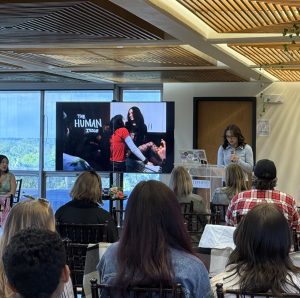
This spring was especially meaningful for Kadence “Jo” Douglas, who served as editor-in-chief for her second and final issue before graduating. Over her time at Stephens, she contributed to five issues, first as a staff writer, and later as the person guiding the entire publication.
“My favorite part of serving as editor-in-chief was being able to see everyone’s work come together into one cohesive magazine,” she said. “There’s something special about all of these individual staff members bringing their own perspectives and visions to create something new.”
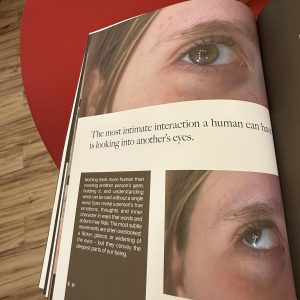
Centered on the theme “Human,” the latest issue of SL explored identity, friendship, vulnerability, and creativity through photography, writing, and visual storytelling. Throughout the semester, the editorial staff met weekly to refine stories, plan visuals, and define what “Human” would ultimately mean. Douglas said the team created a collective creative statement and even assembled a thematic bibliography of films, music, artwork, and writing that reflected the emotional core they hoped to capture.
Because the theme was so open-ended, though, much of the process involved letting go of ideas that didn’t quite fit and reshaping others until they aligned with the issue’s overall vision.
“We really focused on making sure each story and its visuals felt unique while still connecting back to the heart of the issue,” Douglas said.
For staff member Jubilee Forbess, that sense of collaboration was what made the experience memorable. She described the process as full of small “aha” moments.
“I really enjoy seeing everyone work in their own areas, but also love seeing the overlap between them and how our collaborative work makes the magazine function,” Forbess said.
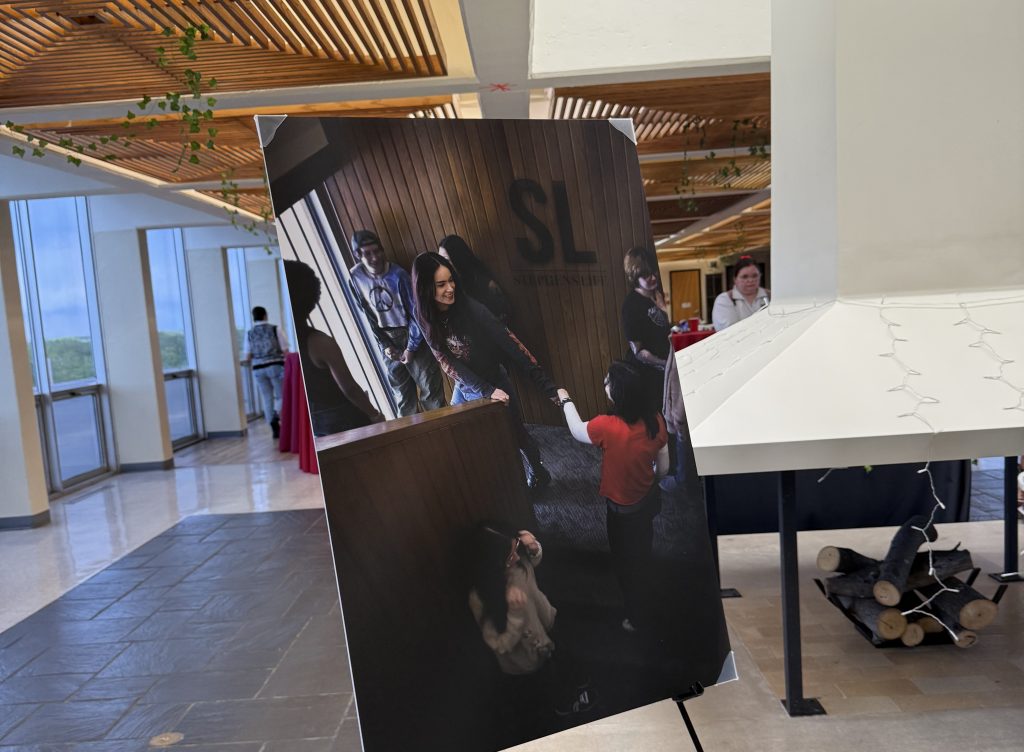
That collaboration carried into the visual storytelling as well. While working on her piece, “In Case Nobody Told You,” Forbess partnered closely with staff member and photographer Emma Binnie to create a shoot grounded in authentic connection rather than in posed or overly styled imagery. Instead of directing stiff setups, they brought in games, props, and conversation prompts to help models relax and interact naturally with one another — laughing, talking, and just being in the moment.
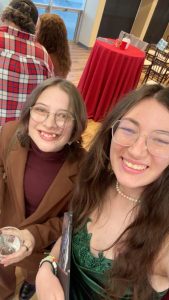
“One of the main parts of our photoshoot was bringing in different games and props to help them relax and really connect to each other in the moment,” Forbess said.
In response, the images carried a softness and spontaneity that matched the emotional tone of the writing, while handwritten elements and scanned notes added a tactile, personal layer to the layouts.
Forbess said the story also grew out of something she’s noticed more broadly: how friendships are shifting for young adults.
“One of the big changes is the decrease in ‘third spaces’ for people to hang out together for free or low cost,” she said. “As long as you’re open to being creative about making memories, close friendships can still work out great.”
At its core, Douglas said, SL is built on individuality, and the magazine only works because every student brings something personal to it. She also remarks on the importance of acceptance that SL offers.
“There would be no Stephens Life if not for the individuality of each of its members,” she said. “Stephens College is a place where women and non-binary folks are able to get an education free from most of the misogyny and sexism that runs rampant in our world today. Our students are opinionated, spirited, creative, introspective, open-minded … I believe a Stephens Life article is one that allows writers to embrace these parts of themselves. Whether that means writing a heavy, deeply emotional piece that required hours of research or a silly short story about a group of friends, there is always passion involved.”
As she prepares to graduate, Douglas hopes the culture she helped shape continues.
“I want future staff members to look back on the issues I led and feel inspired to pursue whatever they can imagine,” she said.