
Reconnecting Mid-Missourians to
Food, Nature, and Each Other
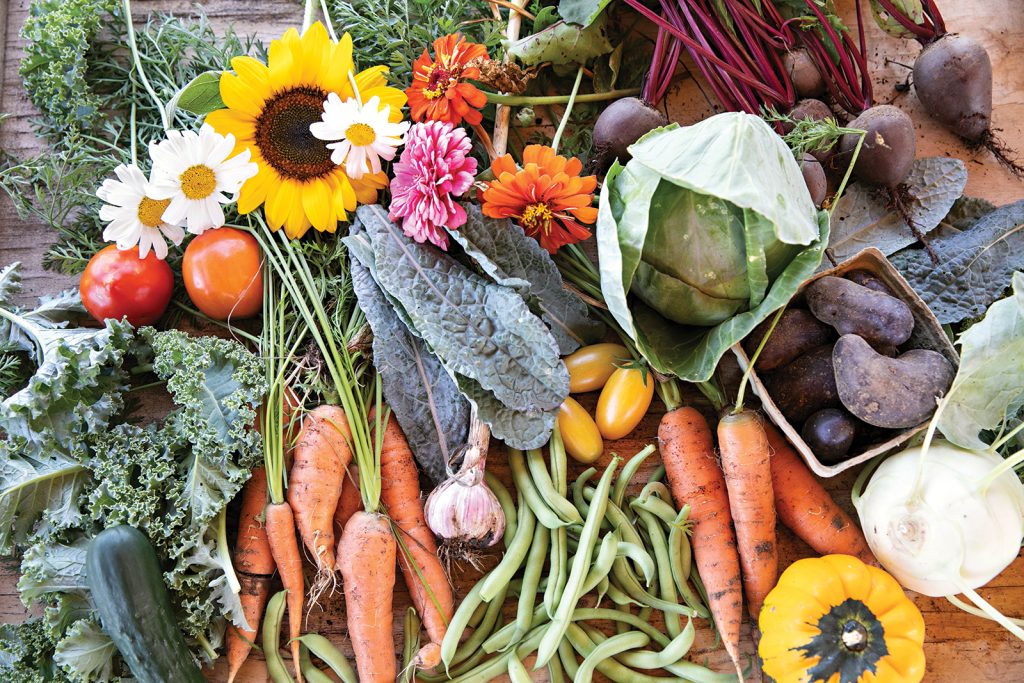
There is something about a farm that invites appreciation and a slower pace. Perhaps it’s the fruit trees stretching toward the horizon, animals grazing and enjoying their habitat, or the way a breeze moves through rows of vegetables. On a farm, it becomes easier to notice things, to acknowledge their progress — like the remarkable journey food takes before it reaches our tables.
For many of us, food has become disconnected from its origin story. We pick up produce from grocery store shelves without thinking about the soil, sunshine, weather, and human hands that made it possible. Yet our connection to food is deeply rooted in who we are. For generations, growing food wasn’t a hobby or lifestyle choice; it was simply life.
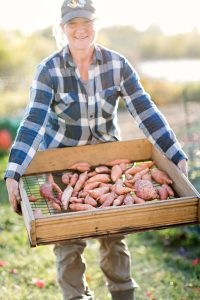
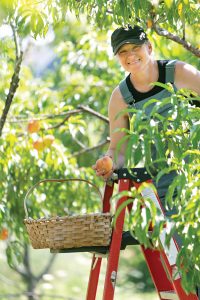
At The Mother Farm, located a little outside of Columbia, visitors are invited to reconnect with that relationship. Situated on 21 acres, the regenerative farm offers more than organic produce, fruit, and grass-finished meats. It offers something many people are quietly craving: a chance to reconnect with nature, with community, and with the simple satisfaction of helping grow something meaningful.
“Our mission is to provide hands-on access to regenerative agriculture to increase human health and happiness while regenerating soil and building community,” says Susan C. Nagel, PhD, the director and self-styled “farmher” of The Mother Farm.
It’s a mission that comes to life every week as people gather to plant, harvest, learn, and rediscover their place in the story of food.
A Farm Built on a Longing for Connection
Interestingly, Nagel did not grow up on a farm. She describes herself as a “farm girl wannabe,” inspired by childhood visits to a great-uncle who farmed. Those early experiences planted a seed that would eventually grow into something much larger.
The Mother Farm was established in 2015, but the vision evolved over time. In those early years, Nagel and volunteers planted more than 500 fruit trees, developed growing areas, built a barn, and acquired livestock. The work was substantial, but another realization was taking root.
People were hungry for more than food.
“There is a deep desire to connect,” Nagel says. “People really long for fresh food, for community, and for nature.”
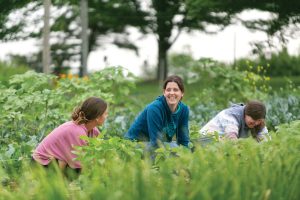
That realization led to the creation of The Mother Farm’s Farm Share program, which officially opened to the public in February 2021. Unlike a traditional community-supported agriculture (CSA) program, Farm Share is built around participation. Members don’t simply pick up a weekly box of produce. They become part of the process.
They plant. They weed. They harvest. They learn. And most importantly, they do it together.
Farming As an Antidote to Modern Stress
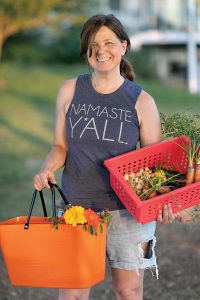
The Farm Share experience is intentionally simple. Members commit to the growing season, which runs from February through November. They gather regularly to work on farm projects, harvest produce, and share in the rewards of the season.
“We strive to make Farm Share a stress-reducing and relaxing experience,” Nagel explains. “All are welcome. No decisions, no experience required. Just show up.”
Farm Share members arrive knowing someone else has already figured out what needs to be done. Whether the task is transplanting seedlings, harvesting vegetables, mulching pathways, or cleaning up the vegetable patch, participants can focus on the work in front of them.
The result is something many members describe as restorative. For Farm Share member Kim Wade, the experience has changed how she moves through the world.
“Farm Share helps me feel like I’m more fully present in my own life,” she says. “Planting, weeding, mulching, and harvesting each week helps me notice more of what’s right around me: the changes in the plants as they grow, the shifting weather, the pair of plovers trying to lure you away from the nest they’ve built in the squash row. It just feels good to be in my body, working outdoors alongside other people.”
Her words capture something increasingly rare: the opportunity to be fully present. At The Mother Farm, people are not simply growing vegetables. They are reconnecting with the rhythms of nature and the satisfaction of doing meaningful work with their hands.
Growing More Than Food
For many participants, the farm becomes a classroom. Not through lectures or textbooks, but through experience.
Members learn how food is grown, what crops thrive in Missouri’s climate, and how weather impacts every harvest. They discover vegetables and fruits they might never encounter at a grocery store and gain a deeper appreciation for the work behind every meal.
“Our connection to food is 100 percent primal,” Nagel says. For most of human history, growing and gathering food was a daily reality. Today, many people have little direct experience with food production despite depending on it every day. The Mother Farm seeks to bridge that gap by inviting people into the process. When you harvest a tomato you helped plant months earlier or gather fruit from a tree you’ve watched blossom in the spring, food becomes more than something you consume. It becomes part of your story.
A Place for Families to Learn Together
One of the most popular offerings at The Mother Farm is the Family Farm Share program. Held on the second and fourth Sundays of each month, the program invites parents and children to work together while learning about regenerative agriculture.
“Family Farm Share is a great way to learn about regenerative agriculture on a beautiful organic farm with your children,” Nagel says. The experience gives children something increasingly uncommon: direct interaction with the natural world.
They see vegetables growing from seed to harvest. They observe pollinators at work. They meet farm animals. They learn that food doesn’t simply appear on grocery store shelves. For many children, these experiences leave a lasting impression.
Tory Jane, a Farm Share participant, says the farm has become a beloved destination for her family. “Farm Share has been a wonderful place for our family to connect with our food and with nature,” she says. “Our children love the farm more than just about anywhere else on earth. They’ve fallen in love with growing food, and The Mother Farm is a big part of that.”
Farming With Nature, Not Against It
At the heart of The Mother Farm is a commitment to regenerative agriculture. Unlike conventional farming practices, which often rely heavily on synthetic inputs, regenerative agriculture focuses on improving soil health, increasing biodiversity, and working with natural systems. The farm grows food without chemicals and emphasizes practices that build healthy soil over time.
“We’re working with nature to grow your food,” Nagel says. That philosophy extends beyond the fields. The farm relies primarily on solar power, supplemented by wind energy, as part of its commitment to stewardship and sustainability.
The Joys and Challenges of Farming
Of course, farming remains deeply dependent on forces beyond human control. Weather can transform a growing season overnight. A late frost, excessive rain, drought, or unexpected temperature swings can dramatically impact production.
Even after years of farming, Nagel says Mother Nature continues to surprise her. Yet those same uncertainties also create moments of profound joy, such as the first berries of the season, a successful harvest after months of care, fruit trees coming into production, or watching animals born and raised on the farm.
Serving the Community Beyond Membership
While the Farm Share is the farm’s most visible program, The Mother Farm serves the broader community in several ways.
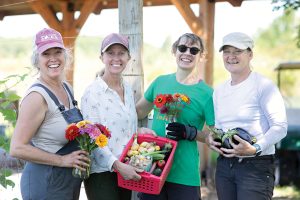
It welcomes individuals interested in experiencing the property before committing to membership. People can attend Farm Share as a guest, schedule a tour, or arrange customized experiences for families, schools, and community groups. Visitors might harvest flowers, gather produce, learn about regenerative agriculture, or spend time with the cows and goats. The goal is simple: to help people better understand where food comes from and how it is grown.
The Future of Food
Ask Nagel about the future of farming in America, and her answer returns to connection. Making a living in agriculture remains challenging, and the number of farmers continues to decline. Yet she believes people are increasingly seeking the experiences that farms like The Mother Farm provide.
Food is part of it, certainly. But there is also a growing desire for purpose, belonging, and meaningful work. “There is pride, joy, and purpose that people are craving,” Nagel says.
Farm Share member Steve Lavigne understands that feeling firsthand. “Since I started coming to the farm and meeting the animals, the people, and the land, my food has nourished more than my body,” he says. “It’s nourished my mind and soul as well.”
In many ways, that sentiment captures the essence of The Mother Farm. Yes, it produces vegetables, fruit, beef, and pork. But it also cultivates something harder to measure.
Connection. Connection to the land. Connection to food. Connection to community.
And in a world that often feels increasingly disconnected, that may be the most important harvest of all.