
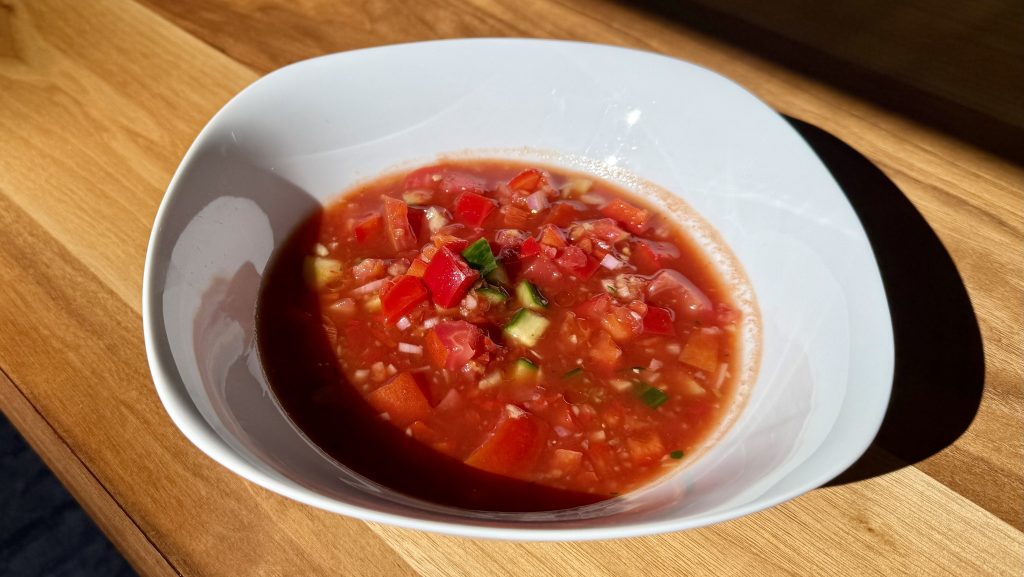
Yesterday, I made this summer’s first batch of gazpacho. I prepared the cold soup at lunchtime so it could chill for a few hours before dinner, since gazpacho’s flavors need time to develop and blend. Cooking is one of my main hobbies, as is reading cookbooks, but I don’t often follow recipes. I like to use all kinds of inspiration to create something on my own. Yet every time I’ve fixed gazpacho, I’ve followed a recipe.
There are many versions of gazpacho, but traditionally, it’s a cold Spanish tomato soup with cucumber, peppers, onion, garlic, vinegar, and hot pepper or hot sauce. Sometimes stale bread is added to give the soup body. Garnishes can include extra chopped vegetables like those in the soup, lemon or lime wedges, avocado, olives, croutons, or simply a drizzle of high-quality olive oil.
For years, I used Betty Crocker’s gazpacho recipe, as it was the beloved one my mom served. In addition to the foundational ingredients, that version includes a splash of white wine, a pinch of cumin, and seasoned croutons to thicken and then garnish the soup. The recipe calls for canned tomatoes rather than fresh, so although I think of gazpacho as a summertime dish, it can be stirred together year-round.
That childhood treasured recipe is consistently good. But over time, as I read more cookbooks, I noticed how many of them contain gazpacho recipes, so I tried different versions. I found I adore gazpacho in all its variations; the soup makes me feel lively and healthy.
Back in the spring of 2021, a bit beat up from the COVID pandemic, I didn’t feel lively or healthy. Lyle, experiencing similar woes, had just joined a weight loss program called Noom. At first, though I wanted to support his evolving lifestyle, I didn’t join the program. I assumed Noom taught healthful eating habits, and I figured I knew enough about that subject. But then Lyle shared what he’d learned.
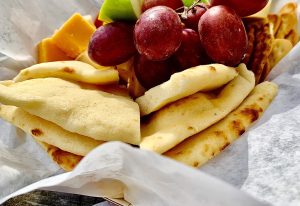
For example, he taught me the difference between a snack of grapes and a snack of raisins — aka, dried grapes. Because a handful of grapes has much more water, it contains far fewer calories than a handful of raisins. I was stunned. That epiphany was one of Noom’s humbling and uplifting first lessons about calorie density.
I joined the program, hoping to get a little leaner. Each day, I logged my meals on the app and studied their nutritional breakdown. Focusing on each ingredient, I sat quietly inspired at my kitchen table. No more guesswork. I was confident about and empowered by my dining selections. On the Noom app, I could clearly see how my meals were analyzed.
By that summer, I felt fit and energetic, but I didn’t stop the program. I’ve generally stayed on a maintenance version of Noom for the past five years. I don’t log my meals every day anymore, but I can use Noom’s data any time I want a refresher: lessons and meals I’ve saved, weight charts, mental health tips, recipes, and even meditation and workout ideas. Some days, just to make sure I’m still eating well, I log all my meals. I’m reminded of what I’ve learned. I consider Noom a genius invention.
Noom’s format and nutrition advice has changed a bit since 2021, but the basic premise is the same: Learn your habits, impulses, and strengths, and use that knowledge to be the healthiest you can be. As with any good form of therapy, Noom encourages you to be nice to yourself, understand yourself, and make better choices.
To help its program participants trim down, Noom classifies foods as Green (low calorie density foods we should eat a lot of), Yellow (middle-range calorie density foods we can eat in moderation), and Orange (high calorie density foods we can eat so we don’t deprive ourselves, but in smaller quantities).
In 2021, Noom’s Green foods were mostly whole vegetables and fruits. Wanting to log as many Green ingredients as I could, I started most days with a Green Scramble — a dish I still make — with greens, chopped vegetables, an egg, and some chopped smoked turkey or olives. As early as breakfast, my Green food list was strong, which thrilled me so much I began making daily vegan lunches.
To learn more about vegan cooking, I read several vegan cookbooks. Vegan for Everybody by America’s Test Kitchen taught me how to make:
• Black Bean Toast with Avocado and Tomato
• Chickpea Salad (reminiscent of egg salad) Sandwiches
• Turkish Tomato, Bulgur, and Red Pepper Soup (with an enticing blend of garlic, mint, and smoked paprika)
The book also contained an appealing-looking Classic Gazpacho. The Test Kitchen writers explained that their version was “a foolproof recipe with distinct vegetables in a bright tomato broth.”
Gazpacho, a dish I’d known and appreciated long before Noom, was full of Noom’s Green ingredients. So, I prepared the soup. I followed the recipe without altering it, and the gazpacho was instantly memorable.
Five years later, I’m still making that version of gazpacho. I renamed it Classic Kickass Gazpacho for a recipe binder I gave Lyle. In a rare occurrence, aside from the slight name enhancement, I’ve left the recipe unchanged. In the binder, however, I’ve added some story and memory notes.
Gazpacho is beautiful, enchanting, and invigorating, can easily be vegan, and is wonderful for a make-ahead dinner because it must be prepared in advance. I’m not a vegan, but I still enjoy vegan meals as a part of my diet. If sleep is a dishwasher cycle for the brain, I suggest that a healthful, vegetable-packed, brilliantly flavored vegan dish such as gazpacho is a dishwasher cycle for the whole body.
Today, at lunch, Lyle and I enjoyed a big, vivid bowl of leftover gazpacho drizzled with olive oil. For dinner, we indulged in a batch of his homemade cheeseburgers. We discussed the variety of ingredients we’d eaten, and I mentioned that gazpacho is both cleansing and a form of insurance. Lyle understood and replied, “Gazpacho is a meal that makes you feel better, and makes you feel better about your next meal.”
CLASSIC GAZPACHO
1½ lbs. tomatoes, cored and cut into ¼-inch pieces
2 red bell peppers, stemmed, seeded, and cut into ¼-inch pieces
2 small cucumbers, 1 cucumber peeled, both sliced lengthwise, seeded, and cut into ¼-inch pieces
½ small, sweet onion, chopped fine, or 2 large shallots, minced
⅓ cup sherry vinegar
2 garlic cloves, minced
Salt and pepper
5 cups tomato juice
8 ice cubes
1 tsp. hot sauce (optional)
Extra virgin olive oil
- Combine tomatoes, bell peppers, cucumbers, onion, vinegar, garlic, and 2 tsp. salt in a large (at least 4-quart) bowl and season with pepper to taste. Let stand until vegetables just begin to release their juices, about 5 minutes.
- Stir in tomato juice, ice cubes, and hot sauce, if using. Cover and refrigerate to let flavors blend, at least 4 hours or up to 2 days.
- Discard any unmelted ice cubes and season with salt and pepper to taste. Serve cold, drizzling individual bowls with oil.
From Vegan for Everybody by America’s Test Kitchen, 2017
My Notes:
Though I follow the recipe, I have adjusted it when missing an ingredient or when wanting an extra spicy version. I use low-sodium tomato juice (low-sodium Spicy Hot or regular V8 works well). I sometimes throw in a minced small hot pepper or two or use a yellow or orange bell pepper in place of one of the red peppers. Occasionally, I spin an immersion blender in the soup a few times after all the ingredients, but the ice cubes are in the bowl. The first time I made the soup, I didn’t have sherry vinegar, so I used champagne vinegar and a splash of dry sherry. Use good summer tomatoes. I use Kaged Heat Garlic Ghost hot sauce.