
As the sun sets on Missouri’s grasslands and prairies, you can see — if you’re lucky — dozens of tiny flashing lights on the butts of the beloved beetle that is known more commonly as a firefly. However, as the Missouri Department of Conservation website notes, globally and locally these populations have declined due to loss of connected habitat.
Missouri was once home to a variety of vast and diverse prairie landscapes. Waist high with native flowers, grasses, and shrubs, these dense habitats were a haven for pollinators and a variety of other native bugs, insects, mammals, and birds.
“A lot of the plants that we use in our conventional landscaping are European or Asian varieties that the pollinating insects that we have in the U.S. didn’t co-evolve with,” said Tyler Gerstheimer, a sustainability specialist who manages the CoMo Wild Yards projects for the city. He lamented that native pollinators are often unable to get nectar from non-native plants, citing that factor as a reason pollinators are heavily in decline.
As small towns continue to grow and cities sprawl into the suburbs and surrounding counties, turf grass lawns have come to dominate the landscape. This development has worsened the pollinators’ plight, but fortunately, the city of Columbia is taking steps to mitigate the problem.
“Over time, lawn care shifted toward that uniform turf grass look, and use of broadleaf herbicides increased,” explained John Ogan, public information specialist for the Columbia Public Works Department. “But the Roadside Pollinator Program could lead the way to reflect a shift back toward recognizing the benefits of more diverse plantings, including those species that provide food and habitat for our pollinators.”
What Is Being Done in Columbia
The Roadside Pollinator Program is run through the Public Works Department and began with “No Mow Zones” established on Scott Boulevard, North Providence, South Providence, Rangeline Street, and Discovery Parkway.
“The program is about using public space more intentionally,” Ogan said. “It supports pollinators and local ecosystems, while at the same time reducing fuel use and emissions from mowing,” The program also helps limit how often public works crews need to work in high-traffic areas.
Individual homeowners are also tackling the increasing scarcity of pollinator habitat. When Allison Vaughn, communications chair for the Columbia Audubon Society, moved into her house, she was eager to find out what native plants would start popping up once she removed the invasive Virginia creeper and bush honeysuckle. She said the previous owners had not installed a turf grass yard, so immediately she started seeing familiar faces in the flowers that sprang up. Unfortunately, she said some of her neighbors didn’t share her delight.
“My landlady started getting weed ordinance violations, and so I ended up trimming back the easement and stuff like that for the street,” Vaughn said. “And eventually it came to the point where I just called the city and I said, ‘Y’all need to tell me what you’re calling weeds, because the weeds that I see are winter creeper and bush honeysuckle.’”
She offered to help city staff determine what “weeds” are beneficial to have, and that effort “snowballed into the development of the CoMo Wild Yards program,” which aids citizens in transforming their turf yards into pollinator habitats.
Vaughn’s yard was the first one with the program’s official sign, “and it’s still up today,” she said.
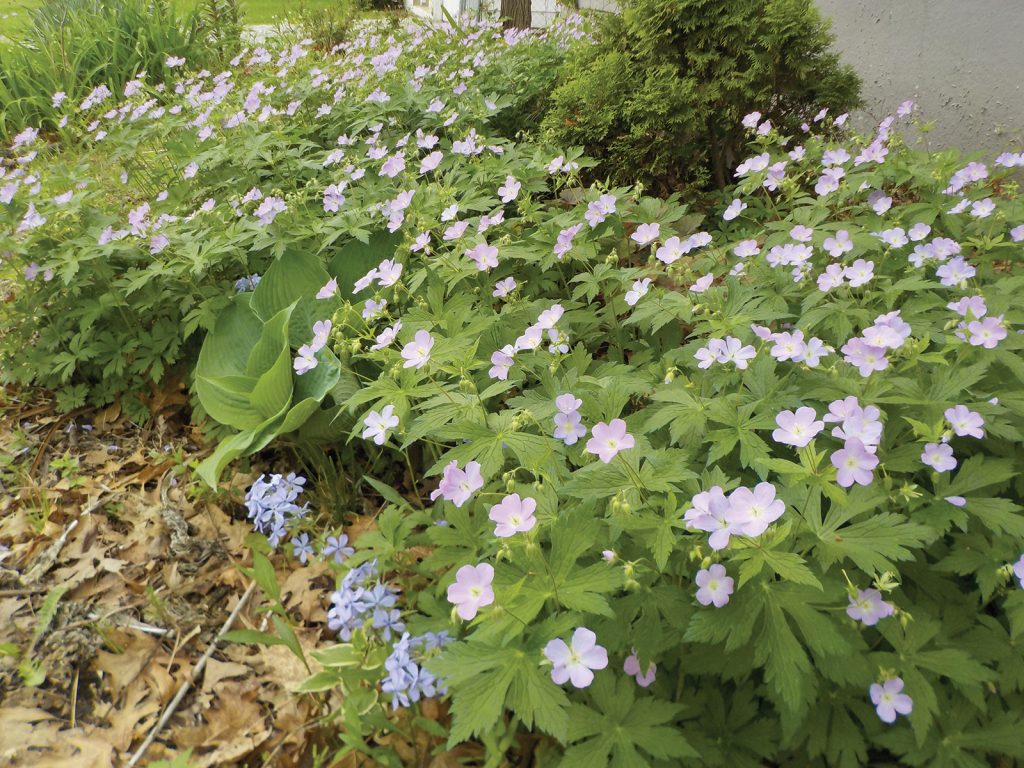
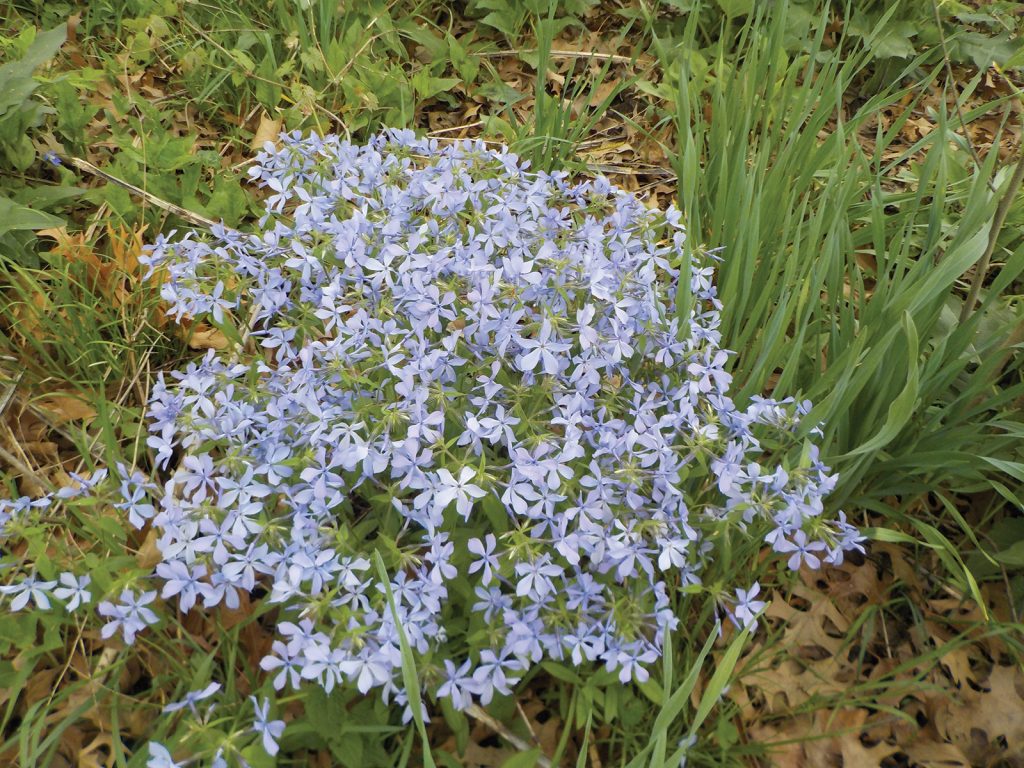
Gerstheimer said CoMo Wild Yards encourages homeowners and other landowners to reimagine landscaping on their properties through the use of native plants. Those interested apply to the program through an online application. Each year, 75 people are chosen to have a consultation with a member of the city’s Office of Sustainability staff or the U.S. Fish and Wildlife Service to help identify important ecological features like soil type, drainage, and sunlight. With that information, a plan is developed to help the landowner create a landscape that uses native plants. There are three certification levels: silver, gold, and platinum.
“We have around 350 participants, at least, folks who have gotten a consultation,” Gerstheimer added. “And then I think we have over 50 yards that have been certified at the silver, gold or platinum level.” The application period opens in early spring and has closed for this year.
What If I Don’t Care About Bugs?
Maybe the problems of pollinators don’t move you. You consider this wild yards (and medians) concept and ask, “What’s in it for me?”
Along with helping out native wildlife, there are a variety of benefits to native landscaping. Native plants are uniquely suited for this area. They have evolved specifically to survive and thrive in this climate. They have long roots that go deep into the soil, helping to mitigate rainwater runoff and prevent soil erosion. That’s certainly a benefit Vaughn can appreciate.
“We don’t have flooding in the basement anymore. We’re on fragipan clay, and it holds water,” Vaughn explained. “Native plants are good for that, because they’re deep rooted, and that helps absorb some of that water.”
A dense landscape of native plants also offers relief from the increasingly hot summers. The city’s No Mow Zones not only create a better habitat for plants and pollinators, but for humans as well. The plants can help lower temperatures along sidewalks, such as the No Mow Zone on North Providence.
“Native grasses typically grow taller and more dense, and that provides more shade at the ground level, and less sunlight is re-radiated as heat,” Ogan said. “The deeper root systems support a natural cooling process where water is released from plants into the air. That lowers the surrounding temperature.” Conversely, short- cut turf grass has less leaf surface and shallower roots, so it tends to dry out more quickly and offers less cooling benefit.
“Over a larger area, this kind of difference can absolutely contribute to reducing localized heat buildup along roadways and throughout the city,” he added.
Native landscapes also require less labor-intensive regular maintenance, a boon for both homeowners and taxpayers. For the No Mow Zones in Columbia, that means an annual cost savings of $160,000 to $280,000 per year, Ogan noted. The savings comes from using less labor and less fuel.
“Mowing is labor- and equipment-intensive, and reducing the frequency of mowing is going to lower our fuel use, our equipment wear and tear, and our staff time,” Ogan pointed out. “That allows us to direct those resources toward other services that residents rely on.”
Where Can I Start?
If you’ve been persuaded that native landscaping is the way to go, you might now be wondering how to get started. Instead of sifting through an unmanageable load of resources, head straight to Missouri Prairie Foundation’s Grow Native! website for everything there is to know about plants native to the region. Emily Gustafson, director of operations for Missouri Prairie Foundation and the Grow Native! initiative, said the website has recorded webinars dating back to 2020 that can help would-be native landscapers get up to speed. The recordings cover landscaping challenges, insects and wildlife habitat, and native trees, among other topics.
Gustafson emphasized that there is a resource available to help gardeners at every level and at every scale, adding that even small actions can have a big impact by providing more native habitat for pollinators and other wildlife. From tending small container gardens to adding native plants to existing exotic beds, she said, every action helps.
“If you add butterfly milkweed into your yard, even just a handful of plants, you’re going to see butterflies, and you’re probably going to see Monarch butterflies, and probably you’re going to see Monarch caterpillars,” she said. “Even though it’s great to construct full habitats, individual plants in small numbers can support wildlife and attract pollinators like butterflies to your yard.”
Where to Buy Native Plants
Giving Gardens
4040 S. Bearfield Rd., Columbia
SunRise Gardens LLC
5771 E. Richland Rd., Columbia
Missouri Wildflower Nursery
9814 Pleasant Hill Rd., Jefferson City
May 19
Native Plant Sale at Bass Pro Shops
3101 Bass Pro Dr., Columbia
Saturdays
Columbia Farmers Market at the Agriculture Park
1769 W. Ash St., Columbia
Low-Cost & Impactful Things You Can Do
Make brush piles
Creating a brush pile with fallen limbs and sticks provides a habitat for all kinds of bugs, birds, and fungi.
Reduce the use of insecticides, pesticides, and herbicides
There is no such thing as a species-selective product when it comes to yard care chemicals. Each of these products creates a variety of undesirable downstream effects.
Leave your leaves
Leaving fallen leaves in place creates habitats for pollinators to overwinter. Fallen leaves can also be used as mulch, and eventually they’ll decompose, improving soil health.
Mow less
Waiting longer between mows gives wildlife more recovery time and less disturbance in general. This also reduces lawn care costs and carbon emissions.
Remove harmful invasives
If your budget prevents you from buying new plants, you can at least remove invasive species like English ivy, Virginia creeper, Japanese honeysuckle, and kudzu.