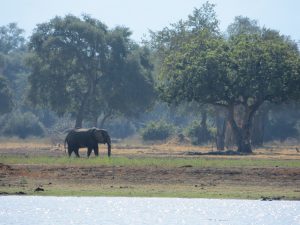

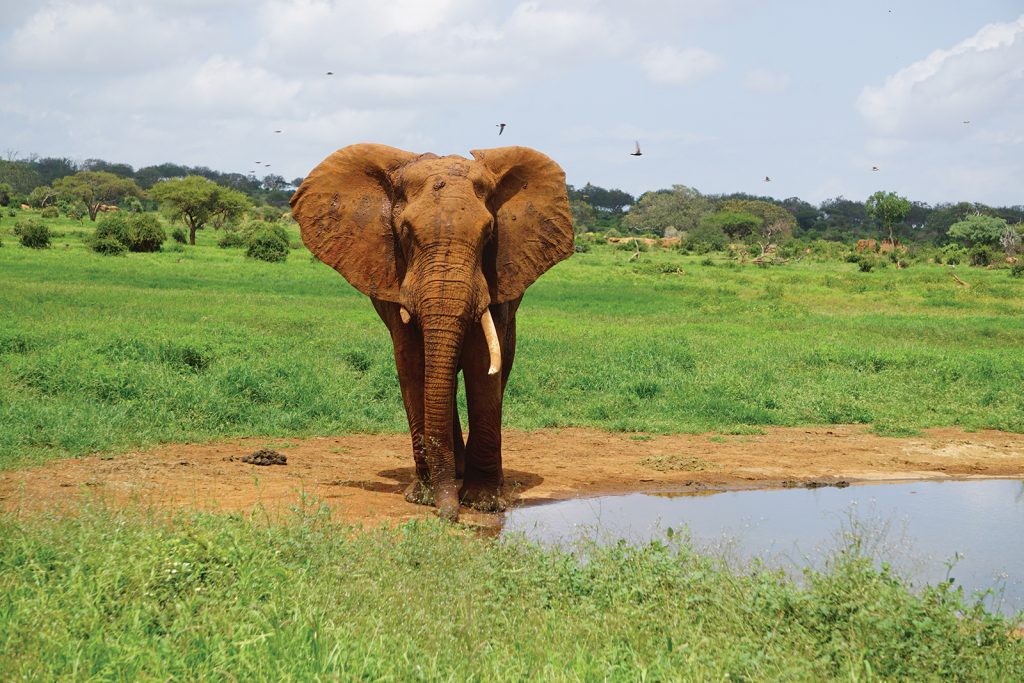
As a cognitive psychologist and professor at Stephens College since 2018, Merrill Sapp views the world of animals, specifically elephants, through a unique lens. She attributes that personal passion for elephants to the power of reading.
“I’ve always been an animal person, even as a small child. I’ve had a lifelong affinity and interest in animals,” Sapp said. Her initial foray into learning about Earth’s most massive land mammal involved reading all the books she could find. Her interest eventually progressed to reading research papers and articles about elephants.
Along the way, Sapp said, she felt “an undeniable urge” to travel the world to learn about elephants and to meet one-on-one with elephant experts.
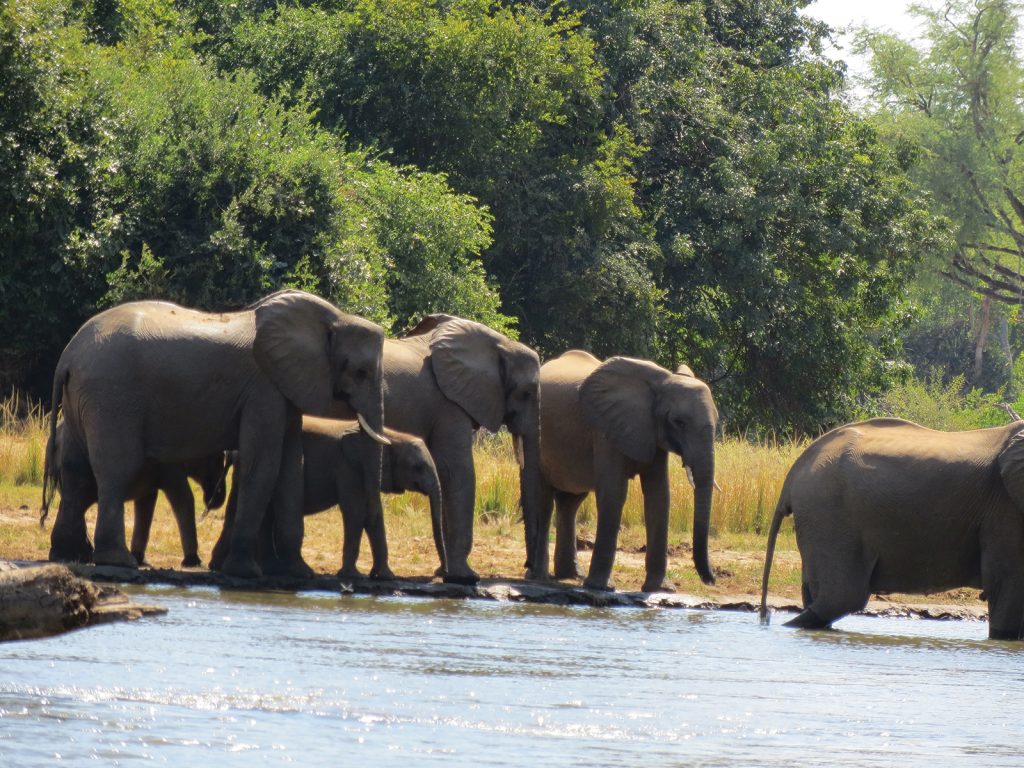
One result of her travels and personal encounters with elephants is the publication of her 2025 novel, Knowing Wonder: An Elephant Story, which is a research-based narrative that follows the daily lives of a family of four elephants.
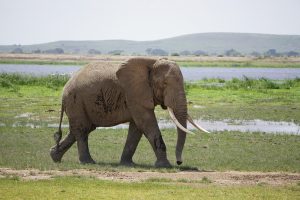 “What inspired me to start writing was realizing elephants are important to the ecosystem where they live. They are keystone animals,” Sapp explained. She stressed the importance elephants have not only for maintaining a healthy ecosystem, but also for how those ecosystems impact elephants’ cognitive processes. How they communicate with each other affects how they interact with their surroundings.
“I felt like with my background in psychology and the basic sciences, I could put that together in a way people would respond to,” she said.
As a cognitive psychologist, Sapp’s specialty is sensation and perception — our basic sensory processes. Cognitive psychology is the study of learning and memory. That field converged with Sapp’s lifelong love of animals and reading to inspire a personal goal: studying the mind of elephants and how they communicate with one another.
“When you really stop and think about what they can do, it might not look like what we do, but their cognitive skills and communicating in caring for each other is really spectacular,” she said.
“Every animal has something that makes it special. We just have to stop and take a look sometimes in order to figure that out.”
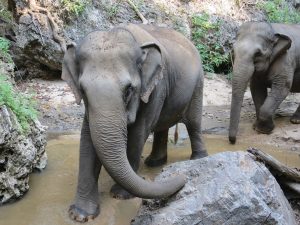 Sapp emphasized that elephants are social animals. “Their social lives are really essential to who they are,” she said, noting that elephants are devoted family members that take care of each other. “Elephants are very peaceful together. It’s really beautiful to see them together in their natural environment.”
Sapp has also written a paper about giraffes. One research project revealed that female giraffes “babysit” each other’s offspring.
“Giraffes are a lot smarter than we might think,” she observed. “They must have some sort of fairly high level of communication ability in order to coordinate watching each other’s babies, going off to eat, and coming back to find each other.”
Elephants are also master communicators, exhibiting detailed physical expressions and the ability to comfort each other with touch and sound. For example, Asian elephants make a specific chirping sound to comfort another elephant in distress.
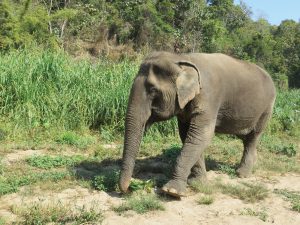 Even though Sapp had learned about elephants and the way they communicate by reading about them, she felt that she needed to experience elephants in their natural habitat to gain a true understanding. So she traveled to Kenya, Zimbabwe, Zambia, South Africa, Sri Lanka, and Thailand to visit elephants in the wild.
Her favorite experiences took place in Zambia and Zimbabwe because she was able to participate in walking safaris. While safaris are typically done from a vehicle, Sapp enjoyed her walking safaris because she could learn even more about the elephants by getting up close and personal.
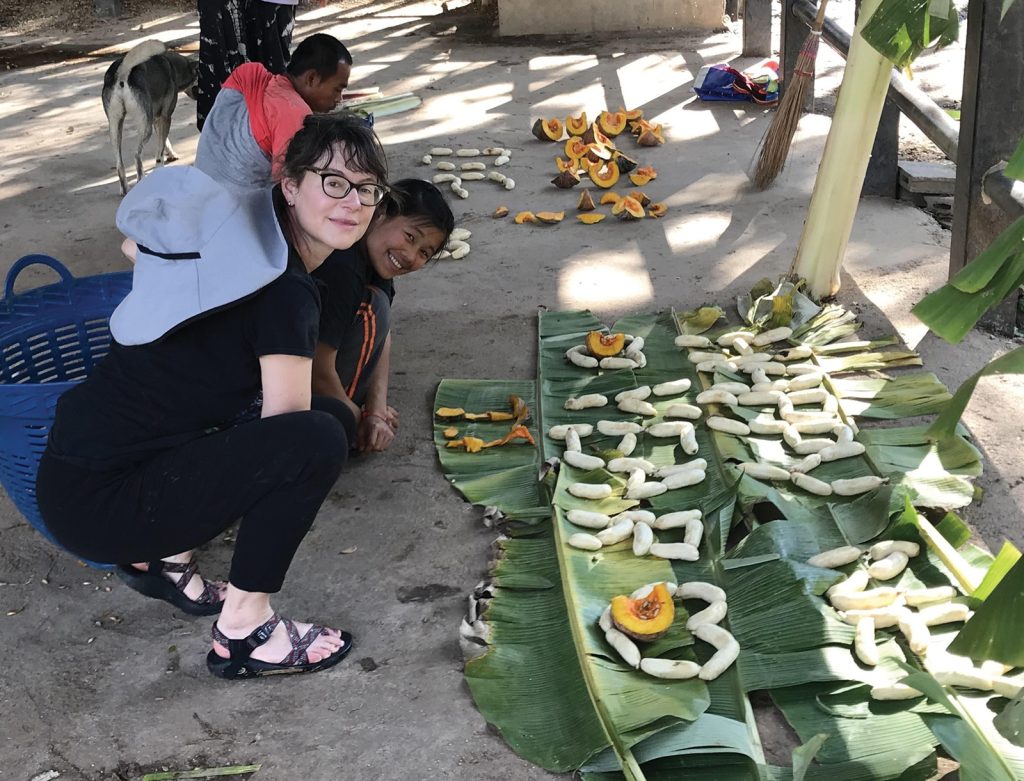
In Thailand, Sapp volunteered at Burm and Emily’s Elephant Sanctuary (BEES) for retired working elephants. She fondly recalled how two female elephants were a bonded pair.
“Elephants don’t have a language where they can express friendship, but there is no question that they form these friendships and support each other throughout a lifetime,” she said. Sapp keeps in touch with staff at BEES and with her contacts in Africa. She plans to return to Zambia and Zimbabwe to spend more time with elephants.
There are other bonuses to her international trips to study elephants and other wild animals in their natural habitats.
In some parts of Africa, she said, “You can see every star in the sky. It’s unlike anything else you will ever do.”