 Columbia is no stranger to a party.
Each spring, cinephiles pack downtown theaters for the True/False Film Fest. In the summer, art enthusiasts spread blankets beneath the trees for Art in the Park, browsing booths filled with ceramics, jewelry, and oil paintings. And every year, readers get a celebration of their own.
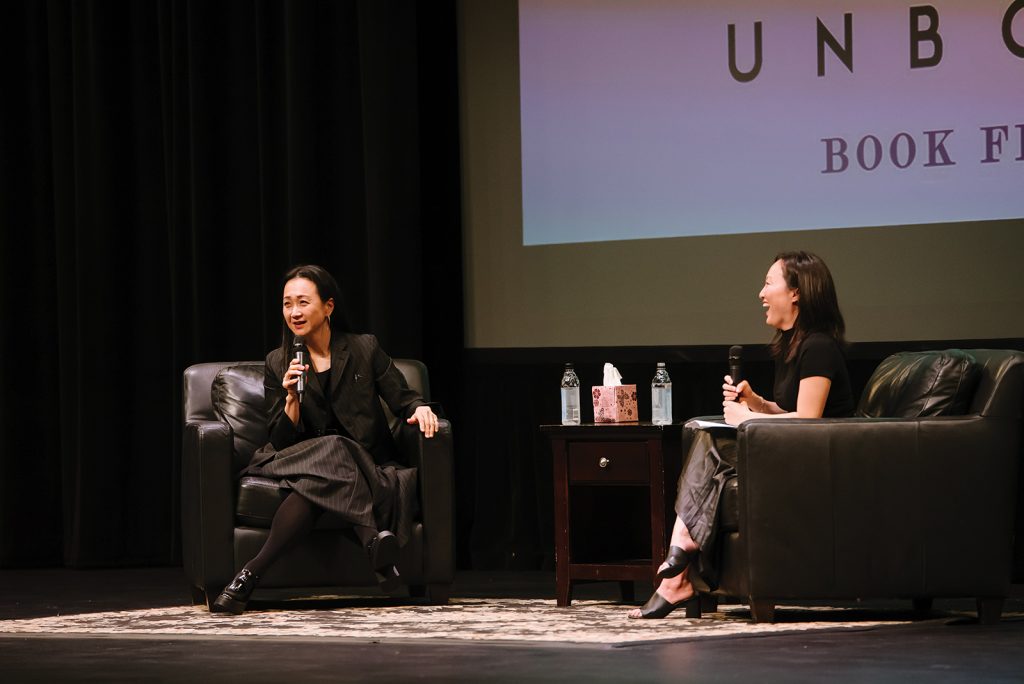
Now in its eleventh year, the Unbound Book Festival brings nationally and internationally recognized authors to Columbia for four days of panels, workshops, signings, and a legendary keynote — with past guests including names like Salman Rushdie, Ross Gay, and Min Jin Lee — for a literary weekend many locals treat like their Super Bowl.
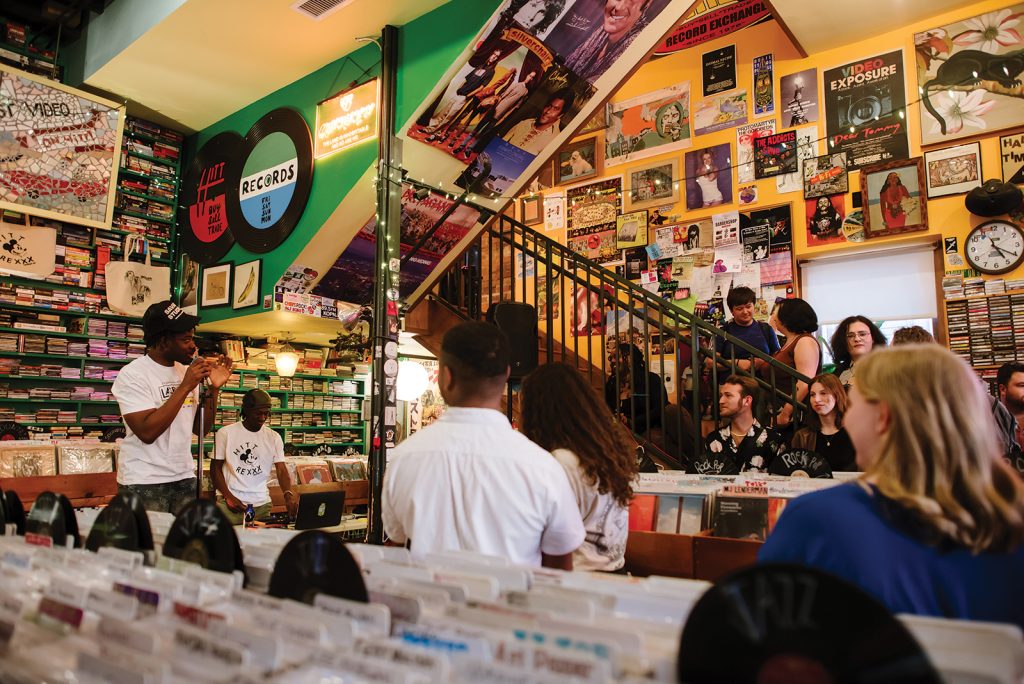
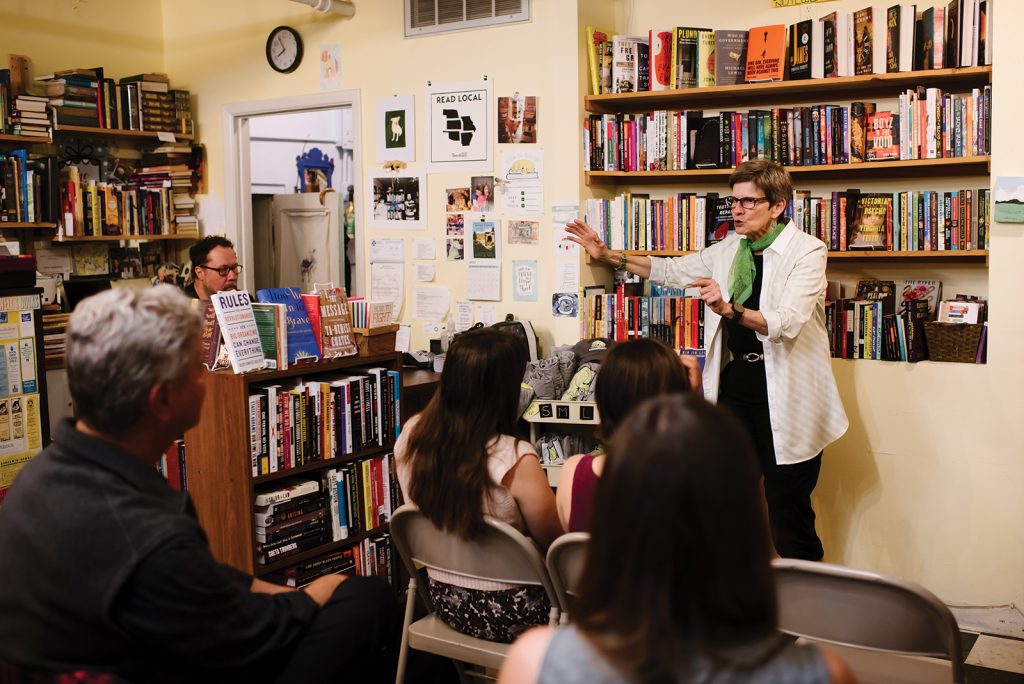
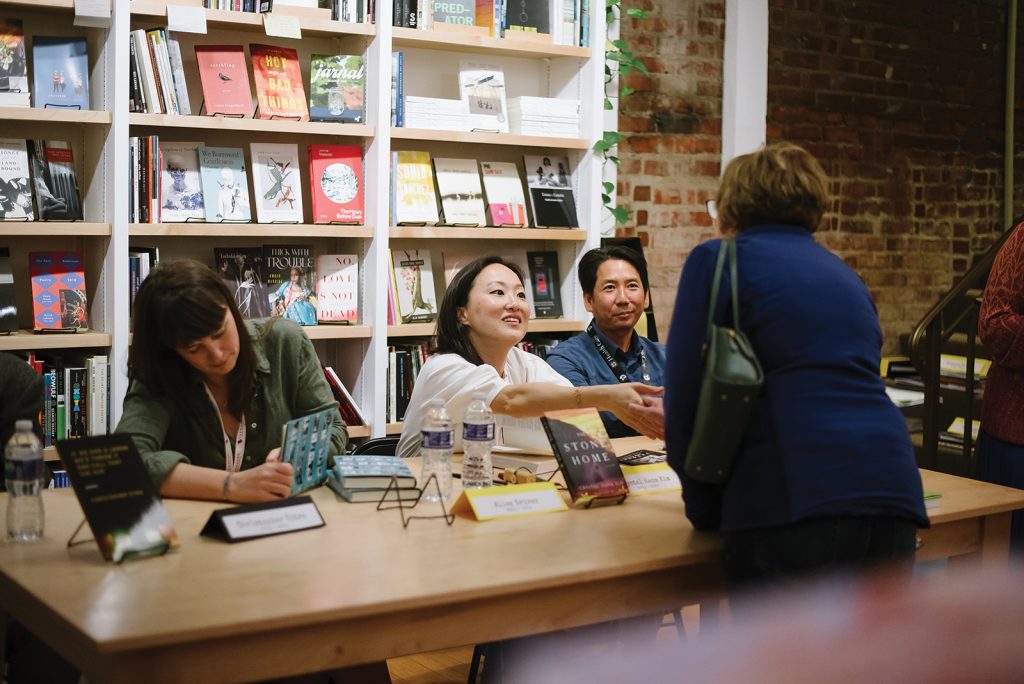
During this time, downtown becomes a living, breathing library. Theaters glow under warm stage lights. Folding chairs line bookstore walls. Programs rustle as readers slip into their seats, coffee cups in hand, shaking off the lingering chill of early spring. A reader stands to ask a question they’ve carried with them since a book’s release. An author pauses, considers, and answers. In those brief exchanges, any distance between page and person melts away.
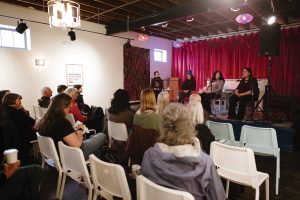
Founded in 2016 by Alex George, owner of Skylark Bookshop, the Unbound Book Festival turns the solitary act of reading into a communal experience. Through lit crawls and live events, it strengthens connections between writers and readers, introduces audiences to new ideas, and inspires a lifelong love of books.
After several years of running the show, George announced his departure from the executive director role in 2024, codirecting the 2025 festival alongside Kerry Townsend before officially stepping away. Townsend now guides Unbound into its second decade, starting with this year’s festival, which runs from April 16 to 19.
“It’s been interesting trying to fill Alex’s shoes,” Townsend says. “Last year, we did it together, but I felt like Alex still did so much. This year, I’ve had to figure things out myself. It’s been a good learning experience, and I definitely feel more comfortable knowing what’s going on.”
Townsend previously worked as a high school English teacher and librarian and says her love for literature blossomed at a young age. Growing up on a farm with a librarian mother, she found the means and plenty of time to dive into books.
“I liked reading because I have a lot of questions in life, and I liked getting answers,” she says. “You can navigate the world through someone else’s eyes in a book — so [reading was] not just escaping, but learning. As a librarian, I liked getting books in kids’ hands, but I also liked helping them answer questions.”
In her new role as Unbound’s executive director, Townsend applies that same curiosity to the festival’s audience, trusting that the questions and ideas that interest her will resonate beyond herself. To keep the festival expansive and free of charge, much of her work centers on fundraising through community donations and grant writing.
“We want to make sure that it stays free,” says Townsend. “I’ve written a lot of grants this year and tried to work with other local arts groups to ensure that the funding is still there.”
As with any festival, there are costs attendees might not see or consider — venue rentals (while several spaces are donated, some may charge fees for staffing), travel and lodging for authors, and honorariums. Thanks to grants from institutions such as the city’s Office of Cultural Affairs and Missouri Humanities, and to prospective grants, Unbound is able to continue putting on a good show.
In addition to fundraising, Townsend serves on the programming committee, helping plan the lineup each year alongside Phong Nguyen, George (who remains involved in a limited capacity), and others. She describes her role as “pulling the pieces together” but credits the committee’s devotion for shaping the festival’s identity.
“It’s a team of very dedicated people,” says Townsend. “They meet twice monthly, and in the meantime, they’re doing research to figure out who would be interesting [guests] and how to make a panel.”
This year’s keynote speaker will be Terry Tempest Williams, author of Refuge: An Unnatural History of Family and Place, An Unspoken Hunger: Stories from the Field, and Desert Quartet, among other classics. She will read on night two of the festival. Panels throughout day three, held at venues across downtown, will explore topics ranging from community silences — examining what happens when the full story isn’t told — to Jane Austen’s enduring influence on culture and literary genres of all kinds. Another session, “What’s the Buzz,” dives into bees and their impact on both the earth and a writer’s work.
Townsend mentions that, this year, a lunch break will be built into the middle of day three’s schedule to allow attendees to have a relaxed debrief session between the morning and afternoon panels, which are an hour and 15 minutes each.
“I feel like this is an era in which conversation is sort of lost right now, and that is leading to a lot of strife, because people don’t know how to have conversations with each other — especially if they don’t agree,” says Townsend. “Having events like Unbound is what’s going to bring us all back together.”
Behind the Scenes
Planning the author lineup is only part of the puzzle. Accessibility is another key focus, a responsibility Joe Marshall and the rest of the committee take seriously each year.
“It’s all about making the festival as easy as possible for everyone to attend, especially for those who have particular needs,” says Marshall.
Marshall, a newer writer originally from Ireland, attends monthly meetings to define ways the festival can continually improve. Often, the committee looks to other literary festivals — such as the Edinburgh International Book Festival, which Marshall notes has strong accessibility policies — for guidance.
“We kind of mirrored what they were doing, and then found our own way of thinking about it,” he says.
Accessibility can take many forms, from convenient restrooms and wheelchair access to sign language interpreters and quiet spaces. Because some venues come with layout limitations, the Unbound team is transparent about what each space can realistically offer, clearly outlining accommodations on the festival’s website. Cost also plays a significant role in what can be provided. For example, an ASL interpreter will be present at the keynote, but smaller venues like Ragtag and Top Ten Wines may not be able to accommodate that level of service due to space constraints and funding limitations — highlighting the importance of grant support and community donations and how essential they are to expanding accessibility across the festival.
Marshall also extends the definition of accessibility beyond physical or sensory needs. Echoing Townsend, he also believes that keeping the festival free is central to the board’s mission.
“If you don’t have the money to pay [to attend] a festival, that’s an accessibility issue,” Marshall says.
Marshall’s perspective, shaped in part by his time in Europe and festivals like Edinburgh’s, reinforces Unbound’s belief that literature should be open to anyone who wants to participate.
Because events are free and open to the public, audiences aren’t limited to highbrow academics or longtime literary insiders. Students sit beside retirees. Aspiring and established writers share rows with casual readers who simply loved a book enough to show up. The mix of attendees is a perfect example of the complex ecosystem that is the literary community in Columbia and beyond.
In a city that already gathers for film, for art, and for music, Unbound creates a space to gather around words. It asks people to sit beside one another, to listen, to disagree thoughtfully, to ask questions out loud. The festival becomes a reminder that open dialogue is still possible.
 Merrill Sapp
Merrill Sapp is an assistant professor and codirector of clinical medicine and director of research at Stephens College. She has written for Earth Island Journal, About Place Journal, Mongabay News, and other publications. She has traveled the world to learn about and work in the service of elephants. Her 144-page novel, Knowing Wonder: An Elephant Story, was published in January 2025. Sapp attended the “CoMo Community Hour: Home is where the art is” Lit Crawl in 2025, reading a sample of her work at Skylark.
Q: How did you become involved with Unbound in 2025, and how did you feel about attending as a speaker?
A: Alex George is very supportive of the local arts community and writers especially. I’ve known him over the years, and through the writing process, and in the process of getting a publisher. He was always very open and generous with his time and his energy, and so he gave me a lot of advice along the way. When it all came to fruition [Sapp’s book being published], he asked me to come read a story. It was really sort of a nice cherry on top of the whole experience.
Most people, when they ask me to read, they ask me to read something from the book — but he asked me to read something about life in Columbia, and so that was a departure from anything that had already been published. When something is published, a lot of people have had eyes on it. A lot of people have given you positive feedback along the way, and you know it’s probably good. But this was a brand-new thing that no one else had read. So it’s a lot more intimidating.
But people responded well to it. There were a couple of people — one was another writer — who approached me afterward, and we talked a little bit. A couple of people from the audience told me about relevant experiences related to the story I read. It was pretty rewarding.
Q: Did you check out any of the other events last year?
A: I went to several things. I attended the writers’ workshop, and I’ve never done anything like that before, so it was just a really good experience. It was run by a graduate student who gave us writing prompts to work on, and then we read some things out loud. I’ve figured out through this process that writing is really about finding your voice, and the more things you do like that, it really helps you to do so.
I also went to several panels about the environment and nature. I’m particularly interested in animals.
Q: Is there any part of the festival you’d call a “don’t miss”?
A: If you’re going to go, you should definitely check out the keynote speaker. Historically, it’s been really special.
 Cass Donish
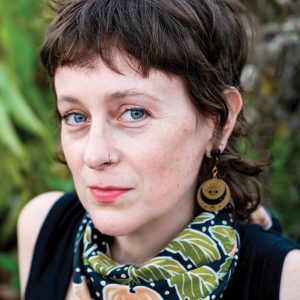
Cass Donish is a queer poet and writer born and raised in the Greater Los Angeles area. They are the author of the poetry collections Beautyberry and The Year of the Femme, which won the Iowa Poetry Prize, as well as the nonfiction chapbook On the Mezzanine. Their work has appeared in publications including The American Poetry Review, Denver Quarterly, The Gettysburg Review, Guernica, The Iowa Review, The Kenyon Review, Poem-a-Day, and VICE. Donish holds an M.A. in cultural geography from the University of Oregon, an M.F.A. in poetry from Washington University in St. Louis, and a Ph.D. in English and creative writing from the University of Missouri. They were a guest poetry reader at the 2025 Unbound Book Festival and moderated a panel focused on indigenous justice.
Q: What was your experience participating in Unbound’s 10th annual festival?
A: I think Unbound is really amazing because it’s the one time of the year you see a huge percentage of the Columbia population come out for the literary arts. I’ve read at Top Ten Wines a number of times, and I think it’s a really fun setting. And then I moderated a panel at Serendipity with three indigenous poets — one of whom used to live here, and that was fun, too.
Q: What was the most memorable moment for you at last year’s festival or any other previous years of Unbound?
A: I remember one event that was actually also at Top Ten Wines. I think it was in 2024. I showed up to a reading really late, kind of at the end of the night, and people were tipsy, and the room was really loud. All of the readers came in, and we were like, “Oh, shit, there’s a lot of noise in this room right now … and there’s supposed to be a microphone …” It turned out no one knew where the microphone went — someone had taken it away. So we were like, “Are we still going to do this reading?”
I remember deciding that I was going to go for it, and all of us were yelling really loudly trying to read our work. Honestly, it was just a really fun and special memory because people were like, “Oh my gosh, they’re going to do it. They’re going to read and just yell their poems into this loud room.” It was a bit silly, but there was so much good energy. And I was reading a poem about grief, so there was this kind of palpable energy reading a grief poem really loudly.
Q: How would you compare what Unbound has to offer here in a smaller city to a festival in a larger city?
A: I think one thing that I like is that you can walk to everything here, which isn’t the same as if you’re in a bigger city where maybe events are going on in different neighborhoods and you’re maybe having to drive from one place to another or Uber around to catch things that you want to see. So I think the size is really nice for that reason. You can just spend the whole weekend walking between the venues, and you don’t ever have to really go super far or drive. I think it’s just, like, that tight-knit feeling of people just know each other and try to offer each other opportunities to get involved. And I think there’s more room to create new events for new venues, more than in a bigger city. I’ve definitely been to some really good events elsewhere, but I think that Columbia has something special here with Unbound because it just feels like home. And I think that people who come here from other places kind of complement the sense of community and the small space of downtown. People seem to really enjoy that sense of the college town size.
 Donald Quist
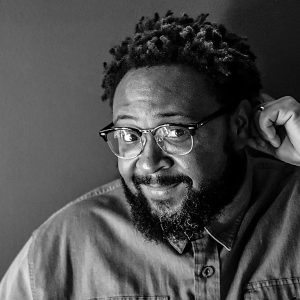
Donald Quist is the author of two essay collections, Harbors — a Foreword INDIES Bronze Winner and International Book Awards finalist — and To Those Bounded, as well as the linked story collection For Other Ghosts. His work has appeared in publications including AGNI, North American Review, Michigan Quarterly Review, Poets & Writers, and The Rumpus, and he has been named Notable in Best American Essays (2018 and 2025). A recipient of fellowships from the Sundress Academy for the Arts, the Virginia Center for the Creative Arts, and Kimbilio Fiction, Quist serves as an assistant professor of creative writing at the University of Missouri. He has served on Unbound’s programming committee and will be participating in a panel at the 2026 festival.
Q: For readers who might be meeting you for the first time at this year’s festival, how would you describe your work?
A: I write a lot of nonfiction — that’s probably what I’m most known for. I write fiction, too, but mostly nonfiction, and it’s a personal essay that tries to connect my lived experience with how pop culture shapes identity, race, and gender. I write about how the art and media we consume shape who we are. I like to make connections like “What does a show like Jackass reveal about us?” or “How can Boy Meets World become an allegory?” That might seem silly at first, but then, as the essay goes on, it becomes increasingly serious.
I’ve moderated panels before, but this is the first panel at Unbound, and I think I’m going to be talking about pop culture, and that’ll be fun. It feels good to get to see this from a whole other angle.
Q: Joe Marshall mentioned that he and the accessibility committee see wealth disparities as another form of accessibility to consider. Can you provide your input on that?
A: I’ll be candid — next week I’m headed to a conference that is one of the biggest booked events in America, called AWP, and it’s $250 to enter. If you’re a student, you can get it for, like, $50. I’m glad Joe brought this up; there are all these ways in which the commodification of art takes access to art away from the people who might need it the most — everyday people who might require art, whether they know it or not, to help them endure another day. And they can’t get to it because it’s behind paywalls.
One of the things I find most amazing about Unbound is that the barrier to entry is pulled away. It’s almost a good reminder that something like this is possible. It is possible to make a community like this, center the arts, and celebrate how the written word can help human beings become better stewards of the earth. Money is a factor, but it doesn’t have to be what makes or breaks it.
Q: What role would you say a festival like Unbound plays in a society that is increasingly online?
A: There is something metaphysical that happens when a group of people comes together for a shared purpose to celebrate something. I think it changes molecules in the air. I think it changes the bodies of the people around. Something magical happens. Even if there are people out there who have never been to the Unbound Book Festival, I believe if they live in Columbia, some part of their life has benefited from the existence of that festival. That much care and effort and that many people pursuing love radiates outward, and it’s going to have an effect. Energy can neither be created or destroyed. The energy that comes from that festival and festivals in general point us to a kinder universe.