

We’re in the midst of one of the most notable celebrations worldwide, and many people here in the States aren’t aware of it. I refer, of course, to Carnival.
Carnival is the period between the old feast of the Epiphany, or the twelfth day of Christmas, and Ash Wednesday, which begins the Catholic Lenten season. In many countries, this celebration is in full swing for the duration, whereas in some others it is somewhat more demure. Wherever it is observed, however, there are, in varying degrees, feasting, partying, and parades, some being fairly ribald!
Here in the United States, the season is typically referred to as Mardi Gras, literally translated as Fat Tuesday. The first Mardi Gras was celebrated near present-day New Orleans by French explorers. Today, New Orleans hosts the most famous celebration in North America, with festivities taking place throughout the season. Other celebrations of note are held throughout the Gulf Coast area as well as St. Louis, although these tend to be less opulent.
The culmination of the carnival season is Fat Tuesday, a day of conspicuous consumption. For Catholics, this was a last chance to splurge before Lent, a season of penance, atonement, and sacrifice leading up to Easter. This is also one of the best examples of enjoying diversity of cultures, as who doesn’t like a party? On Fat Tuesday, everyone celebrates, regardless of race, religion, or ethnicity. And although the cuisine of the celebration generally corresponds with the locale, in the United States, we most often associate Cajun and Creole cuisine with Mardi Gras festivities due to the rich history of the celebration in that area of the country.
So on Fat Tuesday, everyone will be a Cajun, whooping it up with the masses, feasting on red beans and rice, seafood Creole, and crawfish étouffée, oblivious to the history and religious traditions, but ever desirous to attain the coveted plastic beads and the little plastic baby buried in the King Cake (a poor attempt at a pastry, I might add).
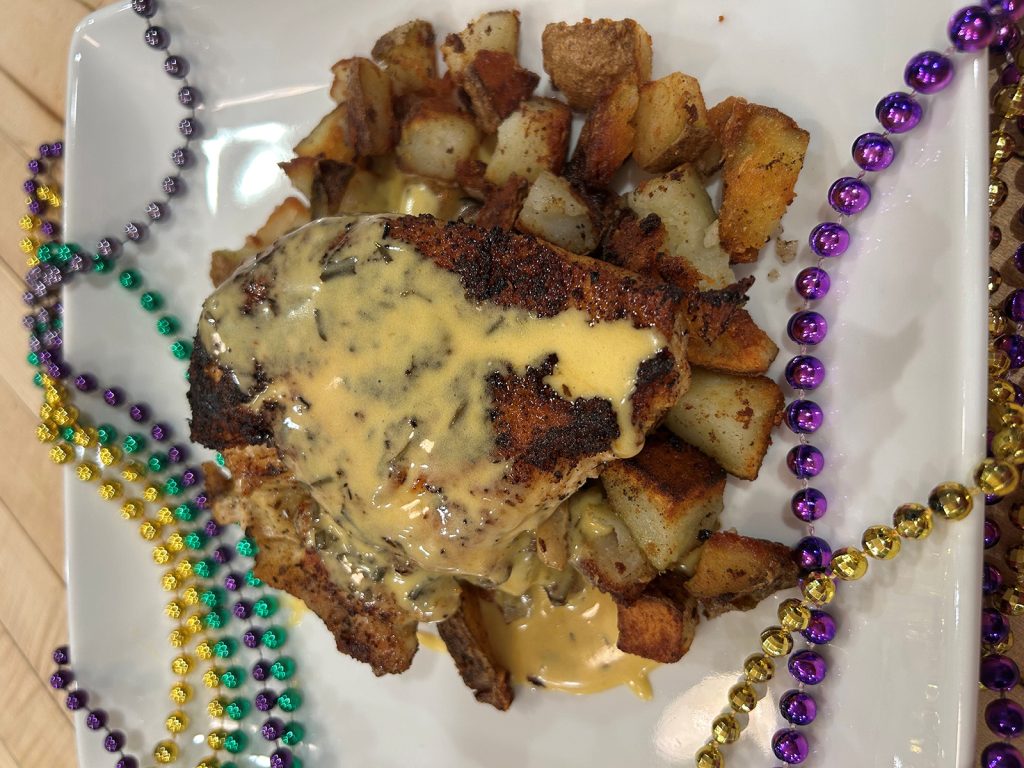
If you aren’t going out and would like to try your hand at a little Cajun cookin’, here’s one of my favorites from Paul Prudhomme’s repertoire, Chicken Tchoupitoulas (pronounced CHOP-uh-TOO-las).
Chicken Tchoupitoulas
4 cups peeled and diced white potatoes
1½ Tbsp. of Hoss’s Cajun Seasoning
8 bone-in, skin-on chicken breasts
4 Tbsp. unsalted butter
Vegetable oil for frying
Béarnaise sauce
2 cups of diced smoked ham
4 cups of sliced mushrooms
1 cup of chopped green onion
- Boil the diced potatoes until tender. Drain and set aside.
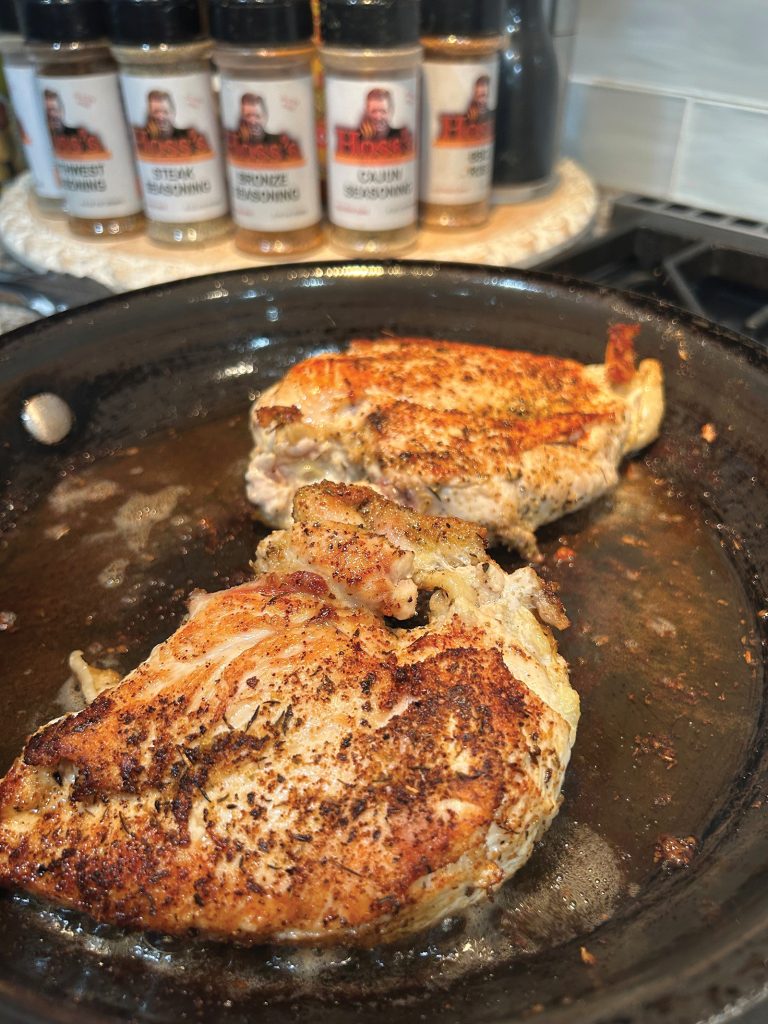
- Sprinkle Cajun Seasoning generously on both sides of the chicken breast, patting it in with your hands. Preheat a very large ovenproof skillet (preferably cast iron) for about 2 minutes over high heat. Place the chicken breasts skin side down in the skillet, dotting with chunks of butter on top. Bake uncovered at 350 degrees for 30-35 minutes, turn meat over, and continue baking until golden brown, about 10 minutes more.
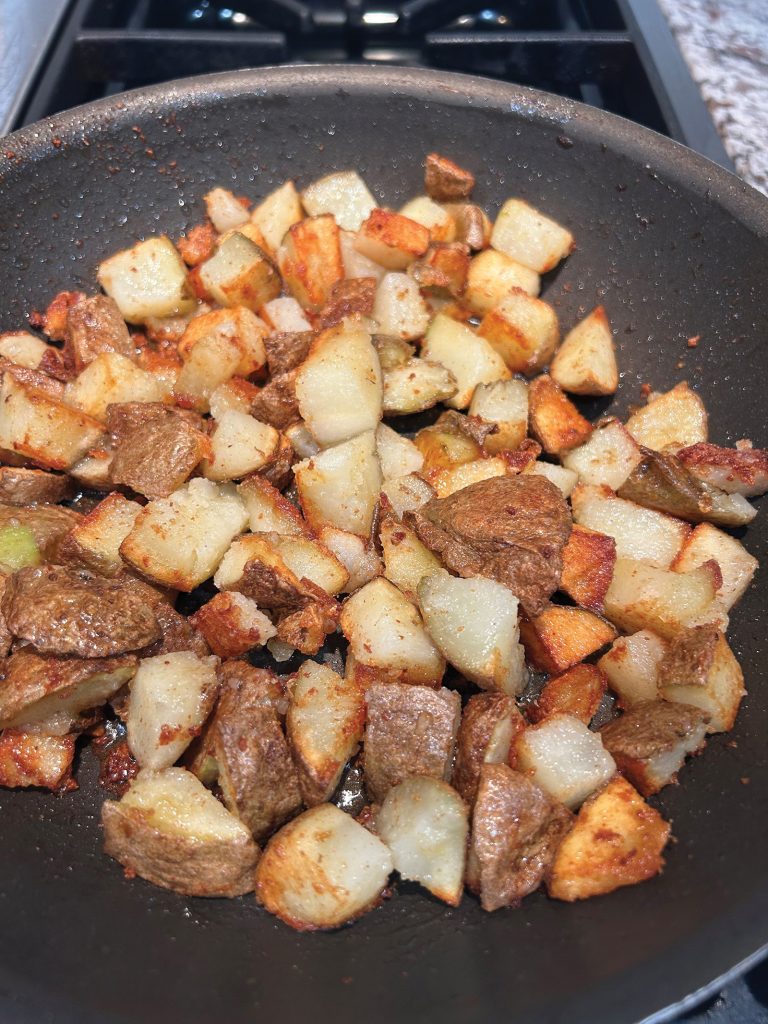
- Remove chicken and set aside; pour pan drippings into a glass measuring cup and reserve. Set skillet aside without wiping it. Heat ½ inch of oil in another large skillet until oil sizzles. Sprinkle potatoes with Cajun Seasoning and fry the potatoes in oil until golden brown on all sides, about 10-12 minutes, then drain on a paper towel.
- Make the Béarnaise sauce (see below).
- In the skillet used to cook the chicken, lightly fry the smoked ham over medium-high heat for 3-4 minutes until brown. Add the potatoes, stirring until heated through (adding half the reserved chicken drippings if the pan is dry). Add mushrooms and sauté until tender, and then add the green onion. Stir constantly for 2 minutes, remove from heat, and serve immediately.
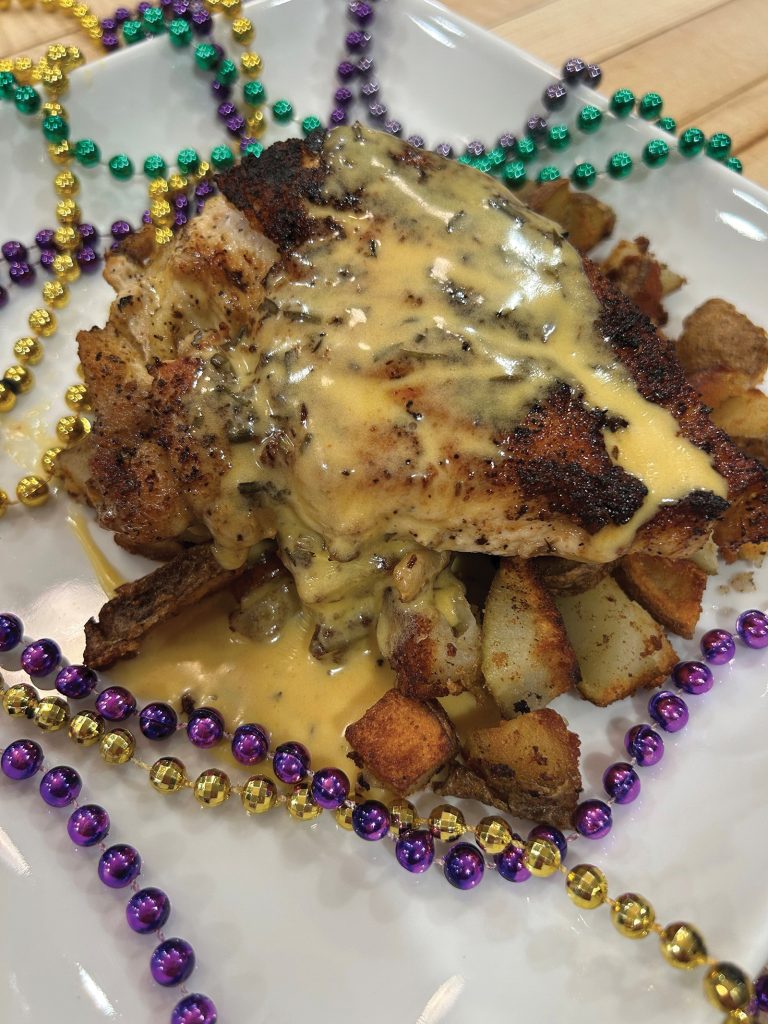
- To plate each serving, place 3/4 cup of the drained potato mixture on a plate, arrange chicken breast on top, and spoon a generous portion of Béarnaise sauce over it all.
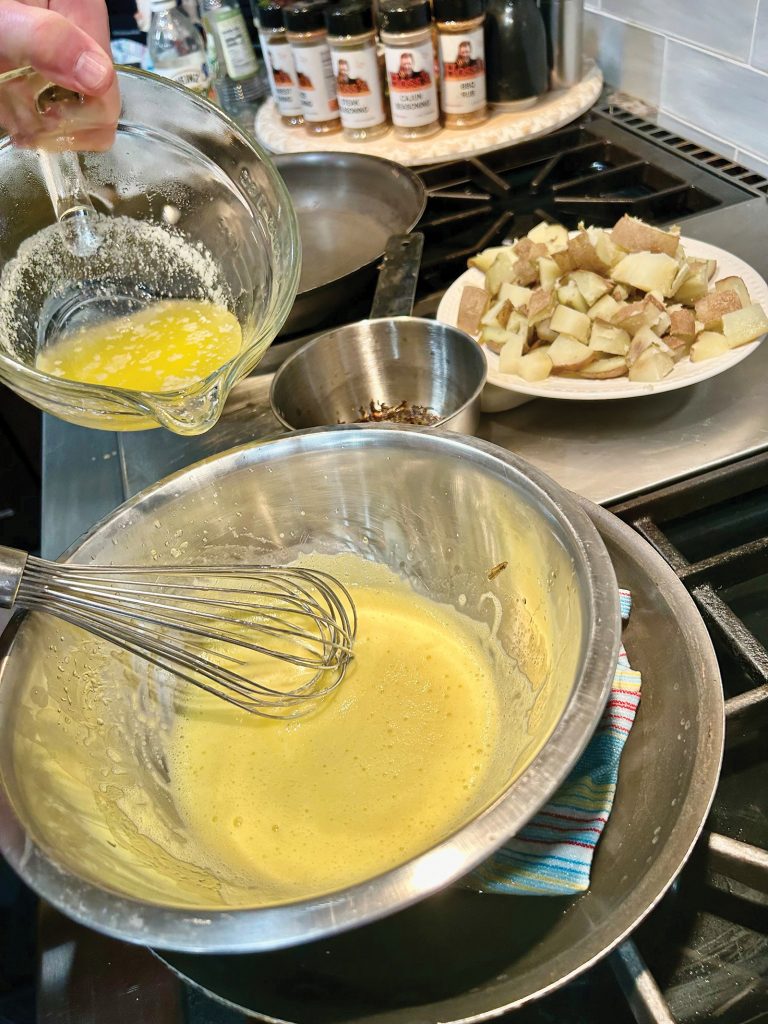 Béarnaise sauce
1 tbsp. chopped shallots
1 lemon, juiced
1/4 cup white wine vinegar
2 or 3 stems tarragon
2 egg yolks
1 tsp. water
2 sticks (½ pound) unsalted butter, melted; keep warm
2 tbsp. chopped tarragon
1/4 tsp. salt
1/8 tsp. white pepper
- In a saucepan, combine shallots, lemon juice, vinegar, and tarragon stems and cook over medium heat until liquid has reduced to 2 tablespoons. Let reduction cool to room temperature; strain into a small bowl to remove solids.
- In a metal bowl, combine egg yolks, water, and reserved vinegar reduction over a pot of simmering, not boiling, water. Whisk well until egg mixture begins to form ribbons when whisk is lifted out of mixture. While continuing to whisk, drizzle in melted butter little by little until completely incorporated and sauce is thick. Add chopped tarragon, taste, and season with salt and white pepper.