
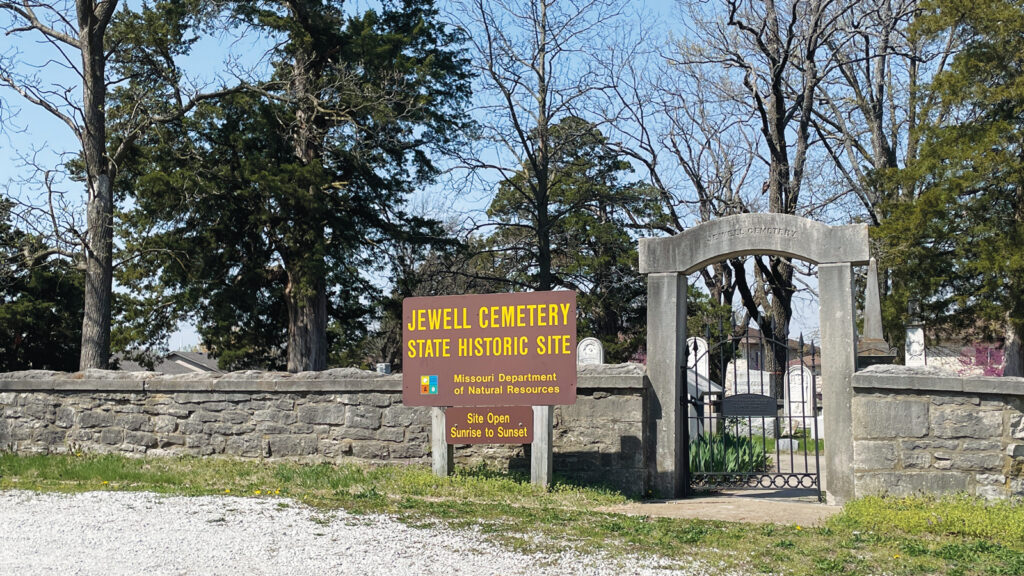
Columbia Cemetery
As old as Columbia itself, the city’s Historic Preservation Commission added it to the Most Notable Property List in 2001. It is now one of six such lauded cemeteries in Columbia. In 2007, it was added to the National Register of Historic Places.
At its core, Columbia Cemetery includes the city’s 1821 common burying ground, but the majority of the cemetery was developed after 1853 with the establishment of the Columbia Cemetery Association, which still owns and operates the cemetery. The association developed and expanded the cemetery using the principles of the trending Rural Cemetery movement. This called for shifting away crowded downtown and church graveyards to spacious, beautiful, landscaped cemeteries designed to serve as public parks as well as eternal resting places.
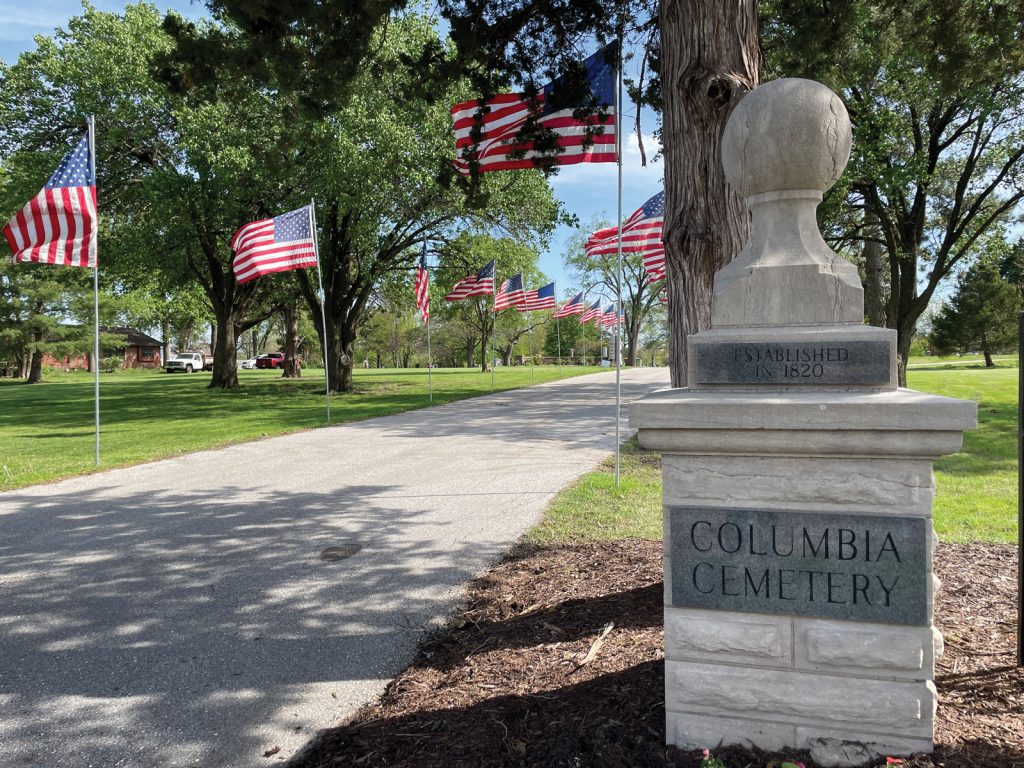
Columbia Cemetery is one of the city’s most recognizable historic places. By design, it’s also a park, and if you know what to look for, it’s a portal into the city and society’s history.
As a result, on any given day, you may find joggers, dog walkers, or people simply enjoying the quiet of this park-like cemetery.
The cemetery is now about thirty-four acres, according to the Columbia Cemetery’s website, and includes an 1880 Jewish cemetery, known as Beth Olem (now called Beth Shalom), the 1914 Elmwood Cemetery, and the county’s burying ground where the indigent were laid to rest.
Beyond offering green space just a few blocks from downtown Columbia at 30 E. Broadway, the cemetery provides a unique opportunity to explore its rich history.
So, How Do You Find History in a Cemetery?
Dana Bocke, a Columbia Public Library associate who has been leading cemetery tours for more than a decade, suggests looking at the grave markers.
“Tombstones don’t just tell the story of a life, but the history of our country. The styles of stones, what they’re made of, and the symbols used have changed over time,” Bocke said in an email interview. “These changes reflect the values and trends of societies throughout the centuries. Different religious, cultural and geographic factors all affect cemeteries.”
For example, she says, earlier symbols on grave markers included “memento mori” symbols, such as skulls and scythes. These were designed as reminders of mortality and warnings about facing eternal rewards — or punishments. By the time of the Revolutionary War, the imagery had changed to softer symbols of mourning, draped urns, and weeping willows. Entering the Victorian era, says Bocke, “you see more flowers and plants and they all had meanings.” Next appear columns, wreaths, lamps, and other elements that evoke the Greek and Roman classical eras, designed to bolster America’s growing image of itself as a republic and align it with past republics.
Another way to use tombstone inscriptions is to “read the landscape,” says Kevin McPartland, a visiting assistant professor of public history at the University of Missouri. Older tombstones often include information about where the people came from, revealing that Columbia’s early settlers hailed from Virginia, Kentucky, Tennessee, and other southern states. This can provide a springboard for learning about the person, as well as why and how Columbia developed.
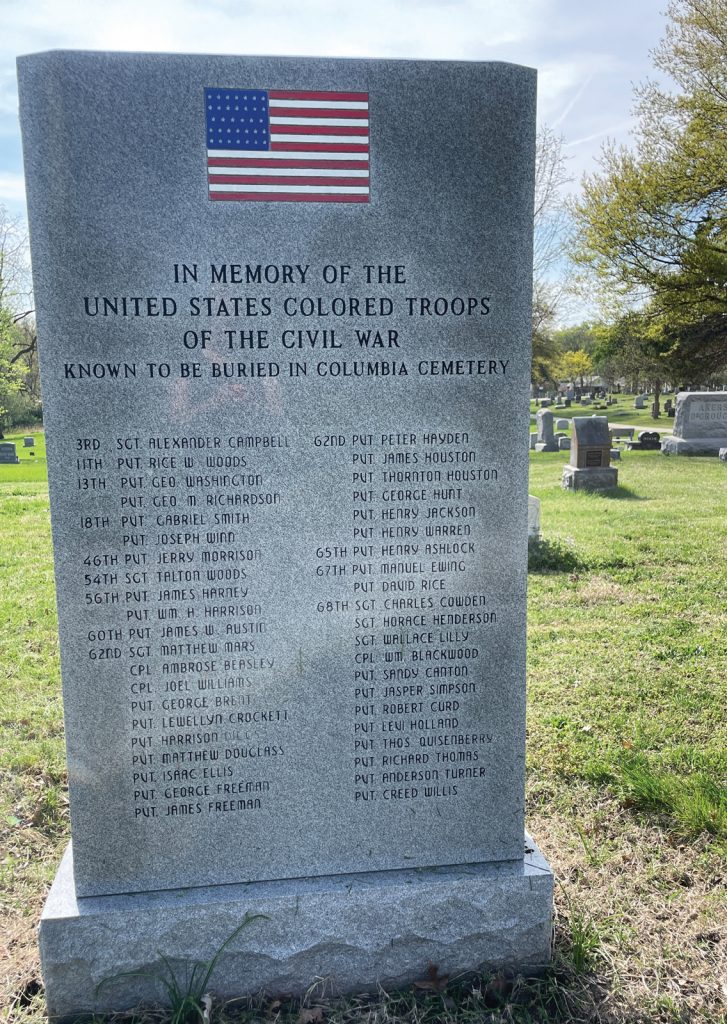
In 2024, McPartland and a team of his students used the information on the tombstones of the veterans of the United States Colored Troops in the Columbia Cemetery as a starting point to research the veterans. The results were presented in twenty-two in-depth biographies of the soldiers at a public event held in the cemetery in June 2024.
Columbia Cemetery “holds the distinction of being the resting place of a significant number of United States Colored Civil War Veterans,” according to the NRHP document. The cemetery has thirty-one such soldiers buried there, and of those, more than a dozen were from the 62nd and 65th regiments, which are credited with providing the funding that helped establish Lincoln Institute, now Lincoln University. The high number of such graves might be because in 1873, Columbia Cemetery opened up a separate area for African Americans, which may have made it attractive for the veterans who were facing the racism of the time.
But you don’t need special research tools to learn from cemeteries.
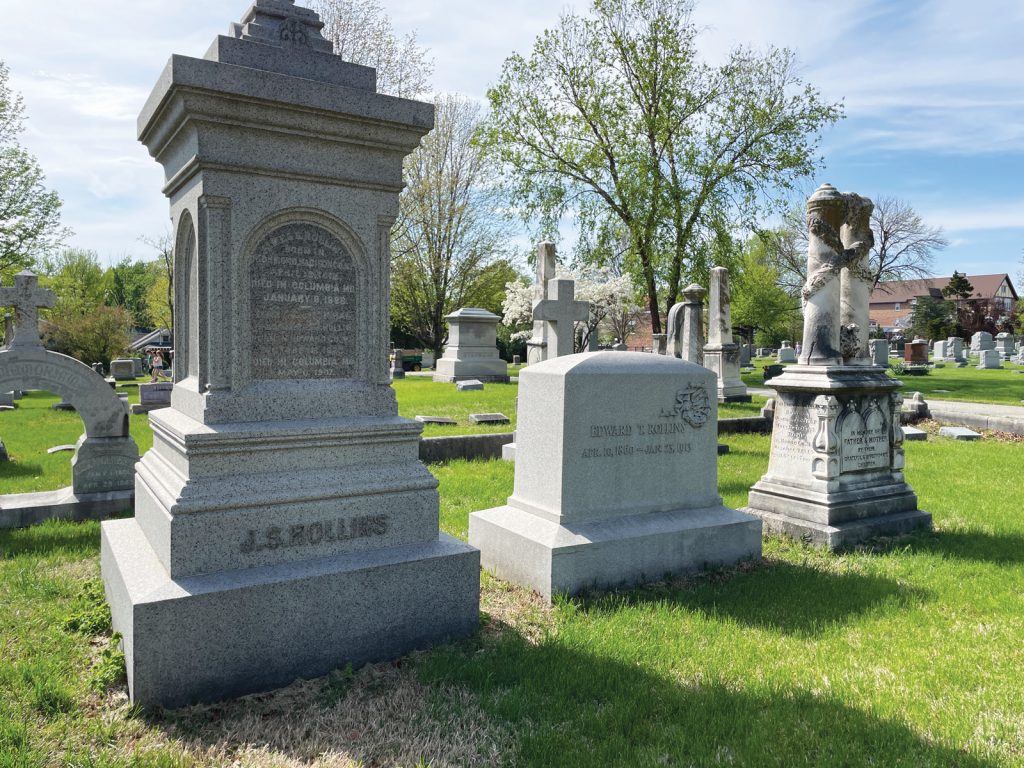
McPartland and others note that observers can learn from simply observing where and how the graves are located. For example, family plots speak of wealth. Columbia Cemetery is filled with huge monuments emblazoned with well-known names such as James S. Rollins, often referred to as the father of MU. In contrast, in the area once reserved for African-Americans, the plots are further apart and the markers are smaller, showing that in the nineteenth century, “wealth didn’t often make it into the Black community,” says McPartland.
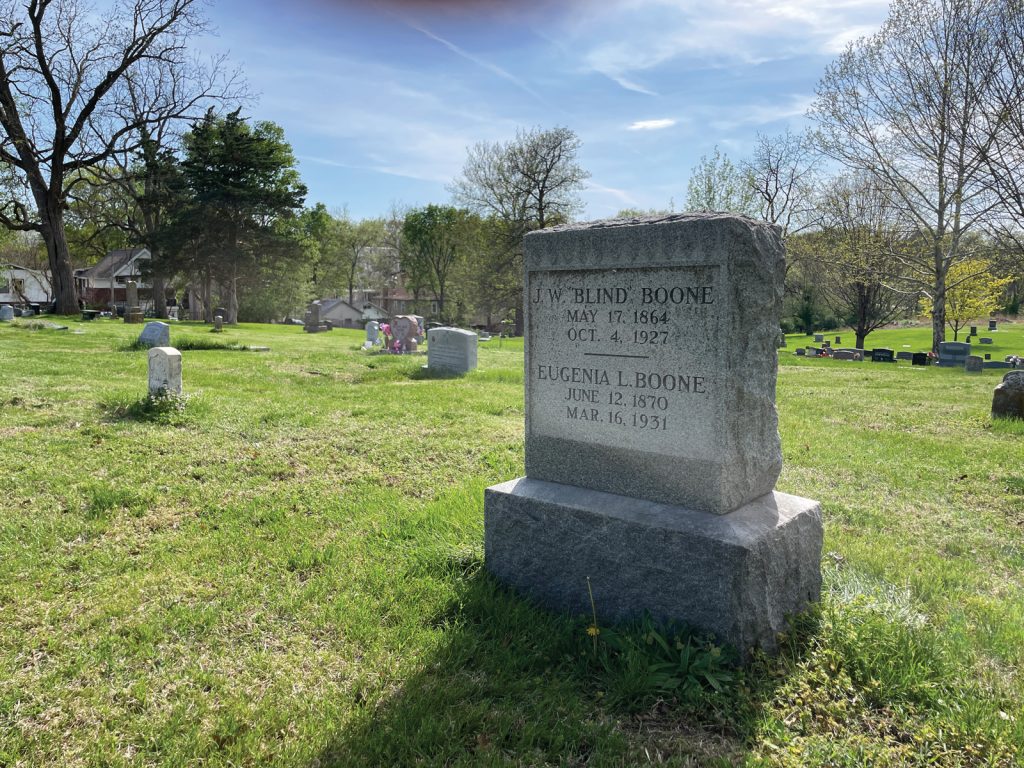
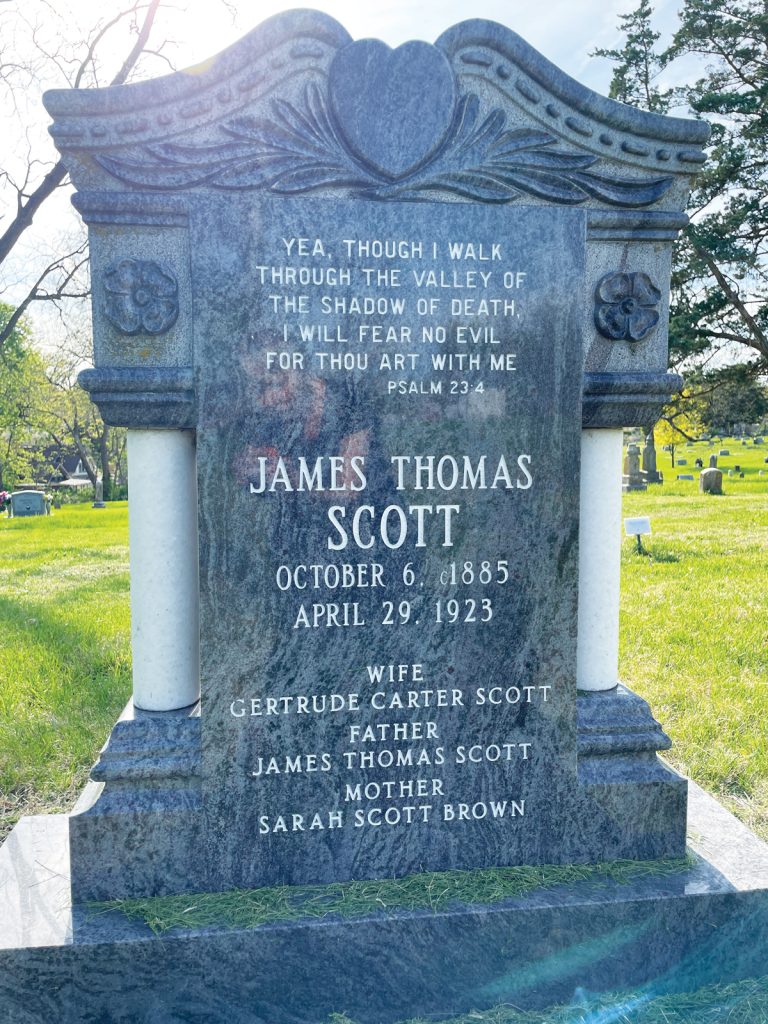
Some graves were unmarked due to a lack of wealth. Recent community efforts are changing that. The grave of J.W. “Blind” Boone, an internationally famed African-American musician who died in 1927, received a marker in 1971. In 2011, James T. Scott, the 1923 victim of the last public lynching, received a marker. In 2020, renowned horticulturalist Henry Kirklin, who died in 1938, received a marker.
Alspaugh Park
Sheltering two historic cemeteries
All cemeteries are sacred places, but not all of them have been treated with the respect they deserve. That’s something local nonprofit CoMo Preservation plans to change.
Two historic cemeteries, Hinkson Creek Baptist and Antioch Christian, are in the spotlight.
Both are in the John W. Alspaugh Park, Columbia’s newest park, donated in 2023 by Dr. Carol Ann Alspaugh, the wife of John W. Alspaugh, following his death in 2022. The 201-acre tract was the largest land donation ever given to Columbia Parks and Recreation. In 2024, the city’s Historic Preservation Commission named it to the Most Notable Property list, noting the importance of the two cemeteries that contain the remains of early settlers as well as those of enslaved people.
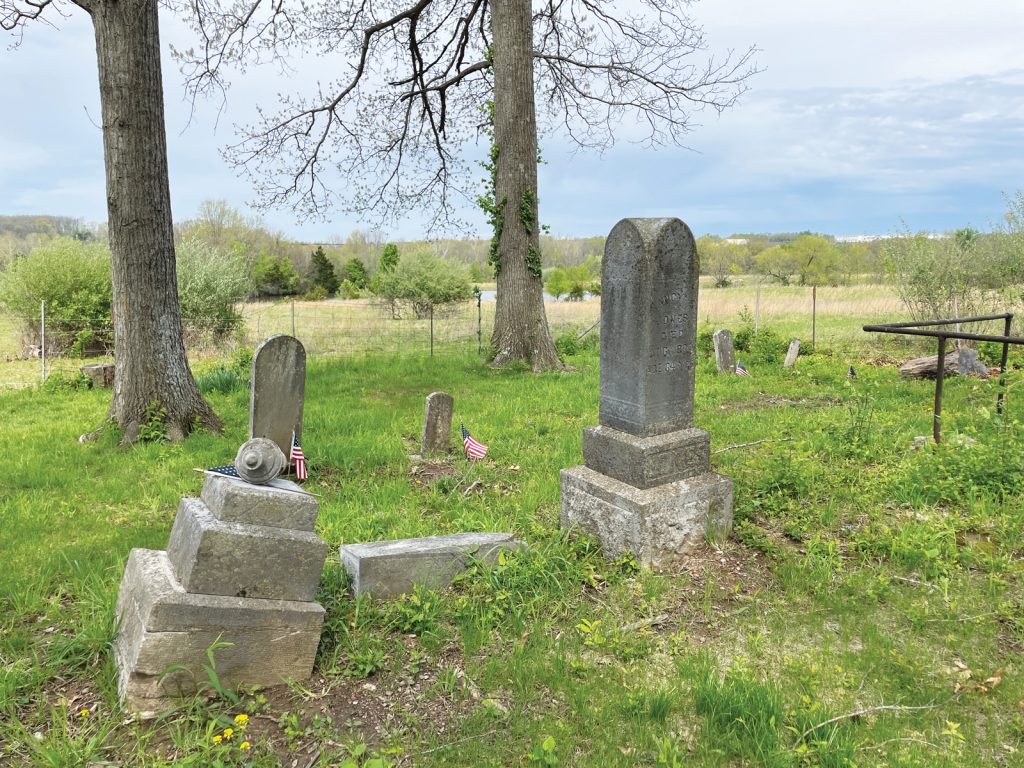
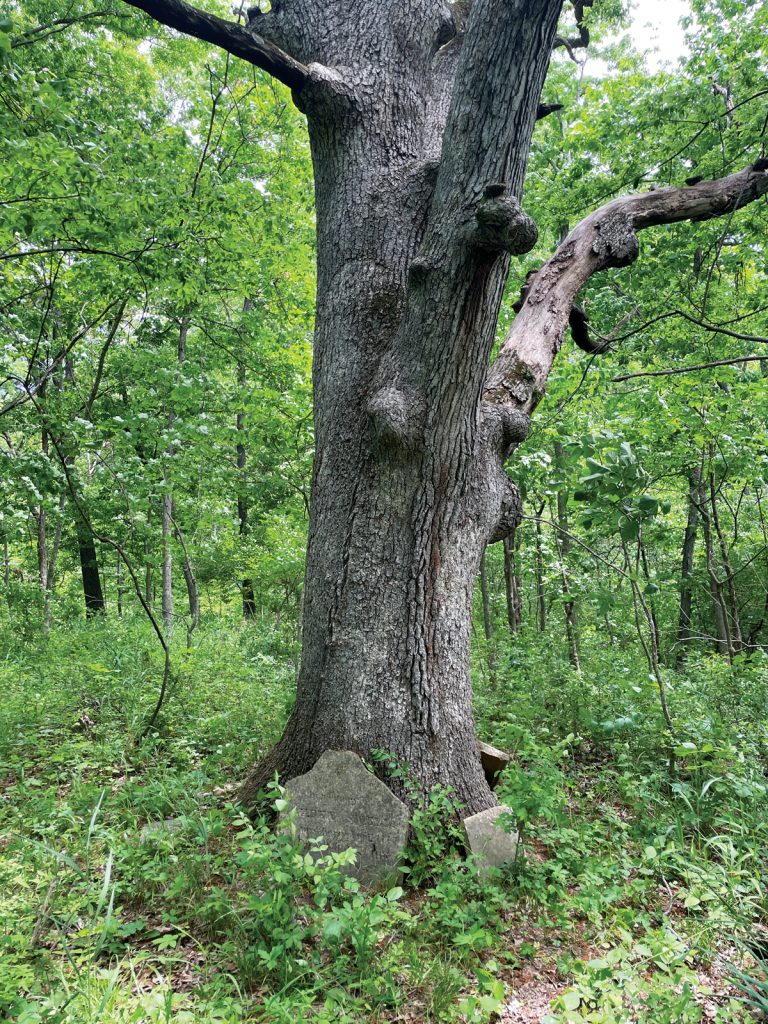
Established in 1836, the Hinkson Creek Baptist Cemetery once served as a church cemetery, but the church itself no longer exists. Over time, before the Alspaugh’s ownership, the grave markers were moved from their original spots, pushed into a pile near an old oak tree and vandalized.
The park’s other cemetery has fared a bit better. The Antioch Christian Cemetery, also once a church graveyard, was established in 1852. But some of the stones have toppled, and time is erasing their inscriptions.
Both cemeteries need improved protection and preservation, says Elena Vega, president of CoMo Preservation. Dedicated to preserving Columbia’s historic buildings and places, CoMo Preservation plans to collaborate with the city and local organizations to give the cemeteries the respect they deserve.
CoMo Preservation plans to offer tours of the cemeteries this fall and winter. In 2026, the nonprofit will bring a cemetery restoration expert to Columbia to discuss how to clean and restore the cemeteries’ markers.
Vega and Stephen Bybee, who is the chair of Columbia’s Historic Preservation Commission and the project director for the Missouri Conservation Corps, a nonprofit dedicated to clearing invasive plants from Columbia parks, met with Columbia Parks and Recreation officials in May to discuss how the city and area nonprofits could collaborate to preserve the cemeteries.
The first step, said Mike Snyder, Parks and Recreation development supervisor, is to document the history of the cemeteries. This, he said, is where CoMo Preservation and other groups can make a difference. The city’s agreement with the Alspaughs calls for the city to mow and maintain the area around the cemeteries, erect a cemetery marker, and create a nature trail to the cemeteries, but not to research the cemeteries, restore or preserve the grave markers.
The park is so new that, so far, the only work done on it has been a slight upgrade to parking and the installation of signs noting the park’s name. The donation agreement states the park must be maintained as a green space, rather than being developed into athletic fields or courts. This means park development can include walking trails, picnicking areas, playgrounds, and other passive recreational amenities. The city still needs to gather public input on any park development, and it could be as late as 2031 before the city has the funds to begin development of the park.
CoMo Preservation doesn’t plan to wait that long. Working with the Missouri Conservation Corps and the city’s Historic Preservation Commission, CoMo Preservation will be looking for funds to conduct historic research on the cemeteries and gather experts and volunteers to the preserve the cemeteries.
Calvary Cemetery
Providing a reminder of racial divisions
Today, Calvary Cemetery is part of Memorial Park Cemetery, but it began in 1929 as a place of burial for African-Americans during a time of rigid racial segregation.
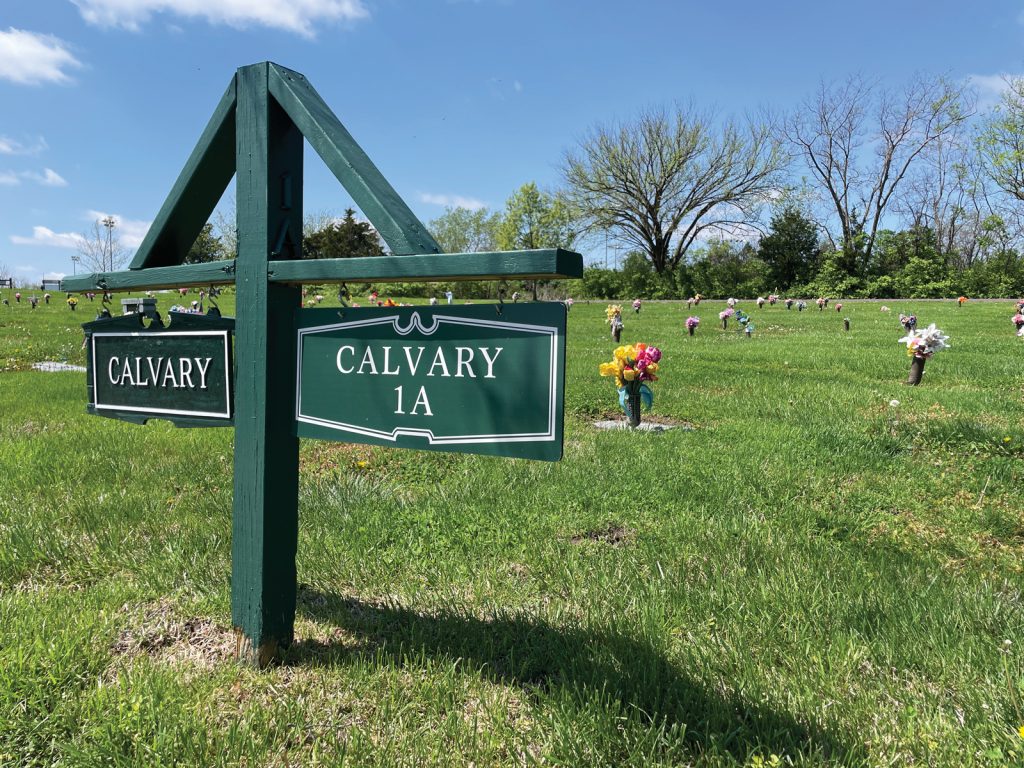
Bought out by Memorial Park Cemetery in the 1940s, historic Calvary Cemetery, located at 1217 W. Business Loop 70, serves as a reminder of the racism and cultural divisions of the past.
Established by Alex L. Hicks, an African-American farmer, Calvary opened five months after adjacent Memorial Park. Both cemeteries were established as “lawn parks,” a new style of cemetery that emphasizes open vistas and views with flush-to-the-ground markers, in contrast to Columbia Cemetery’s garden-like style. The creation of Calvary offered African Americans the option to be buried in this new style of cemetery.
Calvary was named to Columbia’s Historic Preservation Commission Most Notable Properties list in 2012. The MNP list is designed to highlight properties that are historically or culturally significant. Calvary is among six historic cemeteries on the list.
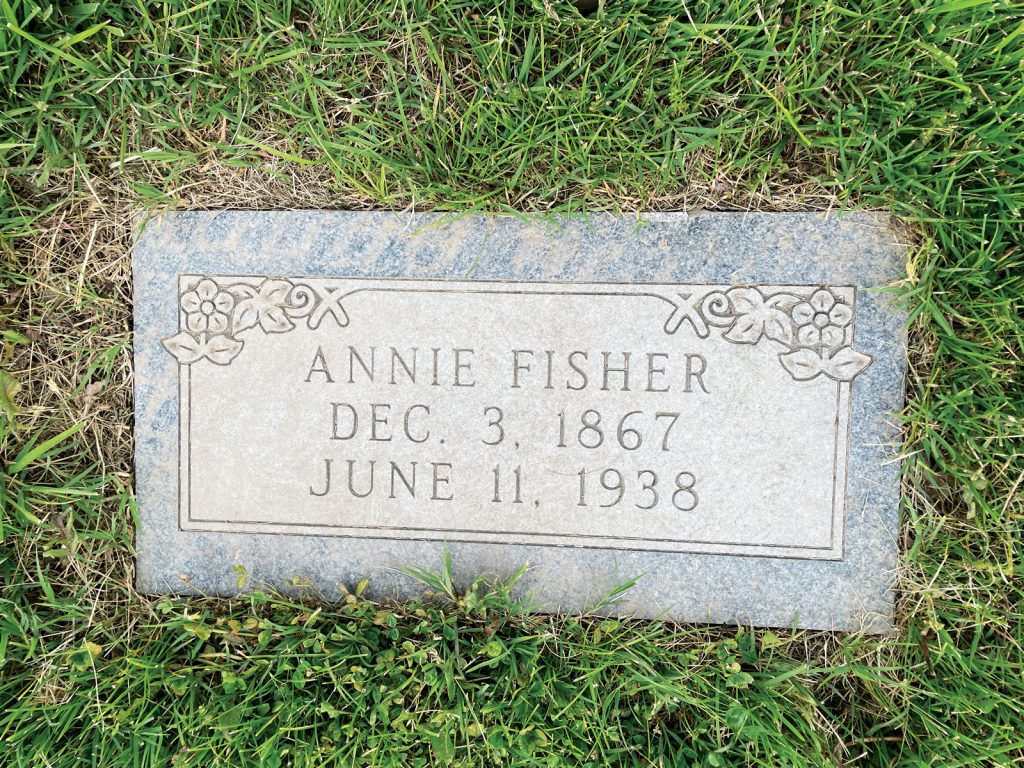
Calvary’s notable graves include “a large number of veterans, and noted black Columbia businesswoman Annie Fisher,” according to the MNP documents. Fisher, who died in 1938, “was one of the most successful businesswomen in Columbia in the early 20th century,” the document continues. “A skilled cook, she won first-place awards for beaten biscuits and country ham at the St. Louis World’s Fair in 1904.” Fisher ran a catering business, a restaurant, and owned a significant number of rental properties. Her grave is a rare link to Fisher, as both of her mansions have been demolished.
The cemetery is managed locally, said Kent Knudsen, general manager of Memorial Park Cemetery, but not locally owned. In 1995, it was sold to Stewart Enterprises, a multinational firm, and in 2014, it became part of SCI, Service Corp. International, which operates in more than 1,900 locations.
While some cultural separations have disappeared, some still evade the equalizing effect of death. Memorial Park Cemetery, like many cemeteries, offers gated estate burial areas, and one such fenced-off area is the resting place of James L. “Bud” Walton, who died in 1995.
Jewell Cemetery
A tiny, quiet spot of state history
Among Columbia’s six designated historic cemeteries, the Jewell Cemetery is unique. It’s the only one that is a family cemetery, a state park, and located within walking distance of a Waffle House.
Less than half an acre, this tiny family cemetery is a quiet oasis of state history, despite its location at 2800 S. Providence Rd.
“The cemetery was founded in the early 1800s as a private family cemetery on land owned by George Jewell,” according to city documents from its induction into the city’s Historic Preservation Commission’s Most Notable Properties list in 2010. Once an area of farms, Columbia has grown up around the once-rural family cemetery.
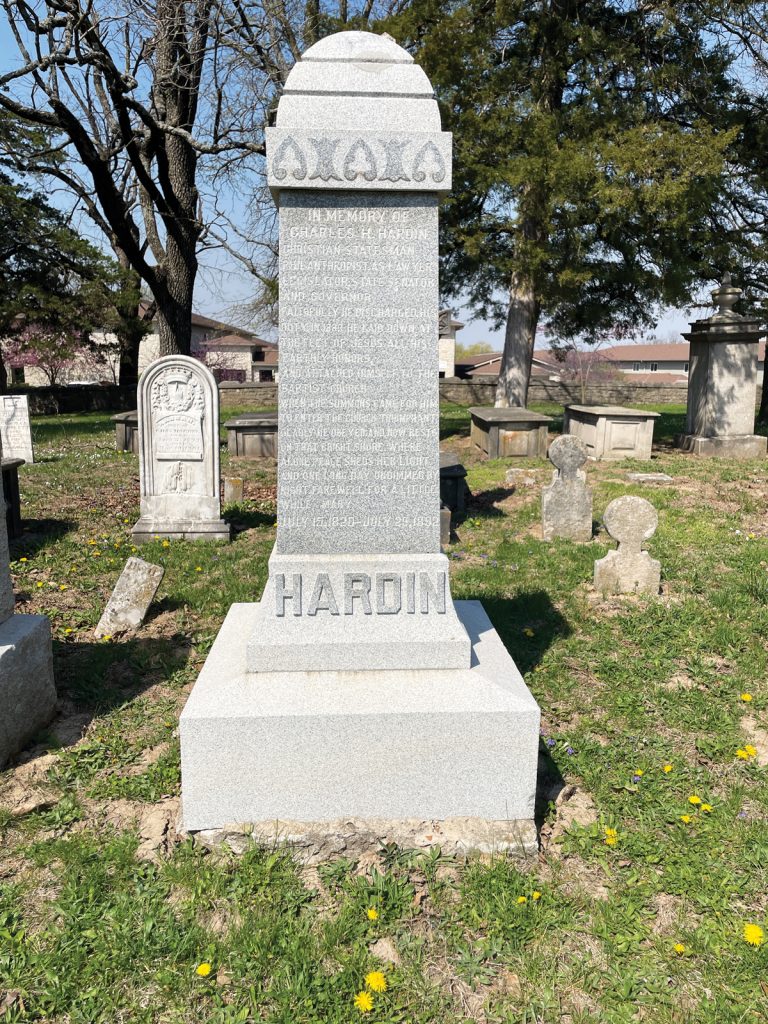
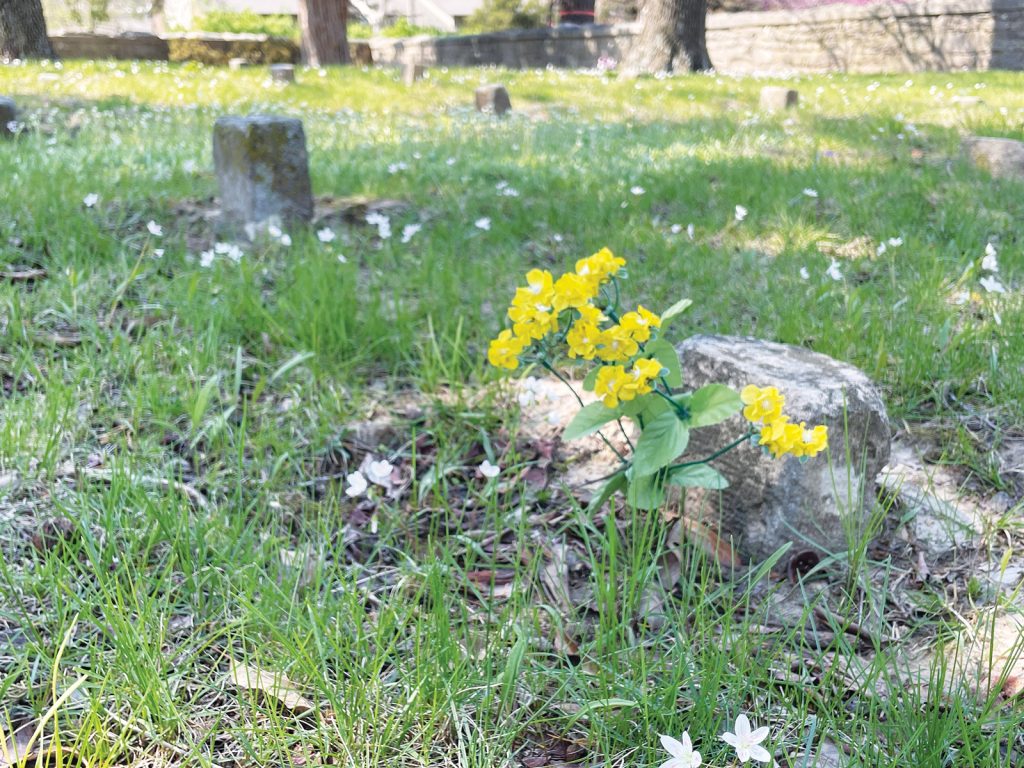
The cemetery is a state park because, according to Missouri law, any cemetery with a grave of a former governor may be marked and maintained by the state if it isn’t in a perpetual care cemetery. As a result, the eternal resting place for former Governor Charles Henry Hardin in this family cemetery is a state park. According to the Department of Natural Resources, the cemetery drew 3,470 visitors in 2023.
Hardin, 1820-1892, grew up in Columbia. After completing his studies in Indiana and Ohio, he returned to Columbia. Following his admission to the bar, he moved to Fulton. Hardin quickly moved into public life and served in the Missouri House and Senate. During the Civil War, he was accused of being a Southern sympathizer and was disenfranchised. After the war, in 1872, he returned to the state Senate and, by a narrow margin, was elected governor. He served from Jan. 1, 1875, to Feb. 8, 1877, and his accomplishments included reducing the state’s debts created by the Civil War “by eliminating wasteful practices, refusing to assume county war debts, and refinancing bonds,” according to the Missouri Office of Administration’s website.
The cemetery is also the resting place of William Jewell, who was involved in Columbia’s early development, serving as a mayor and helping to establish Columbia’s First Baptist Church, among other activities. He also helped found William Jewell College in Liberty, Missouri.
The cemetery contains more than forty descendants of George Jewell, with graves dating from 1822 to 1868, according to city documents. The cemetery also includes about twenty graves of enslaved people. Although some of those graves are marked with native limestone, none have inscribed tombstones, although a recent visit revealed flowers placed at many of them.
Fairview Cemetery
Offering life lessons
The historic Fairview Cemetery offers us two lessons, says Jo Turner, secretary of the Fairview Cemetery Association, which owns and operates Fairview Cemetery.
First, she says, “Visionary and generous people need to continue to step forward and plan for the future.” She’s a descendant of one of the cemetery founders and says the farmers who founded the cemetery in 1914 were poor, but they still decided to purchase the land for the graveyard. “It was important 100 years ago, and it’s important now,” says Turner.
The cemetery was founded when the tradition of burying family members on their own property began to wane, according to documents from the cemetery’s listing on the Columbia Historic Preservation Commission’s Most Notable Properties list in 2014.
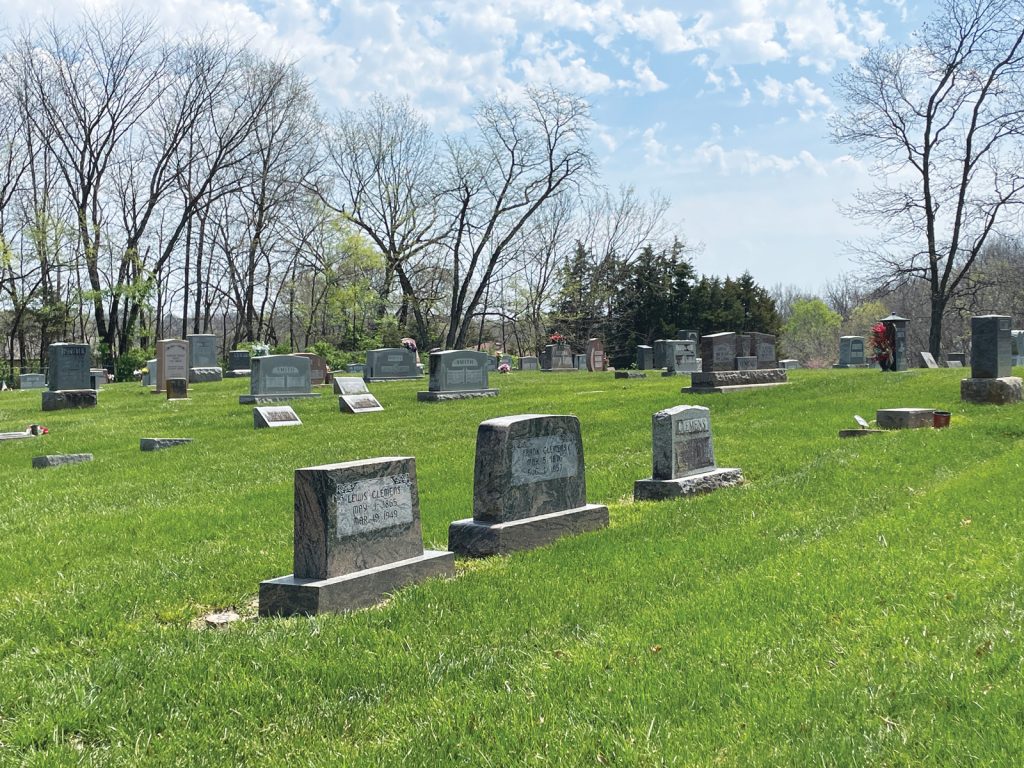
For more than fifty years, Robert Eugene Grant, a descendant of one of the founding members, served as the cemetery caretaker. He died in 2019, and now his widow, Ida Grant, 96, and her daughter, Phyllis Grant, have taken over as sextons. Turner, 72, worries about the future. “As we all get older, I’m not sure who will take this on.”
The other lesson, says Turner, comes from the many graves of infants and children as well as soldiers who died during World War II.
“Life can be very fleeting and short. We need to pay attention and love and care for each other,” says Turner. City documents note that the first grave in the cemetery in February 1915 was for infant Charles Kenneth Payne. Another of the graves marks the remains of one of Turner’s cousins, who died in Europe and whose remains were brought back for burial in the Fairview Cemetery.
The cemetery is adjacent to the 1942 building, which once housed Fairview United Methodist Church, now the Countryside Nursery School. That building was also named to the Most Notable Properties list in 2014. Access to the cemetery is via a horseshoe-shaped drive, entered from Fairview Road that exits onto Chapel Hill Road. Visitors may park on either Fairview or Chapel Hill.