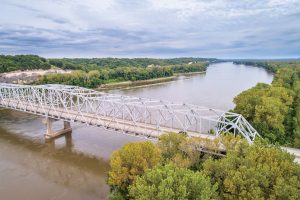

Rocheport, a small, historic village with a population of around 200, is located along Missouri’s Katy Trail, a rail-to-trail extending from Machens in St. Charles County to Clinton in Henry County. Rocheport not only has historic 19th-century homes and buildings, but also the famous MKT Tunnel, a 243-foot-long tunnel located near the western edge of town. Visitors to Rocheport, including cyclists on the Katy Trail, can find numerous historical markers that identify buildings listed in the National Register of Historic Places as they stop to dine or enjoy the local scenery. Rocheport is the perfect stop for cyclists or destination for visitors.
What many may not know is that Rocheport was once home to one of Boone County’s largest African American enclaves. Though this community gradually disappeared by the end of the 20th century, those interested in Missouri’s Black history can still visit one of the locations connected to Rocheport’s African American population.
While many of the town’s historic Black structures, such as the “African School” and the homes of many African Americans, are long gone, one former pillar of Rocheport’s Black community continues to stand: Mount Nebo Baptist Church. This structure, though no longer a church, is a testament to the faith and perseverance of Rocheport’s African Americans and their efforts to create community amid Missouri’s Jim Crow culture following the end of Reconstruction.
Prior to the Civil War, a total of 138 African Americans called Rocheport home, though 130 of these individuals were held in slavery. In the five years after the war, the Black population of Rocheport increased to 261. By 1876, Rocheport’s population had grown to 615 white residents and 356 Black residents, making the African American population more than one-third of the town. Though the town’s Black residents made up only 3 percent of the Black population of Boone County, the ratio of African Americans to Euro-Americans in Rocheport was higher than the county average of 26 percent.
Though racial conflicts occurred in the town during the 19th and early 20th centuries, including a race riot in 1882, one of Rocheport’s lifelong African American residents, Siotha Jackman, recalled in the 1970s that when she was growing up in the 1920s and ’30s, “I don’t remember prejudice. … Of course we had our disagreements … but we always made up before sunset.”
Mount Nebo Baptist Church was organized in the fall of 1866. Worship services were first held in a building called the “Blue House,” likely located on the southeast corner of Ward and Main streets, before the construction of the Mount Nebo Baptist Church building. Built in 1910 on the corner of Ward and First (now First Bethel Road) streets, the building was close to the railroad tracks (now the Katy Trail) and many of the homes of Rocheport’s Black residents, who poured funds and effort into building the church. This new edifice, according to historian Alberta Shipley, featured stained glass windows, electricity, carpeting, and an organ, all symbols of progress and a hopeful future.
Not only was the church modern and beautiful, an apt testament to its parishioners’ faith, but it was a gathering place for the local African American community and, according to Jackman, occasionally for the town’s white residents as well. Jackman recalled in 1992 that events at the Mount Nebo Baptist Church brought together crowds from around the area. One of these events was “Choir Days,” when local Black churches gathered for singing and worship. The building was filled with joy and community, a sanctuary and gathering place combined into one. Mount Nebo Baptist also held Saturday night dances. As Jackman noted in 1976, “The church put on a lot of social events, plays, and pie walks.” It was a place of faith and bridge building, a sacred space of community.
However, as the 20th century progressed and more of Rocheport’s African American residents passed away or moved, the church congregation shrank. By 1974, the once vibrant church was left with only three members. These congregants officially closed the church in 1974, and with it, closed the doors on decades of memories.
For many years, the building lay vacant and eventually fell into disrepair. Bill Foreman of the Columbia Daily Tribune wrote in 1993 that “windows were missing, floors had collapsed, and its sagging foundation caused the building to precariously list to the north side.” Barbara Noe of the Columbia Missourian added that, at one point, “the city of Rocheport demanded the historical structure be destroyed.”
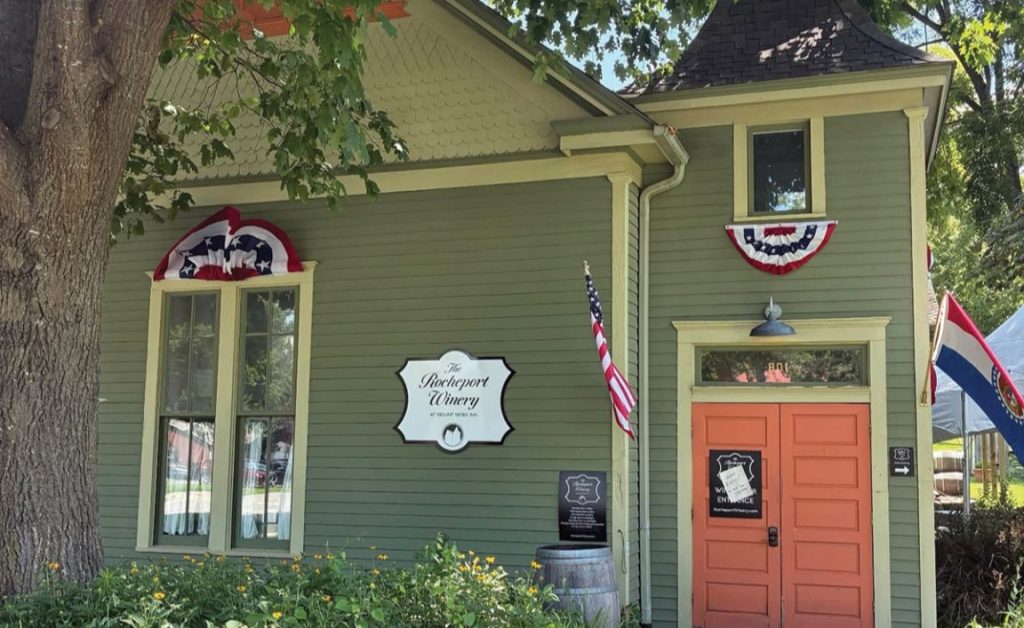
Thankfully, a local radio executive and entrepreneur, John Ott, bought the building, restored the decaying structure, and transformed it into the Nebo Gallery and Deli. After more extensive renovations in the 2000s, and with the addition of more rooms, the building became what it is today: the Mount Nebo Inn and The Rocheport Winery at Mount Nebo Inn. Though the building is no longer the religious sanctuary it once was, visitors can still appreciate one of Boone County’s remaining Black Missourian heritage sites, which connects the present to the past and to the story of Rocheport.
Robert is a PhD student at the University of Missouri and wrote this essay as part of his studies.