

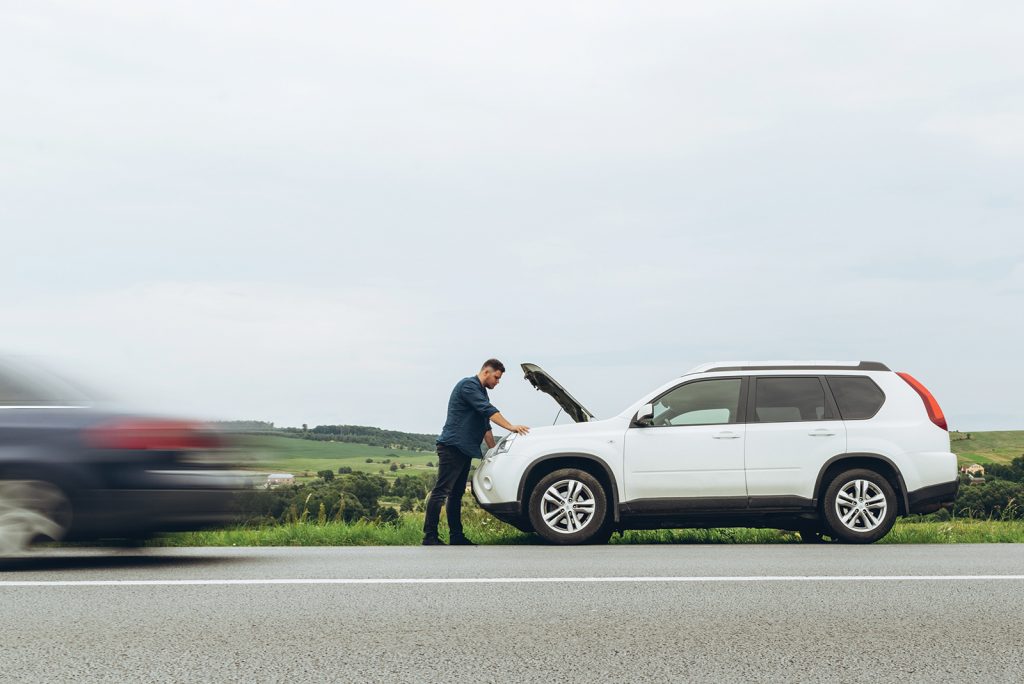
Every road trip has elements we love to talk about … and many we don’t talk about.
We’ll talk about the hole-in-the-wall diner where had that homemade slice of pie and the waitress called us darlin’. We love telling the story about the exit we missed and the two hours in the wrong direction that led us to discover some random lookout we didn’t know existed. But we won’t talk about the guy we saw walking on the shoulder somewhere just outside a big city. We won’t talk about the car with the trunk popped, hazards on, that we registered for half a second and passed.
We are good at curating our road trips.
I think most of us live this way — not just on the highway. We’re great at the detours that make a story. The unexpected friendship. The exit nobody planned. The afternoon that turned into something. We are considerably worse at the detours that cost us something we don’t want to give. The phone call we keep meaning to make. The relationship that’s hard to repair and easier to let drift. The neighbor whose life makes us uncomfortable enough that we keep things polite and distant.
We are champions of the convenient detours and often resistant to the costly ones.
There’s a story about a first-century rabbi who, after a long day, tells his friends to get in a boat and cross a lake at night (more unlikely, dangerous, and difficult in the first century than you might think). The opposite shore, where they’re instructed to go, is the wrong side of the tracks, so to speak. It’s filled with those who don’t think like them, act like them, believe like them. It is enemy territory, culturally. They don’t want to go. They go anyway.
When the boat lands on shore, like a plot twist in an action thriller, a man suddenly appears from within a cemetery. He lives among the graves. He’s hurting himself. He’s broken every chain people have tried to bind him with. By every category — religion, geography, sanity — he is unreachable, he is untouchable. Definitely not worth pulling over for.
This was an unexpected, unwanted detour for Jesus’ students, but it was the very reason Jesus told them to cross the lake in the first place. He never told them why, but the why now came into focus. This man needed help. He needed someone to step into the mess of his life, someone who wouldn’t just drive on by, someone willing to take a chance in order to make a change.
This is just one of many stories in the life of Jesus that cause us to pause and consider who might be on the other side of the shore from us and what we would be willing to do to help.
We all have someone, probably more than just one someone, we quietly drive past. Someone too volatile, too messy, too difficult to deal with. We tell ourselves it’s about boundaries, their bad choices, or the risk being too much for us. Those arguments are honest and important — and sometimes they’re right. But sometimes they’re not.
Beyond crossing a lake or providing roadside assistance, there is a more meaningful kind of “pulling over” — for the friend you haven’t called, the family member you’ve kept at arm’s length, the neighbor whose life looks nothing like yours. It’s the willingness within us to take a kind of detour that costs us something we weren’t planning to give. The willingness to take a chance in order to make a change.
I’ve driven past plenty of people and chalked it up to busyness, boundaries, or safety. Sometimes it was. If I am honest, most times it wasn’t. Maybe the only way to know for sure is to pull over and find out.