
As Bruce Springsteen once sang, “Everything dies, baby, that’s a fact. But maybe everything that dies someday comes back.”
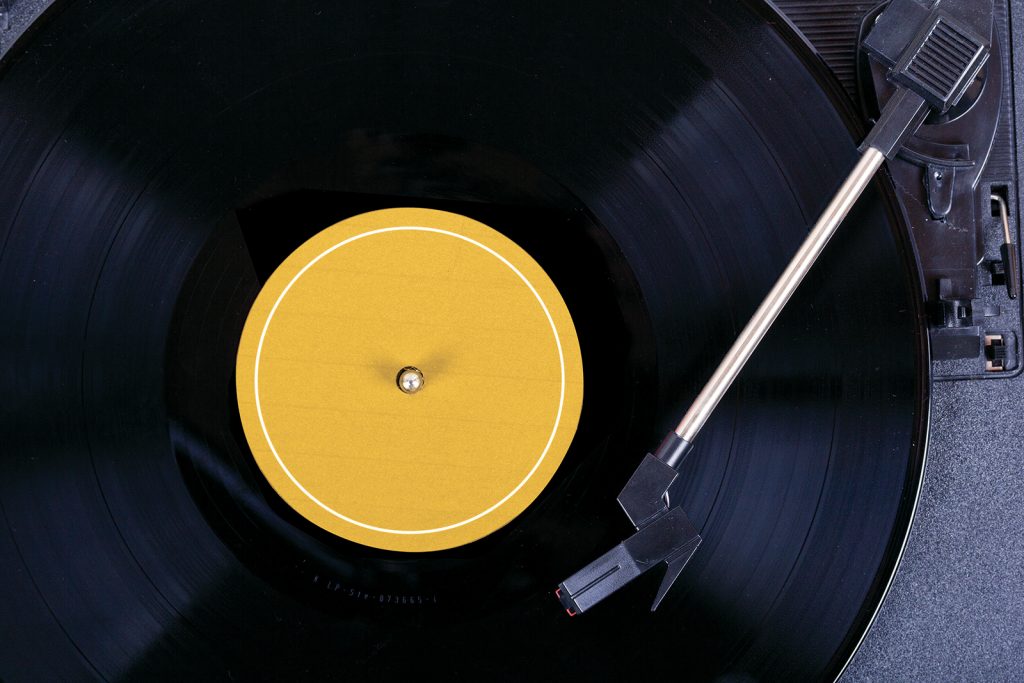
And if you haven’t heard, vinyl records are back. In a big way.
According to figures released in March 2026 by the Recording Industry Association of America, vinyl sales grew for the 19th straight year. Americans bought $1.04 billion of new vinyl in 2025, making it the first year in the 21st century where consumers spent more than a billion on new records. The Life of a Showgirl, the latest LP by pop megastar Taylor Swift, sold 1.6 million copies alone. Throw in another estimated half billion in used record sales, and you’re looking at quite an impressive comeback for a medium once thought obsolete.
If you haven’t bought a record in years, this might seem a tad confusing. When a Spotify subscription costs $12.99 a month, why would people in their right minds spend so much money on records? Columbia’s record store owners have some answers.
The Whys Behind the Vinyl Wave
As with any major consumer shift, there are short-run and long-run factors at play. For Taylor Bacon, co-owner of Hitt Records (10 Hitt Street), part of vinyl’s comeback has to do with pandemic-era hobby spending. In 2020, just as the world was entering social isolation and people were looking for things to do around the house, major retailers started carrying affordable turntables again.
“Once the big box stores put really cheap suitcase turntables in, that’s when we noticed everything skyrocketing,” Bacon said. “Everybody was locked up, people were getting suitcase turntables, and boom.” Some people obsessed over their sourdough starters; others went to Target, bought a Crosley turntable, and started collecting records.
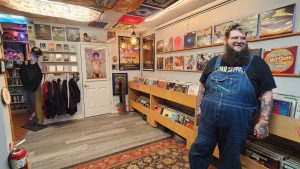
But major retailers didn’t invent the vinyl renaissance — they were just capitalizing on a trend that had been brewing for some time. Readers may recall that Columbia even had a record store called Vinyl Renaissance back in the mid-2010s. Jesse Slade, the owner of King Theodore Records (1103 E. Walnut St.), a cozy two-room shop packed with vinyl, VHS tapes, and music memorabilia, concurs.
“I used to buy Fleetwood Mac[’s 1977 album] Rumours for 50 cents all day back in the early 2000s,” Slade noted. “Now you’re lucky to get a copy of that used … under 20 bucks is a steal. That’s inflation, but also interest inflating as well.” Bacon, who’s been slinging wax at Hitt Records since 2013 agrees, adding, “That’s been going for a long, long time … for at least 20 years.”
What’s driving this sustained wave of interest in vinyl? As with any conversation about art, subjective arguments will enter in. One is sound quality. Many proponents of physical media, including Bacon and Chris Taylor of B Side Records (601 N. College Ave.), are convinced that vinyl sounds better. Another argument is that the physicality of vinyl makes you a more attentive listener than skipping through playlists or listening on shuffle does.
As Slade puts it, “Records … are an art form that are made to be enjoyed as a cohesive piece. So when you buy a piece of physical media like a record, it’s harder to skip a song on. You gotta sit there and listen to the whole thing.” And patience, as they say, is a virtue.
Whether you buy the claim that vinyl is a superior listening experience, another reason that more and more people are returning to the old ways is that music buffs have come to see the record store as a refreshingly IRL way to discover music outside of social media. Many music lovers are skeptical of the role that social media now plays in influencing what music they hear, a skepticism that seemed amply justified when cofounders of a digital marketing firm revealed that NYC indie band Geese owed much of its overnight stardom to ginned-up fan accounts their company had created. Just as the 1950s practice of “payola” (i.e., record labels bribing DJs to play their records on the radio) led to public indignation, listeners these days are liable to call an artist an “industry plant” or “psyop” if they think someone has juked the algorithm to make that artist a star.
As music critic Grace Robins-Somerville argues in the AV Club: “People want to think they have good taste, and they want to think their taste is above the influence of algorithmic advertising. If someone compliments your shirt, it feels so much cooler to be able to say you found it in some mom-and-pop thrift store in the middle of nowhere than to admit that you got it off some influencer’s TikTok shop.”
For music fans who are suspicious of algorithmic influence, then, what better way to build your own taste than to hit the bins and pick out something that you’ve never heard before? Besides, as Bacon points out, the majority of recorded music is not actually available on streaming services.
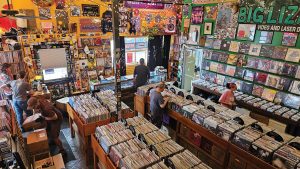
“There’s still oceans [of music] to be discovered,” he said. “There’s just a lot to explore beyond what the algorithm gives you.” If you’ve ever dug through KOPN’s old collection of jazz-funk records in the backroom of B Side or combed through 1960s-vintage psychedelic 7-inch singles at King Theodore, you might see what he means.
Growing mistrust of streaming services is also making fans seek out their own copies of their favorite music. Artists have long complained about low payouts from streaming, and news last year that Spotify’s CEO invested nearly $700 million in an AI battletech company led a group of indie artists to remove their catalogs from the platform in protest. Whether from economic self-interest or political conviction, musicians can decamp from streaming platforms at a moment’s notice, taking their devotees’ most beloved songs with them.
As King Theodore’s Slade points out, “You don’t own anything unless you own it. It’s like renting a house — your landlord can sell the house and kick you out at any point. … It’s the same with Spotify. You’re leasing your art, which is convenient and fun, but at the end of the day if they decide to pull the rug out from underneath you, they have it [and] you don’t.”
Discs You Can Own, Places You Can Hang
To encourage this ownership impulse, record stores have a few marketing tricks up their sleeves, the most prominent of which is Record Store Day. Since its creation in 2008, RSD has grown from a largely grassroots celebration of independent record stores to a massive industry event where patrons (in some places) will camp in line to get their hands on special releases that record labels put out for the occasion.
In fact, the annual happening has become such a to-do that some smaller stores are opting out of participating in the official event. Of the three record stores in Columbia, only Hitt carried RSD exclusives. That said, most stores still celebrate RSD in their own way — holding sales, as King Theodore did, or offering live music and food à la Hitt.
Which is perhaps the real reason that record stores abide. They’re not just a place to buy vinyl and CDs — they’re community spaces for music lovers. In Columbia, B Side has an open mic night on Tuesday evenings, while King Theodore screens films and runs an annual micro-budget film festival called Reel Fest. Visitors flit in and out of Hitt to shoot the breeze before having a beer at Uprise or seeing a film at Ragtag Cinema next door. If you’re looking for good conversation and good tunes, why not pay your local record stores a visit?