
Long before the basements beneath Walnut Street picked up the nickname “the Catacombs,” the block was running on groceries. The neighborhood grew up around the old Wabash depot, which made it an ideal place to move food from trains into stores. Poole & Creber’s warehouse complex — part residence, part storage, part worksite — was positioned to unload groceries straight off the trains and keep the region fed.
The Block the Crebers Built
The day after Christmas 1924, John Creber ran an ad in the Columbia Daily Tribune:
“FOR QUICK SALE … $7250.00 … MY HOME AT 1607 HINKSON AVE … Seven-room brick bungalow, two years old — furnace, bath, electricity, gas, fireplace, concrete basement, radio, fine garden spot, location and neighborhood excellent. I am moving closer in. Give possession in six weeks.”
In 1923, Creber and his wife, Mabel, had moved to Columbia. Both were originally from Streator, Illinois, where Creber was raised in the family business — his father’s grocery store. Along with his partner, L.T. Poole, Creber opened a store at 9 N. Eighth St., Poole & Creber Pay & Carry. (Although Poole and Creber later parted ways, Poole’s name remained on the business.)
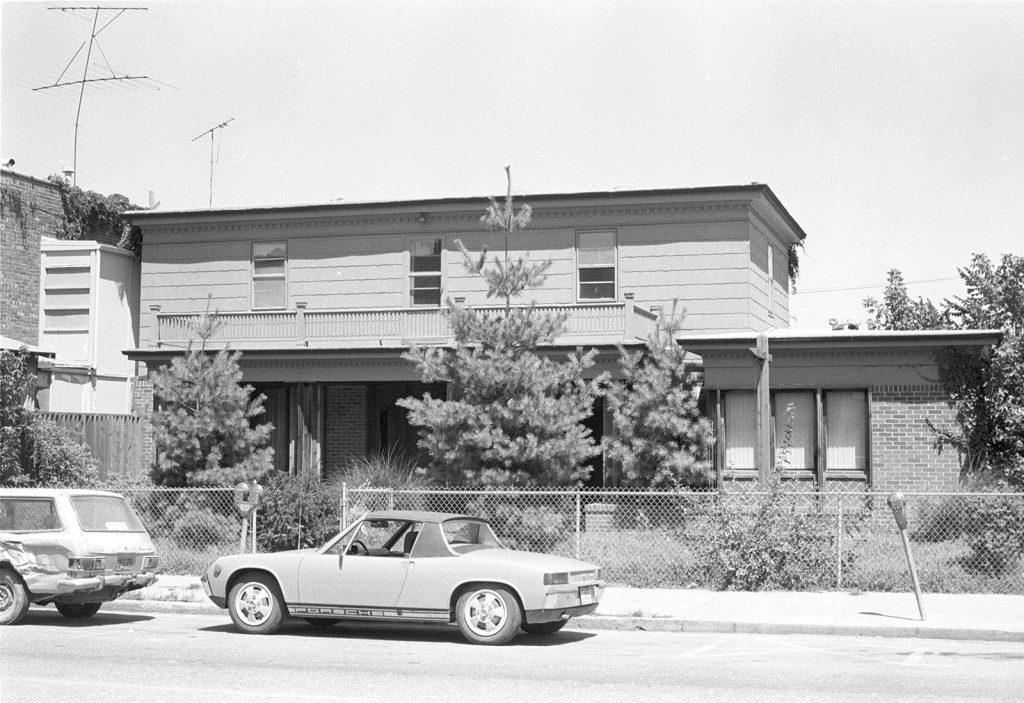
After getting their bearings, the Crebers moved from their Benton-Stephens bungalow to a large Victorian house near the corner of 10th and Walnut that backed onto the Wabash Station. They couldn’t have known when they bought the house how much the family would come to shape this block. By mid-century, it had transformed into a layered logistics hub, leaving behind the irregular rooms, ceiling heights, and passages that would eventually come to be known as the Catacombs
But Walnut Street didn’t just provide the Crebers’ livelihood — it was also a lively social hub for the family, who lived on the block in one place or another for decades. The Crebers entertained frequently at their home, and over the years, their lives unfolded across the warehouse complex itself. Both daughters were married there — Laura at 1021 Walnut in 1929, and Jimmy Rose at 1013 Walnut in 1949. Their son-in-law, Ernest Lewis, opened Ernie’s Steakhouse at 1005 Walnut in 1946, in a brick building John constructed for him; he purchased the building from Creber the following year.
By 1950, their son Dick and his wife, Elizabeth, had moved into the house at 1021 Walnut, where Elizabeth opened a hair salon. The elder Crebers relocated to 1013 Walnut. A decade later, after a newspaper article announced that Dick had moved to Puerto Rico, John and Mabel were back at 1021 Walnut. John died there in 1964.
In short, the entire arc of the Crebers’ lives unfolded on this block.
A Marvel of Modern Logistics
John Creber understood the value of newspaper ads.
“Students & Columbians!” a 1934 Tribune ad read. “We invite you to 1011 Walnut St., and visit what we think is the cleanest and most unique warehouse in the state! That’s Saying a Lot But Come and See for Yourself.”
The complex he built certainly had its charms.
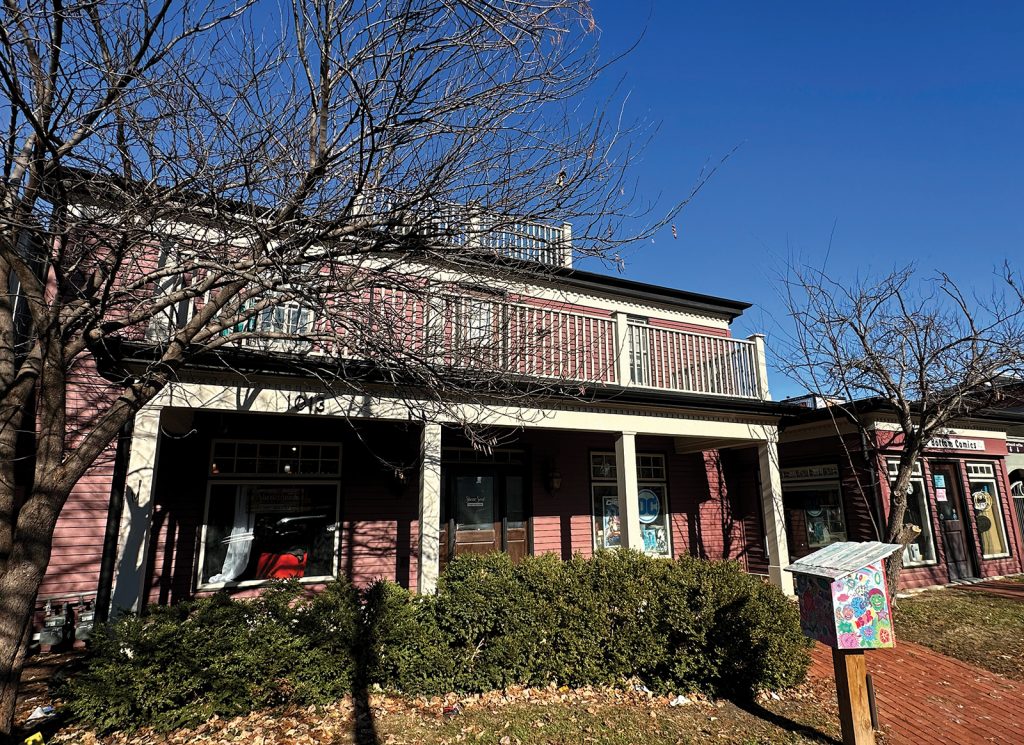
What people now call the Catacombs began as a practical grocery operation shaped by the railroad. The complex, centered on today’s 1013, 1019, and 1023 Walnut Street, grew around the big Victorian house and the small wholesale house Creber built behind it in 1926. Just off the Wabash Station, the site was designed with two faces: On the north, it opened directly onto the railyard, where a spur delivered goods directly to the back; on the south, it presented offices and living space to Walnut Street.
Over the next two decades, Creber expanded the complex as need dictated. First, he expanded the original wholesale house in the early 1930s, adding a bakery. The largest renovation came in 1939, when workmen expanded an existing warehouse that sat perpendicular to the street between the two houses to create offices and a cork-lined cold storage room with troughed floors for melting ice. Then they dug a tunnel between the two basements.
Later that year, they constructed a partial second floor to the south of the original wholesale house, adding a cash-and-carry display room on the street side and literally connecting the warehouse to the back of the old house near the building’s loading dock. The final leg of construction in 1950 added the long, narrow room at the eastern end of 1023 Walnut.
Over time, those additions tightened the block into a continuous working system rather than a collection of separate buildings — not a system of tunnels so much as a layered set of connected workspaces.
“Today, we kind of think the highways are the lifeblood, but the railroads are what made things work,” says architectural historian Debbie Sheals, who wrote the National Register nomination for the buildings at 1019 and 1023 Walnut. “Columbia was growing. … It also was a hub, so everything came in on the railroad and then [went] out on trucks to the surrounding community. It speaks to Columbia’s place as a trade center.”
For decades, rumors of tunnels beneath downtown Columbia have sent wide-eyed students searching — though the consensus now points to just one system: the miles of steam tunnels beneath the University of Missouri campus. Regardless, rumors of tunnels connecting downtown storefronts during some bygone era persist.
Do the Catacombs fuel the myth? Sheals doesn’t think they’re the source — though she says they may have contributed to the mystique. “I don’t know if I’ve ever been in a historic site where somebody’s not talking about a tunnel,” she says.
The Speakeasy Years
Much like the tunnels, the Catacombs speakeasy is a bit of a local legend.
Citing his health, Creber sold his regional chain of grocery stores in 1948, keeping only the warehouse on Walnut. In 1958, he sold that as well, announcing his retirement. Poole & Creber continued with new ownership and built a new warehouse on Paris Road in 1959. The commercial spaces on Walnut Street began operating independently, no longer tied to a single enterprise. After John’s death in 1964, Mabel Creber remained at the Walnut Street address for several more years. By 1970, she no longer appears there in the records.
The basement warehouses slipped into mixed industrial use, while the houses and offices above continued to cycle through tenants. This is how the complex found its next big adventure.
In the early 1990s, Jim Bradshaw rented space in the former Creber complex to house his moving company, Columbia Quick Moves. Eventually, he started letting one of his employees use part of the space as a rehearsal studio for his band. And in that moment, a speakeasy sprang to life.
Those practice sessions became regular hangouts. Every Wednesday and Sunday for around 10 years, there was a party at the Catacombs. Bradshaw says, by his count, more than 1,000 people came through the doors over the years.
He notes there was a house band as well as a steady rotation of performers of all sorts — and that acts from the Blue Note occasionally stopped by to play an impromptu set at the legendary party spot.
“There was just a whole scene down there — really cool people, musicians, poets, artists,” says Lisa Bartlett, the former Columbia College art student who would later open Artlandish Gallery upstairs at 1019 Walnut. “People had these businesses, but also it was kind of a party scene. It was business during the day and speakeasy at night.”
Bradshaw says the space mattered because it offered something Columbia largely lacked at the time: a place for musicians to gather and play together informally.
“The thing people responded to most was how comfortable they felt being themselves,” he says. “It kind of provided a venue that wouldn’t have been there for a lot of musicians.”
The Accidental Arts Co-op
In 2009, Artlandish Gallery opened at 1019 Walnut and reshaped sections of this underground network into a collaborative arts maze — a space that enabled scores of local artists to show and sell their work. After occupying multiple spaces in the neighborhood — first running an antique store in the Berry Building, then moving into a space at Orr Street Studios — Bartlett had a clear sense of how art might live in the district.
What she didn’t plan on was the entire arts co-op that came with it. But that’s how a dark, cork-covered produce cellar became one of the incubators for the district’s next identity. Concrete floors and low ceilings became part of the appeal rather than obstacles to work around.
“I did a pop-up downstairs called the Catacombs Art Market, and the artists came by the droves,” Bartlett says. “They were like, ‘Could you please just keep this permanent?’ It kept growing.
“I didn’t really think people would want to be down there, because it’s a little … you know, it’s a little …” She trails off and laughs. “But the artists loved it, and I loved that ambiance too.”
After the Art Market came First Fridays — an event that would come to define the North Village Arts District. What began as a one-off solution for overflow artists became a recurring event that reshaped how art could be encountered downtown, pulling visitors into basements, back rooms, and other unexpected spaces.

The Circle of Life
After appearing in the Columbia Daily Tribune as an abandoned property in 2004, the original 19th-century house at 1021 Walnut was ultimately demolished before redevelopment began on the block. Otherwise, the complex remains strangely intact. Its footprint is largely the same, but its use has shifted once again.
The Artlandish chapter ended when the gallery moved to Ninth Street late last year. But the Poole & Creber complex is still fundamentally a massive co-op space. Eleven businesses currently split the footprint, keeping rents relatively low in an increasingly desirable neighborhood.
The North Village has reinvented itself more than once. In the Catacombs, the bones of every era are still there: storage rooms that once fed the city, a speakeasy that held its secrets, a basement maze that helped launch dozens of artists. The uses return in familiar forms, echoing what came before — a bakery, a sewing studio, a jewelry store, a movement studio, an arts space.
These rooms have been carved up, added onto, and reimagined — and still they keep finding new work to do.
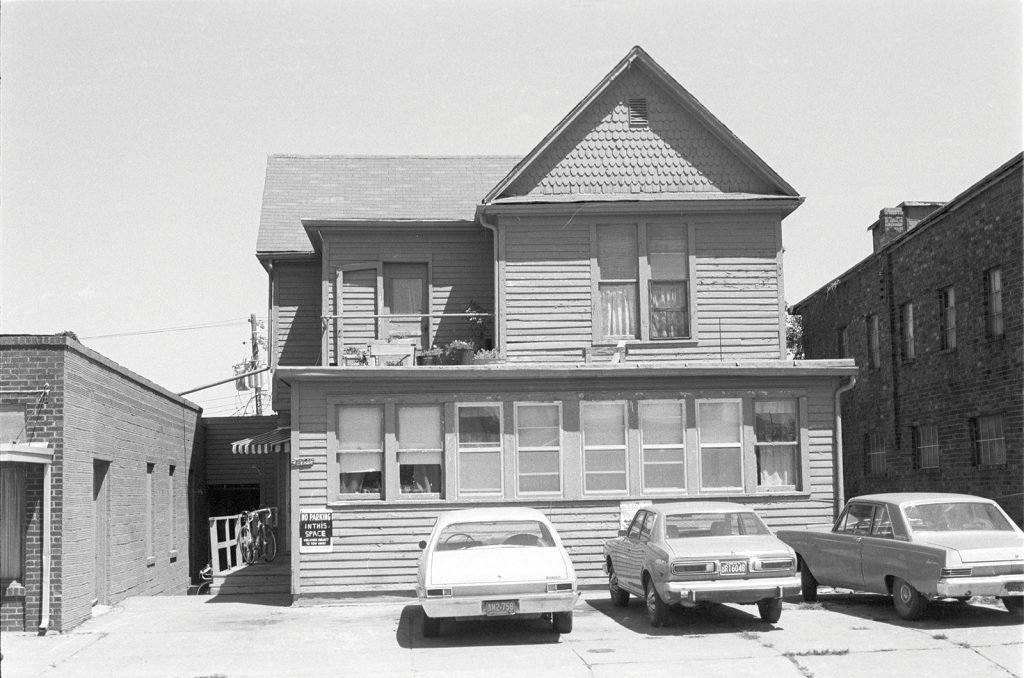
PQ: Top: The house that started it all: 1021 E. Walnut St. The house was declared abandoned in 2004 and later demolished. Credit: Courtesy of the State Historical Society of Missouri (SHSMO). Photo by Mary Matthews and B. Walters, 1978.
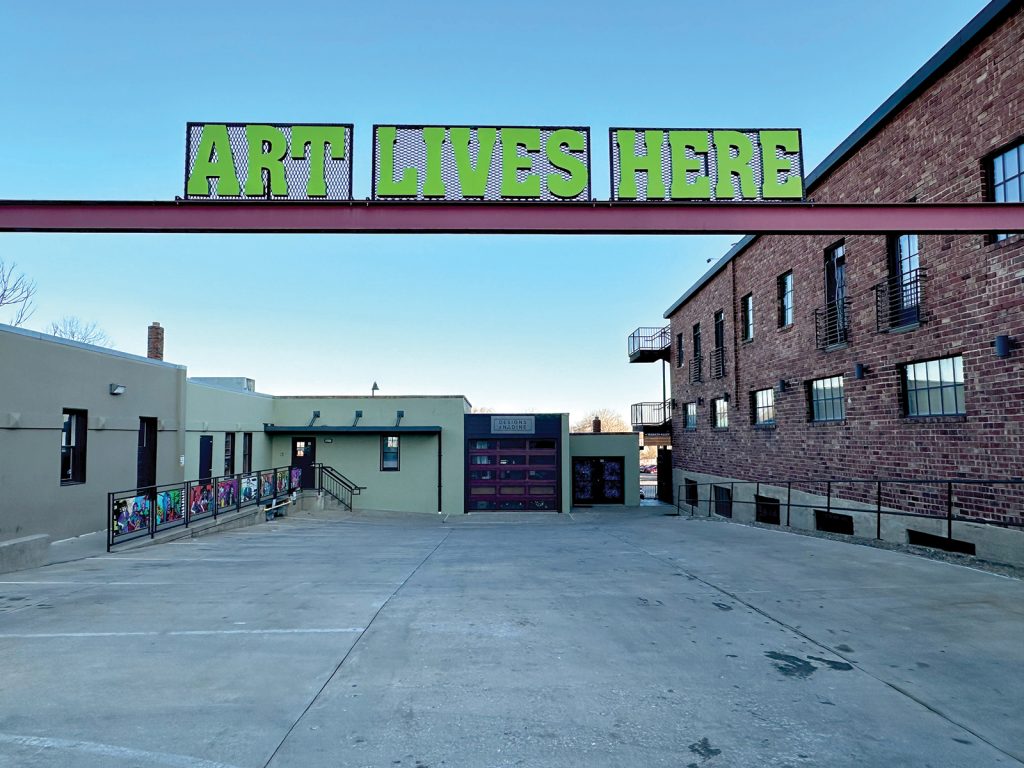
Bottom: Exterior view of 1023 E. Walnut St. The street-facing upper level was constructed during the 1939 expansion of the complex. The building was originally set behind a 19th-century house that faced Walnut Street, with the loading dock angled to allow access from behind the house. Credit: Tahlia Heaton, December 2025
PQ: top: View of 1013 E. Walnut St. in 1978. This shows the building before the space that now houses Rock Bottom Comics was expanded, adding footage and front display windows. Credit: Courtesy of the State Historical Society of Missouri (SHSMO). Photo by Mary Matthews and B. Walters, 1978.
bottom: 1013 E. Walnut St., purchased by the Creber family in 1939 and incorporated into the growing Poole & Creber operation. The porch was added around 1907. The house was built before 1869. The Crebers’ daughter Jimmy Rose was married in the house in 1949. Credit: Tahlia Heaton, December 2025
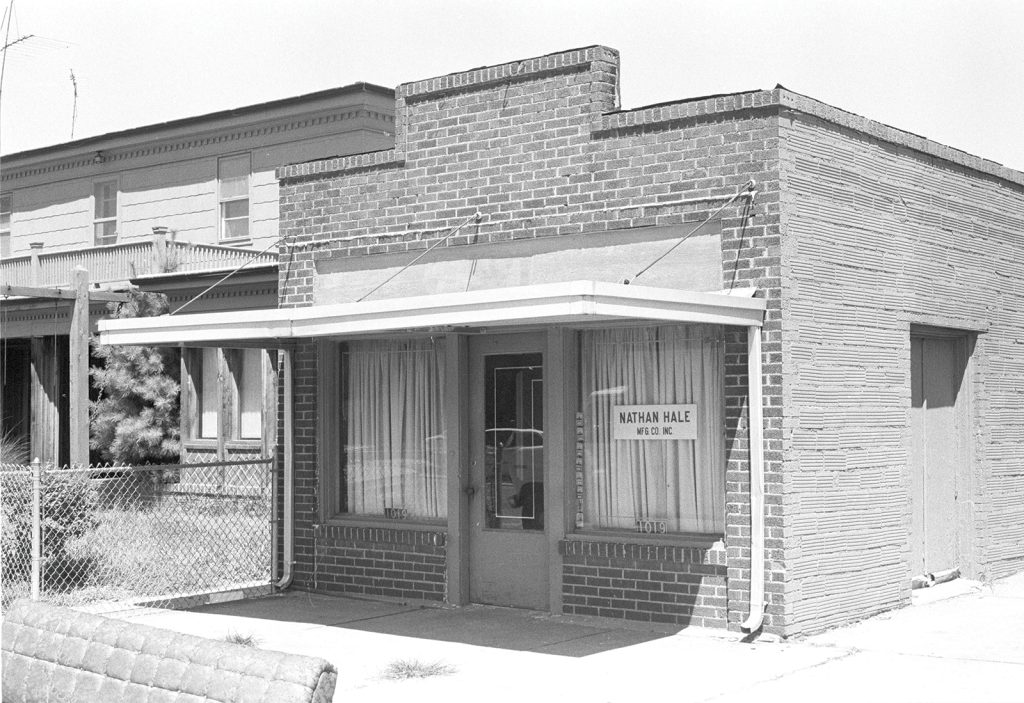
PQ: Top: 1978 view of 1019 E. Walnut St., part of the Poole & Creber Market Company complex. Credit: Courtesy of the State Historical Society of Missouri (SHSMO). Photo by Mary Matthews and B. Walters, 1978.
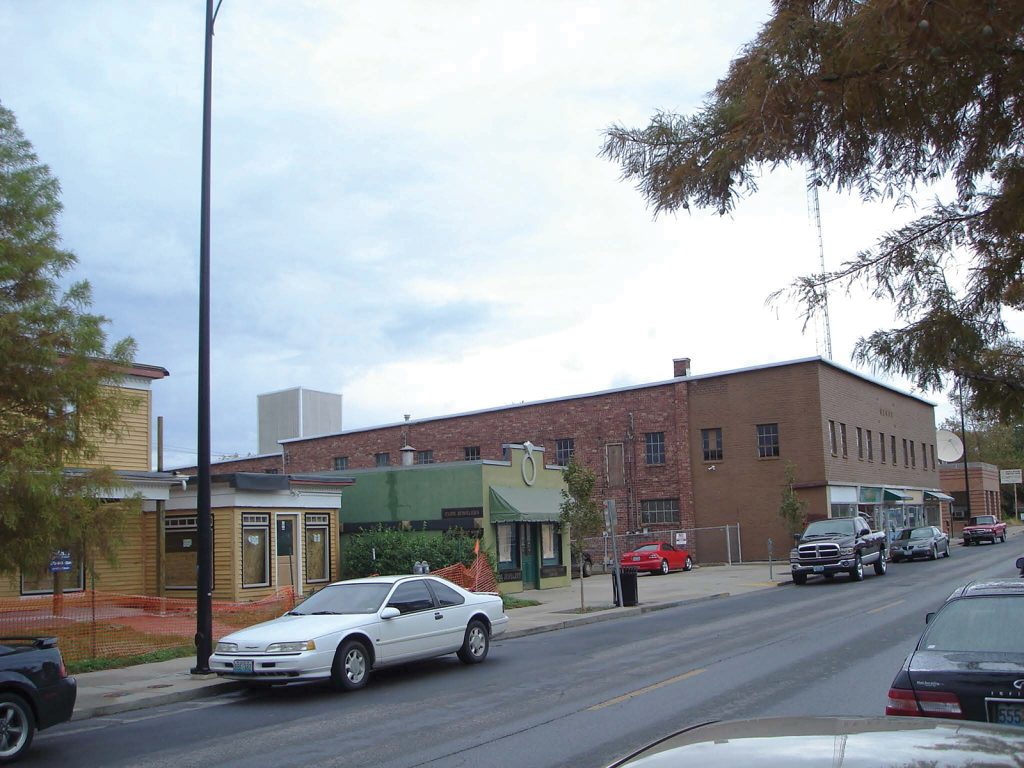
middle: The echoes of a grocery empire: 1013 E. Walnut, 1019 E. Walnut, the vacant lot where 1021 E. Walnut once stood, and the Berry Building. Credit: Downtown Columbia Historic District (Boundary Increase) 1019-1025 E. Walnut St., Boone County, MO; Debbie Sheals; September, 2007.
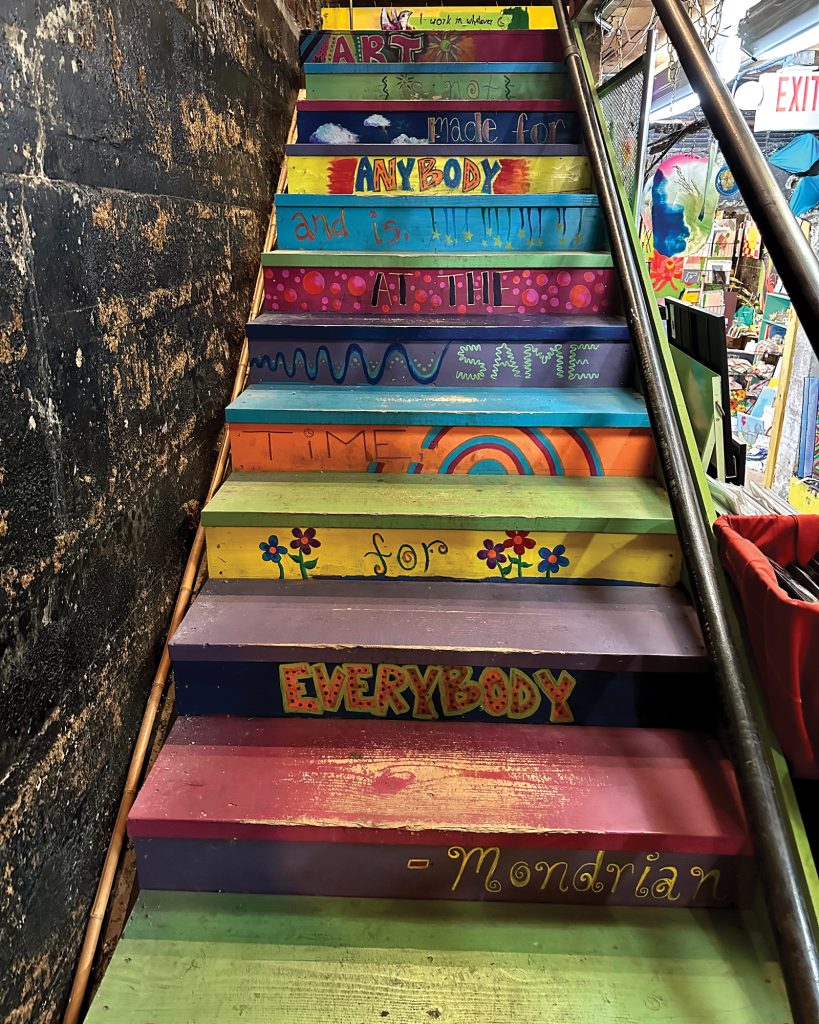
bottom: The stairway inside 1019 E. Walnut St., photographed shortly before Artlandish Gallery vacated the space after more than 15 years of anchoring the Catacombs. The staircase has since been repainted. Credit: Tahlia Heaton, December 2025
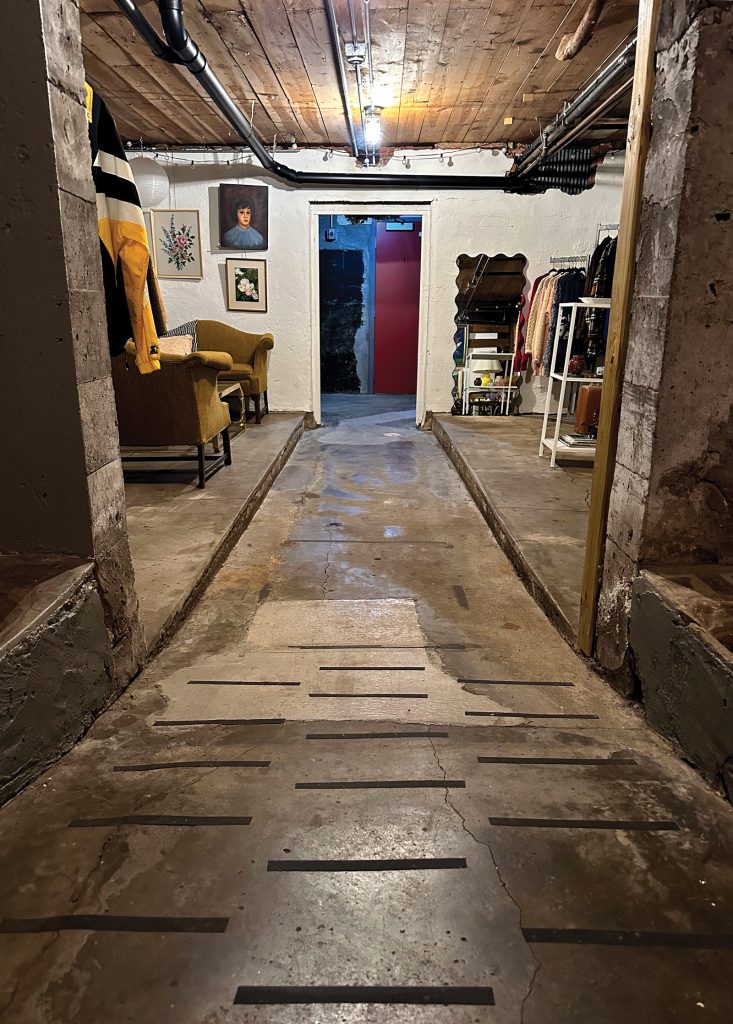
PQ: Top: Sloping, trough-style concrete floors inside Stellar Made & Found, remnants of the complex’s cold-storage era. Former tenant Jim Bradshaw says produce was stored in this room and that melted ice flowed along the center channel and out to a drain in the larger warehouse area. Stellar recently moved from part of the outer warehouse complex to the cold-storage basement. Both sections were built during the warehouse expansion in 1939.
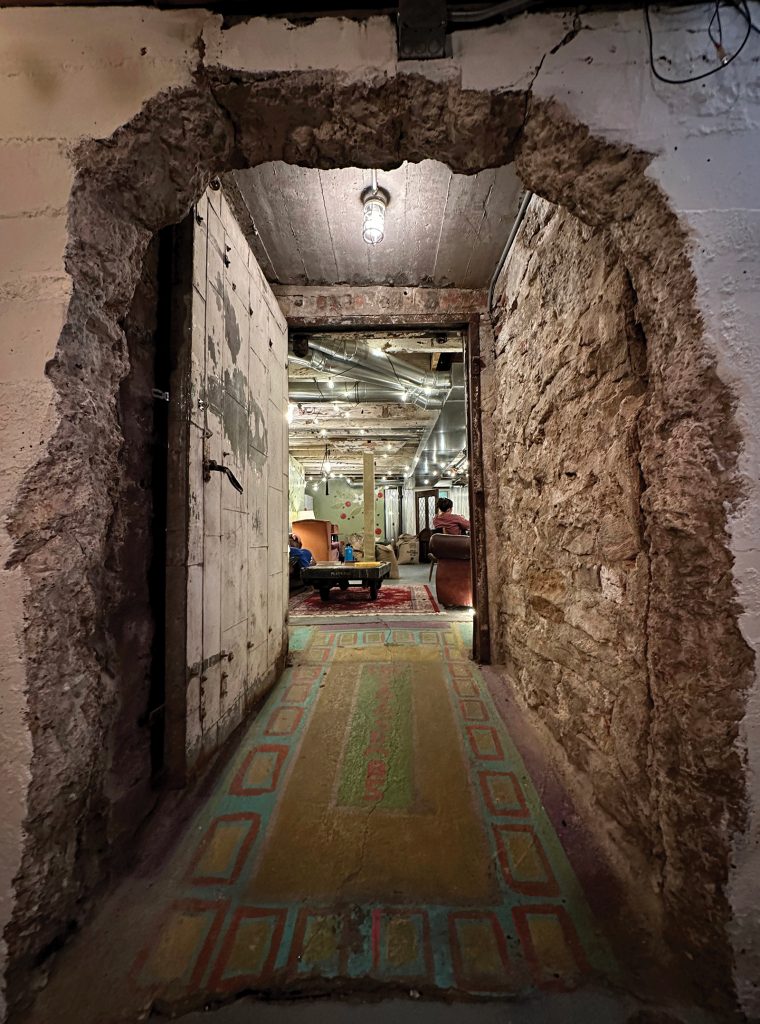
Bottom: The tunnel cut between the basement levels at 1021 E. Walnut and 1013 E. Walnut. The cold-storage warehouse Stellar Made & Found occupies was built in 1939, and the tunnel was added at the same time to connect the two buildings’ basements. Fretboard Coffee is visible through the opening.
Credit: Tahlia Heaton, December 2025
PQ: From top, left to right:
The entrance area at Rock Bottom Comics was not part of the original house; based on photographic evidence, it was added in the late 1970s. According to Rock Bottom owner John Evans, the archway was hand-sculpted by the late Kenny Greene, a longtime neighborhood jeweler known by many as “the Mayor of the North Village.” The archway and checkout counter are one unbroken sculptural piece.
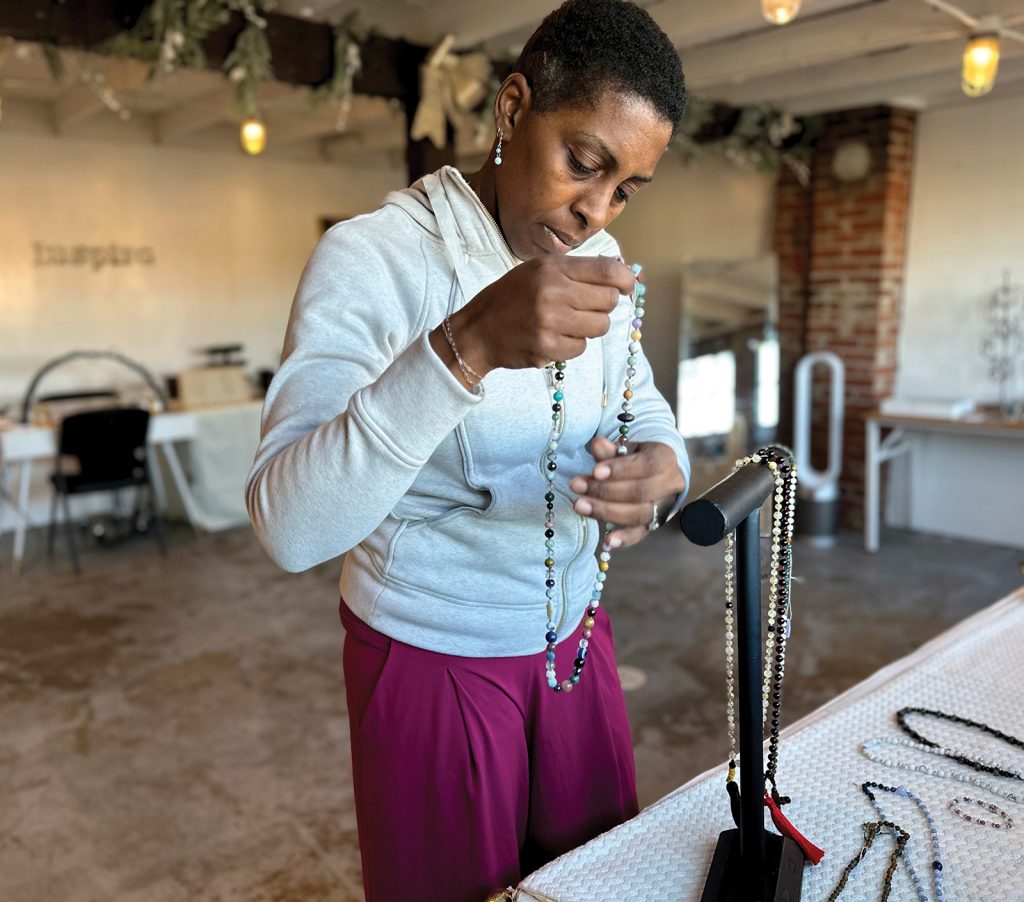
Star Cathcart co-owns CoMo Crystal Shop, which recently opened in the Catacombs complex. The shop is located in one of the oldest sections of the warehouse and is likely the site of the 1931 bakery addition. The chimney that served the bakery is visible in the background.
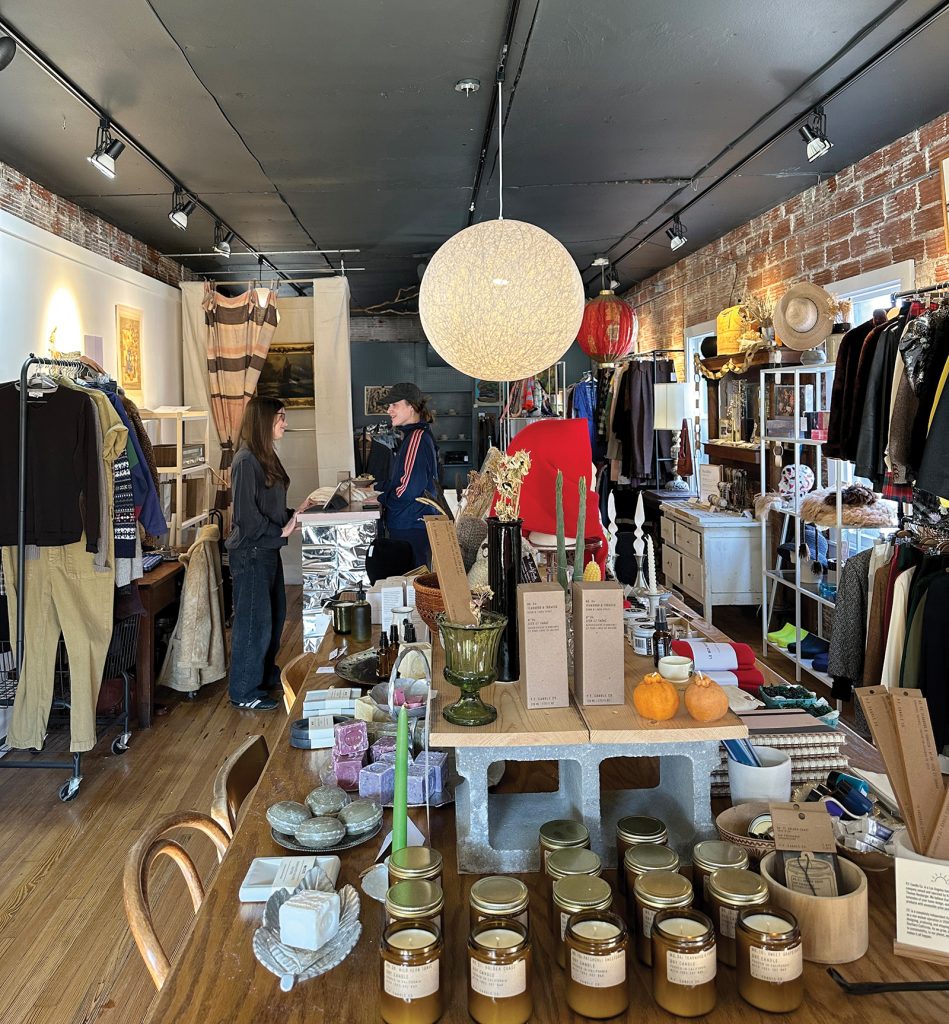
At Hedda, one of the present-day businesses providing access to portions of the Catacombs below, owner Heather Ripcse checks out a customer. Hedda recently relocated from one of the older parts of the warehouse to the office ell added in 1939, which was until recently occupied by Artlandish Gallery.
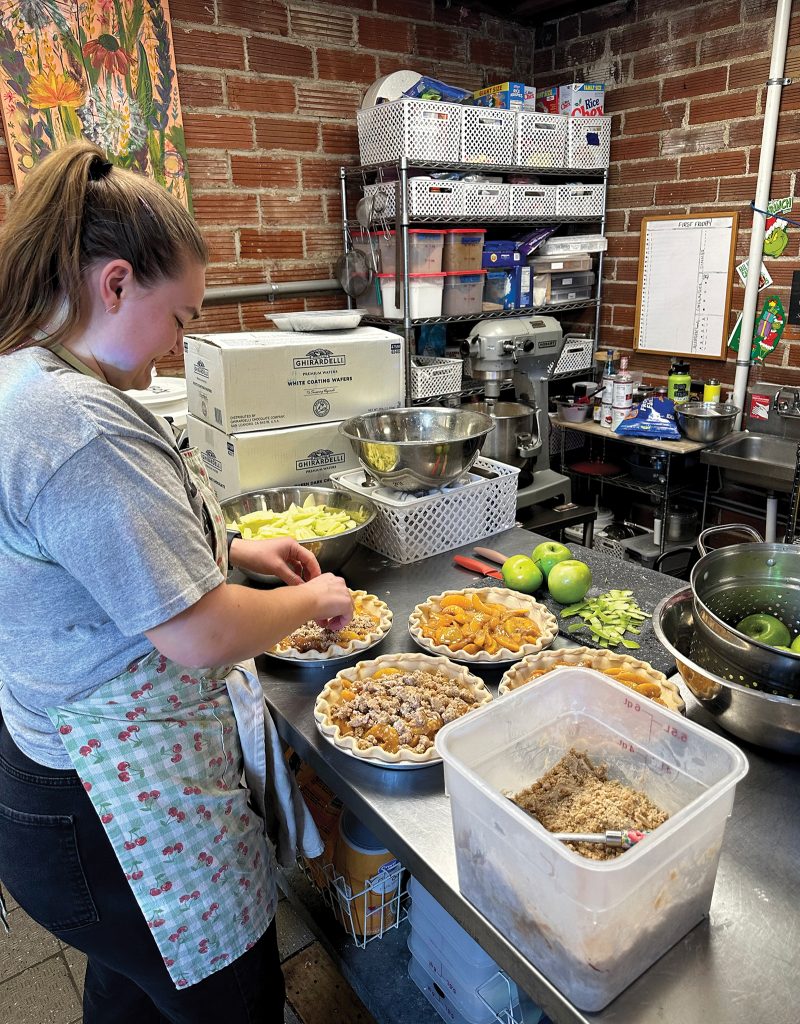
Wishflour Bakery has operated in the Catacombs since 2022. Poole & Creber built the complex’s first bakery in 1933, and Wishflour is at least the fourth bakery to operate in the building. Here, Kathryn Rothermich makes apple pies to meet the shop’s Christmas rush. Wishflour recently leased additional space in the Catacombs and plans to host baking classes, escape room nights, workshops, and more in the coming year.
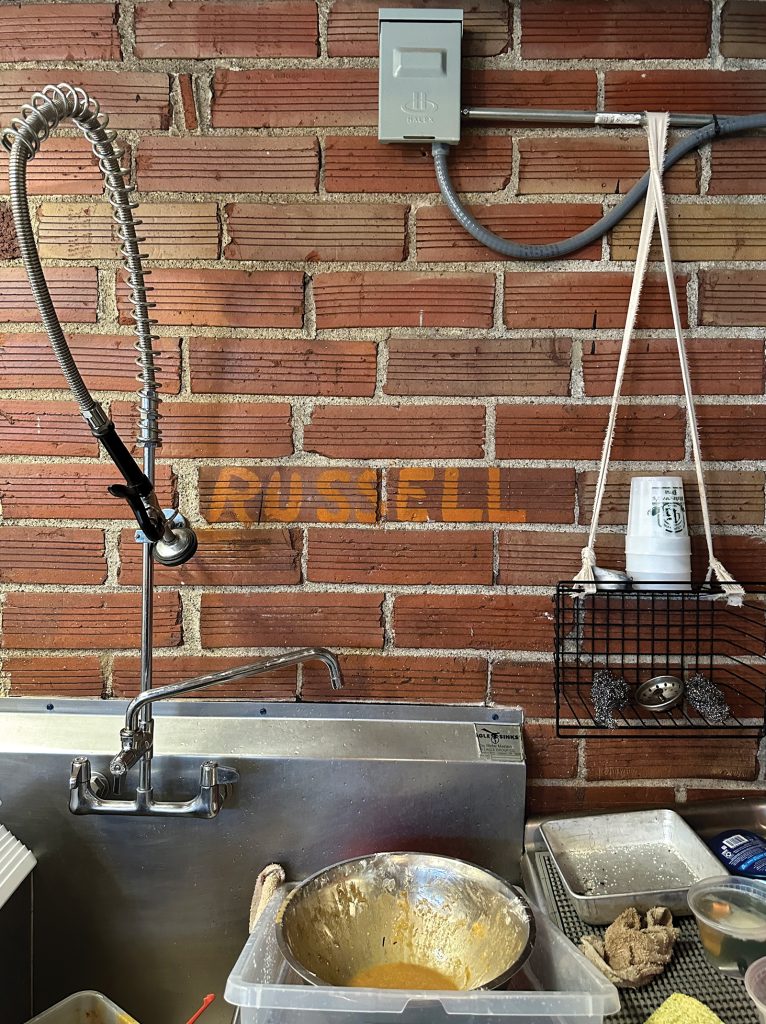
The space where Wishflour Bakery is located was one of the later additions to the complex. In the kitchen, a wall bears remnants of a personalized parking space on what was previously an exterior wall.