
“Glossophobia.” That’s the term for the fear of public speaking. Most people probably aren’t familiar with the word, but statistics indicate that a whopping 75 percent of them suffer from the phobia. Not even the opportunity to picture an audience naked will entice them to the dais.
But there are a lot of people who make a living by miking up to speak on a variety of topics to audiences that range in size anywhere from single digits to the thousands. In fact, there are four Columbians whose keynotes take them around town and the world.
Kim Becking, Alex Demczak, John Hall, and Brandi Spurling all got to the stage in different ways, with unique messages and distinct speaking styles. Every time they get up to say something, though, they leave a little bit of Columbia wherever they are in the world.
Kim Becking
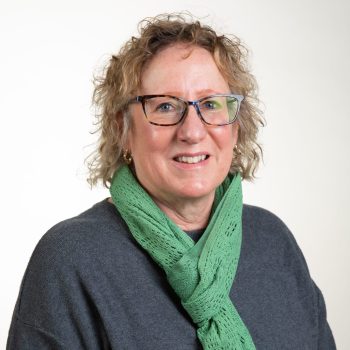
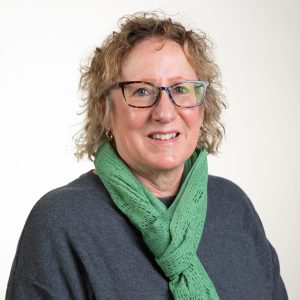
Kim Becking calls herself a “recovering attorney” who worked in large practices, moved into government, and later ran a successful public affairs and communications firm. But none of those jobs led to her speaking career.
Diagnosed with breast cancer at 30, Becking and three other young women wrote the best-selling Nordies at Noon, where they shared their stories about having breast cancer at a young age. Soon, they were being asked to talk to media and audiences.
“At the time, I didn’t even know professional speaking was a career,” Becking says. “I thought I was simply sharing my story to help others. But then event organizers started asking me what my fee was, and I remember thinking, ‘Wait, you can actually make a living doing this?’ That was the beginning of a journey I didn’t see coming.”
After speaking part-time, Becking decided to turn her passion for helping leaders and teams find resilience in the face of an ever-changing world into a full-time gig. The Unstoppable Momentum movement was born.
Becking speaks at fifty to sixty events a year, plus conducts coaching and workshops. Moreover, she has received the Certified Speaking Professional designation held by fewer than 17 percent of pros worldwide.
“For me, it’s not about the letters after my name,” Becking says. “It’s about what they represent: years of consistent excellence, service, and impact. Because in the end, success isn’t applause in the moment. It’s knowing that something you’ve shared continues to ripple forward — changing how people lead, how teams work, and how organizations thrive. That’s transformation. And that’s the legacy I care about.”
Becking says shifting her focus from herself to what her audience needs that day keeps her from getting nervous before she speaks.
“Over the years, I’ve developed a ritual that grounds me every time. Before I step on stage, I put my hand on my heart, close my eyes, and ask myself: ‘What do they need right now?’”
If they need unstoppable momentum, her audience is in luck.
Alex Demczak
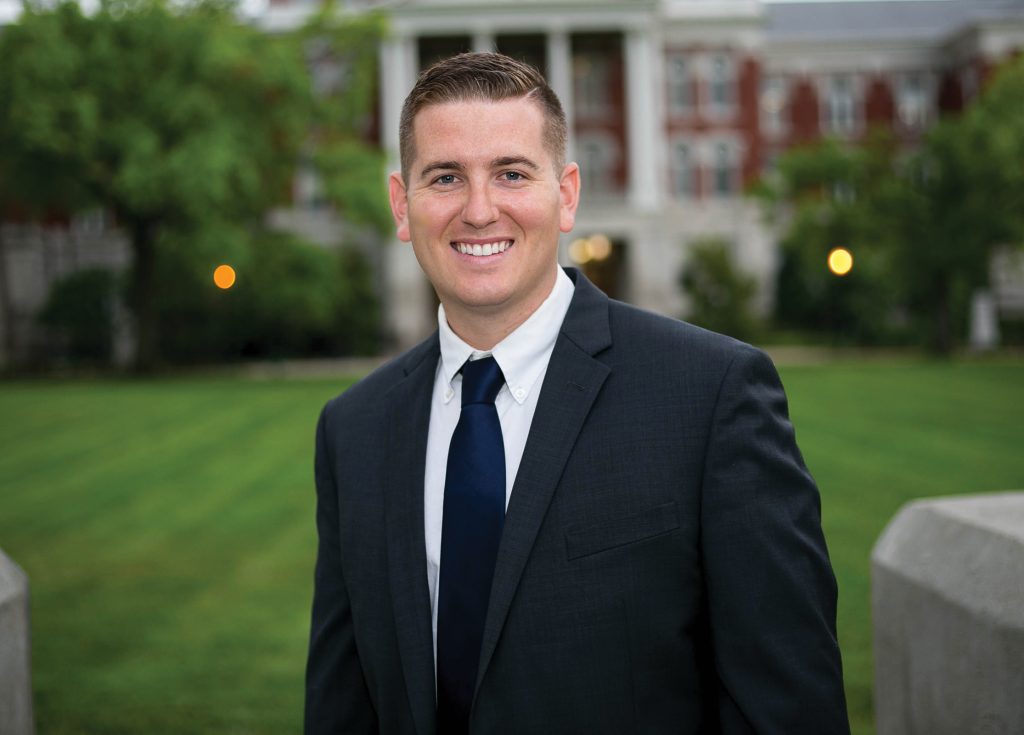
While playing quarterback for the Tigers, Alex Demczak took a public speaking class at Mizzou and actually enjoyed the experience. After publishing his first book, Thrive U, he talked about the book locally. That was the beginning of the speaking part of his career. “Speaking leads to more speaking,” he says.
He did public speaking as a side gig while working at Veterans United Home Loans before launching full-time as a speaker and founding ShareYourStory.com. Although he took on fifty speaking engagements one year, he averages about twenty now.
“Early on, I said yes to everything without considering whether it was the right fit,” Demczak says. “Over time, I’ve learned the importance of being selective — choosing engagements where I can make the most impact while also protecting my family and business priorities.”
Leadership, teamwork, integrity, culture, ethics, and sales are some of the topics he addresses for clients ranging from local organizations to the U.S. Space Force. For him, no audience is too small.
“My smallest audience was one kid,” Demczak notes. “I believe if you aren’t willing to show up for one person, you can’t expect the bigger stages. My biggest audiences have been school assemblies and large conferences, but I always try to keep the mindset of impacting people one at a time.”
Demczak says travel is the most challenging part of his speaking career because it takes him away from his family. But he admits to loving the chance to take the stage in Florida when it’s cold in Columbia. Wherever he speaks, however, his goal is the same.
“I’m passionate about helping leaders and organizations build trust, lead with integrity, and share their stories,” Demczak says. “At the end of the day, I want people to walk away from my talks not just inspired, but equipped with something they can apply immediately.”
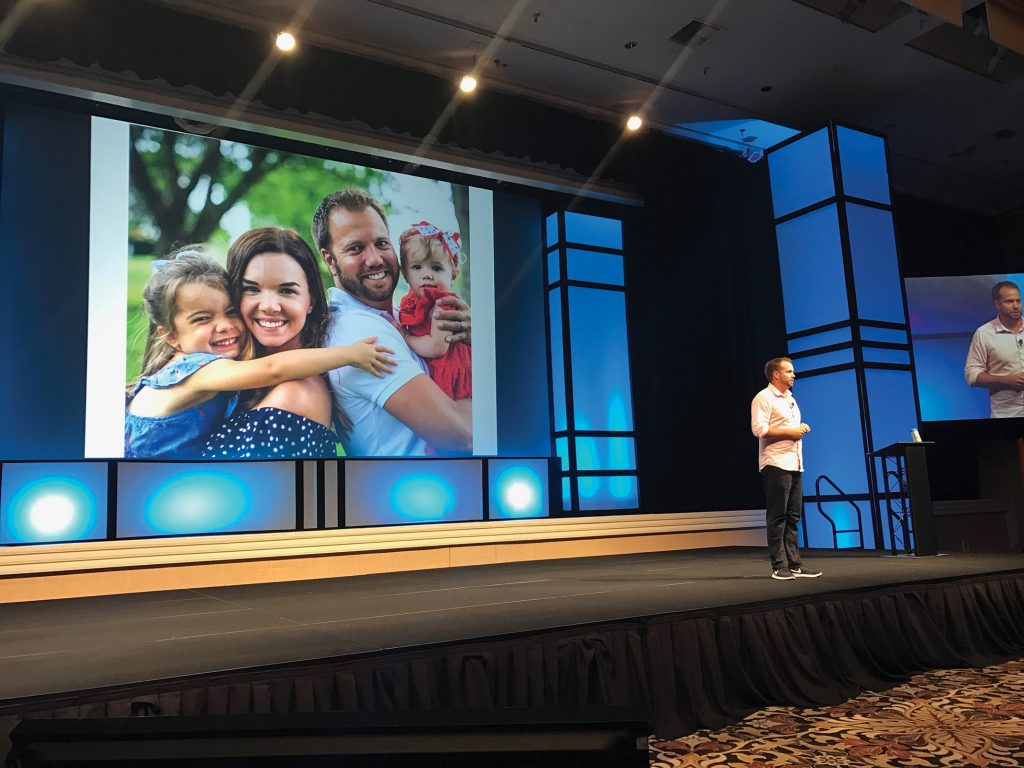
John Hall
John Hall has been a public speaker for about a decade, but he still gets nervous before he walks on stage. Early on, he would have a cocktail to calm his nerves. But after Ice-T made a joke about that method at a morning engagement at MIT, Hall stopped.
“Now, I call my wife, business partner, or a close friend before speaking. Talking to someone who grounds me is way better than a cocktail at 9 a.m.,” he says.
Like Becking, Hall is a serial entrepreneur. He co-founded the time management app Calendar.com and was one of Gabb Wireless’s early investors. He co-founded and advises two Columbia-based marketing agencies with nationwide client lists, Relevance and Adogy. In addition, he’s a regular contributor to Forbes, Fast Company, and Inc.
It was the publication of his best-selling book, Top of Mind, though, that ignited his speaking career. After his LinkedIn newsletter became one of the most followed in the country, it really blasted off.
“Biggest lesson overall? It’s not about me. It’s about helping the organizer and their audience succeed,” he says.
Hall thrives on his link with audiences while on and off the stage.
“I make it a point to be approachable,” he notes. “I’ll show up early, stay late, hang with people in the crowd. I don’t want to be the ‘fly-in-fly-out’ speaker with an ego. I want people to walk away feeling like they actually connected with me.”
Hall has had offices in Salt Lake City, New York City, and Palo Alto, but he believes Columbia provides a great base of support for him and his family. After his 6-year-old daughter told him how much she misses him when he’s gone, he promised to wear pink for her on stage and television, so she’d know he was missing her as well.
“And I have, every single time,” he says. “Even on CNBC or in front of 10,000 people.”
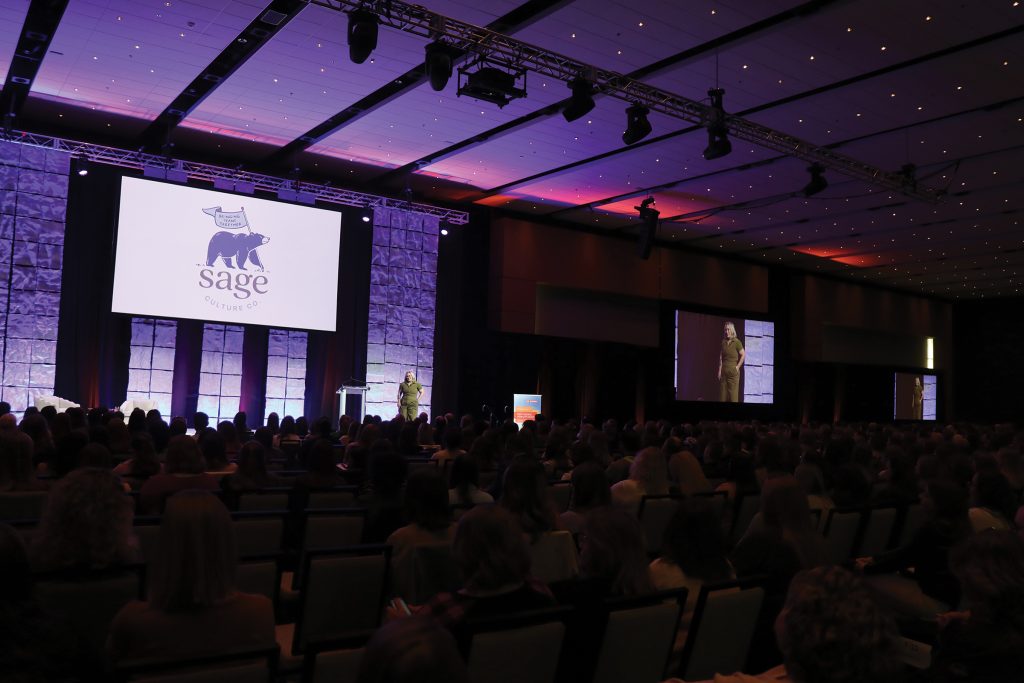
Brandi Spurling
“Competitive” and “funny” might be good adjectives to describe Brandi Spurling. She launched her new company, Spree Culture Co. (formerly Sage Culture Co.) and her speaking career in one fell swoop.
“A friend texted me about a speaking competition the week I announced my new company,” Spurling says. “I applied to speak, was chosen, presented at the conference to over 100 attendees in my breakout session, won, and booked my first four paid speaking gigs within a month. The rest, as they say, is history.”
How do you use a bachelor’s degree in theatre, a master’s in strategic leadership, and a penchant for stand-up comedy? You hit the circuit, speaking to a handful of people, thousands, or numbers in between.
“Keynote speaking has been the best Venn Diagram of so many parts of my life,” Spurling says. “Because of that, it just doesn’t feel like work. It feels like a playground I get to go to every day, test out new ideas, question old ones, try out new jokes, and connect with copious amounts of strangers in the process.”
Spurling also hosts a podcast, “Dear Leaders: Love Your People.” But public speaking has become central to her and her company.
“The very nature of this industry can be volatile and uncertain,” she says. “I would be crazy to say that the scarcity mindset doesn’t creep in every now and then and whisper: ‘Welp. Sure hope we get enough bookings this year.’”
So far, so good. Spurling’s keynotes have taken her across the country and virtually to 10 other countries. She’s logging more than 55 engagements per year. Nonetheless, she still gets nervous in front of a crowd.
“I use mindfulness techniques like EFT [Emotional Freedom Technique] tapping, meditation, or just good ol’ singing at the top of my lungs in the car to calm the nerves that inevitably come.”
What else does Spurling want people to know about her?
“My husband is a firefighter, and he’s smoking hot.”