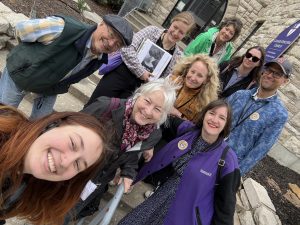


We’re currently in the midst of what former U.S. Surgeon General Vivek Murthy declared a “loneliness epidemic.” That might sound like an exaggeration until you consider how many of us feel disconnected, despite full calendars, active group chats, and endless digital interactions. Loneliness doesn’t care about your income, your travel log, or how many people like your photos. It doesn’t discriminate. There are important factors that have contributed to the loneliness epidemic, including high levels of life transitions, individualism, and technology.
A friend recently shared a story that keeps me feeling hopeful. Before leaving town, she arranged with her neighbor’s son to mow her lawn while she was away. When she returned, her lawn was perfectly cared for. Wanting to keep up her end of the agreement, she stopped by to pay the boy, but only his father was home. He declined the payment, saying, “I want to teach my son the importance of community. We do things to help our neighbors.”
That moment was bigger than a menial household chore; it was about reciprocity, showing what it means to be part of something larger than yourself. That kind of mindset is increasingly rare in a culture that rewards individual hustle and constant productivity. Reciprocity is about mutual commitment, not about one’s ever-changing mood.
Here’s a truth we don’t talk about enough: We need each other. Not just for practical survival, but for the richness, depth, and emotional color that relationships bring to life. A healthy community, whether it’s your friend circle, neighborhood, workplace, or chosen family, functions on acts of mutual care. Nor do those acts always require grand gestures. Often, they’re small, quiet, and consistent.
A few months ago, after a long trip, I noticed a friend wasn’t quite herself. It was a rainy day, and I almost continued with work as usual. But something nudged me to text her. When she said she was working from home, I picked up a warm chai and drove over. She opened the door, we embraced, and she felt emotional. Two hours passed in conversation I didn’t plan for. She needed that connection — and so did I. That’s community.
In a world that often praises self-reliance and overbooked schedules, showing up can feel like a radical act. I’ll admit, there are times I don’t have the bandwidth. There have been times I said no because I was exhausted or talked myself out of a check-in because I thought it wouldn’t matter. Still, I’m trying to be more intentional. Because the truth is, we owe each other.
Yes, we’re busy. However, we are the product of others’ generosity. People have shared their time, guidance, energy, or quiet presence when we needed it most. It’s our turn to give back. That could mean checking in with someone who’s been quiet, splitting leftovers, running errands together, offering to walk a dog, sharing homegrown tomatoes, or simply sitting beside someone who’s overwhelmed.
Loneliness thrives when we believe our desire for connection will not be met. Yet most of us are quietly yearning to be witnessed, to be thought of, to be celebrated for simply existing. It’s OK to have this desire, and it’s also OK to ask for it.
Let’s reframe loneliness not as something shameful, but as a signal. Consider it a moment of reflection on how we’re relating to ourselves and others. Ask yourself, “Am I showing up for people I care about? Am I being honest about my own needs? Am I demonstrating mutual support or just checking boxes?”
Meaningful relationships are gifts. And like any gift, they come with responsibility. That means offering our time, attention, purpose, skills, and, sometimes, just our stillness. It means giving what you can and taking what you need, not out of obligation, but out of love.
The next time someone crosses your mind, then, don’t wait for the perfect moment to get in touch. Text them. Stop by. Lend a hand. Make the call. Show up. Because on the other side of loneliness is connection, and it requires all of us to take turns doing our part. We need each other.