
Imagine watching someone you love slip away — not because of age alone, but because of a disease doctors sometimes have trouble naming correctly.
Lewy Body Dementia (LBD) steals more than memories. It steals identities. It’s one of more than 100 known forms of dementia and the second most common after Alzheimer’s. Yet despite its prevalence, LBD is also one of the most misdiagnosed. In its early stages, the disease often presents like Alzheimer’s or Parkinson’s, with overlapping symptoms that include changes in memory, movement, mood, and even language.
Though research on LBD has improved in recent years, families still struggle to get clear answers. That’s why advocates persistently work to raise awareness in hospitals, memory care facilities, and living rooms across the country.
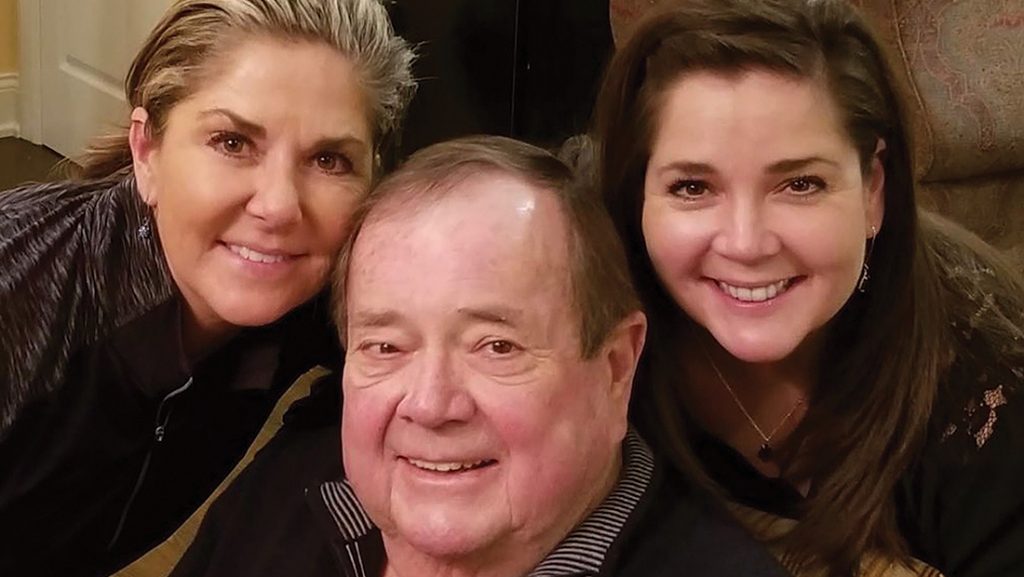
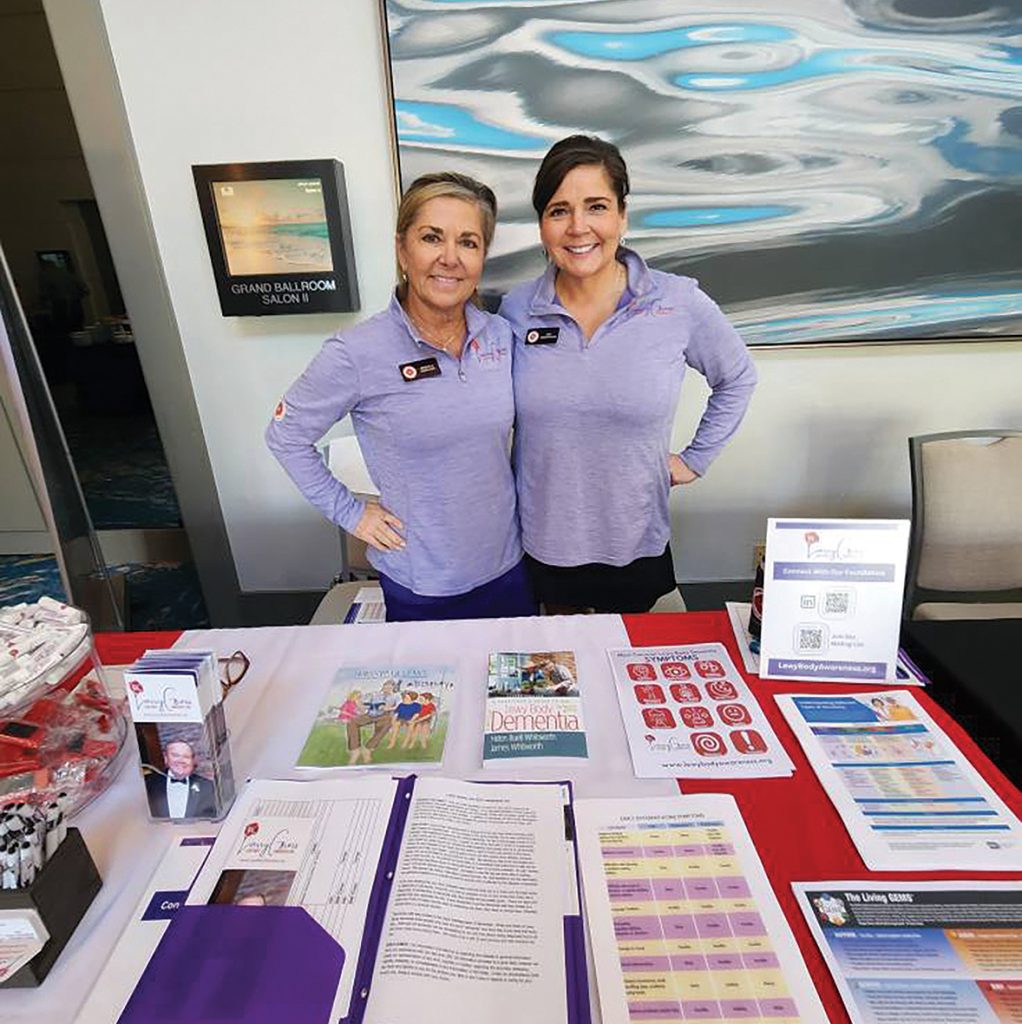
Locally, the Larry Gross Lewy Body Awareness Foundation is doing just that. The nonprofit was cofounded by sisters Rebecca Gross-Highland and Amy Gross Greenwood following the death of their father in 2021. The foundation became an official 501(c)(3) nonprofit in 2023.
To understand why the Larry Gross Lewy Body Awareness Foundation exists, it helps to know Larry’s story.
Larry’s Story
Lawrence “Larry” Gross was always a numbers guy. Business, sales, strategy — it all came naturally. In the 1960s, he even lived what his daughters jokingly call a “Bionic Man” life, selling cutting-edge knee replacements after leaving behind a successful pharmaceutical career. To his daughters, Amy and Rebecca, he was “a brilliant mind.”
It was that brilliance that made his cognitive decline impossible to ignore.
In 2013, when subtle changes in their father’s processing abilities began to surface, Rebecca and Amy encouraged their parents, Larry and Anna, to see a general practitioner.
“The doctor basically said, ‘It’s probably Alzheimer’s, here’s some Aricept, bye,’” Amy recalls.
“Alzheimer’s was the catch-all,” Rebecca adds.
They weren’t alone in their frustration. According to the Lewy Body Dementia Association, only about 30 percent of people with LBD receive the correct diagnosis during their lifetime, with Alzheimer’s being the most common misdiagnosis. For years, Larry was among those misdiagnosed.
Over the next two years, Larry’s decline became more pronounced. In 2015, he visited a neurologist but once again received an incorrect diagnosis. Although he had experienced REM sleep disturbances for years, no one recognized them as early indicators of Lewy body dementia. Without a full understanding of the disease’s complex symptoms, key signs continued to go unnoticed.
Four years later, Larry finally received the correct diagnosis, though there was some initial confusion. Because Lewy Body Dementia shares many features with Parkinson’s disease, it was first described to the family as a Parkinsonian disorder. This led to some misunderstanding about what the diagnosis truly meant — a mix-up that’s not uncommon given the overlapping symptoms of these conditions. In 2020, just two weeks before a devastating hemorrhagic stroke, his diagnosis of LBD was clarified and confirmed.
But when he was transferred to another hospital, his LBD record didn’t follow. After the attack, hallucinations and delusions — already a challenge — intensified.
 “He had all this pressure in his brain, which was making him act weird,” says Amy. “And they kept giving him drugs you cannot give a patient with Lewy Body, one of those being Haldol, which is probably the worst one.”
Haldol, an antipsychotic often prescribed for schizophrenia, delirium, or agitation, can have the reverse effect on someone with LBD, amplifying confusion and aggression rather than calming it.
The hallucinations and delusions soon became a defining part of Larry’s life. Amy explains, in layman’s terms, that hallucinations are “seeing something a little weird,” while delusions are “completely immersive.”
Among the many lessons Amy and Rebecca learned while caring for their dad, one stood out: Sometimes compassion means playing along. In their guide to Lewy Body, they explain that sometimes it’s better to lie — not to deceive, but to relieve.
With help from a team of caregivers, Amy and Rebecca continued caring for Larry until 2021. Along the way, they gained a deeper understanding of the insidious disease that had reshaped their father’s life.
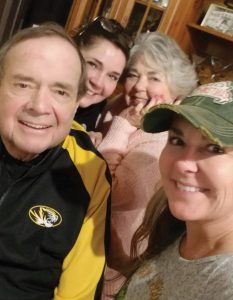
Carrying His Legacy Forward
During his illness, the sisters pored over books and online resources and joined support groups, trying to make sense of his symptoms and help their parents navigate the confusing and painful journey. After Larry’s death, Amy and Rebecca decided to gather everything they had learned into one accessible resource for families like theirs.
The foundation’s mission reflects this: to educate families of loved ones diagnosed with LBD, as well as the wider community, healthcare providers, social services, and long- and short-term memory care facilities. To do so, Amy and Rebecca raised funds through different events to create informative care packages for families who have a diagnosed loved one.
Care packages include a folder of information packets, from symptoms to look for to ways you can help care for your loved one through advocacy, as well as a children’s book (Grandpa & Lewy) and an adult’s book (A Caregiver’s Guide to Lewy Body Dementia), explaining the disease at the respective level needed.
As of January 2025, the Larry Gross Lewy Body Awareness Foundation had assembled more than 1,500 resources to distribute to those in need, sending resources around the country and to places like New Zealand, Canada, and Uganda. The sisters also continually attend conferences, such as the Alzheimer’s Association International Conference, to get the word out.
To raise funds, the foundation accepts donations via its website, hosts golf tournaments, and participates in group fundraising. Its fourth annual golf tournament took place in June and featured eighteen holes of golf, contests, raffles, and community events. Coming up, the nonprofit will be a part of the Tigers on the Prowl collaborative fundraising event on October 17, along with Woodhaven, Love Coffee, Grant Us Grace, and Safe Families for Children.
For now, the sisters’ main priority is to keep educating and equipping families with the resources they need. Looking ahead, they hope to one day award scholarships to neurology students or establish a dedicated caregivers’ clinic to provide respite for those carrying the heavy emotional weight of dementia care.
Every event, every resource, and every goal is another way of honoring Larry’s life and of ensuring that other families navigating Lewy Body Dementia don’t have to walk the path alone.
Larry Gross Lewy Body Awareness Foundation
lewybodyawareness.org
[email protected]
(573) 673-4349
Instagram: @lewybodyawarenessfnd