

Boone Junction Village
Boone Village, or the Village at Boone Junction, in Columbia, Missouri, is a planned historic village that showcases the history of Boone County through relocated structures. It features homes and businesses from different eras, offering a glimpse into the lives and lifestyles of Boone County residents from 1818 to 1930. The multi-layer display is located on the grounds of the Boone County History & Culture Center at 3801 Ponderosa Street.
The village houses various relocated structures, including the Gordon-Collins Log Cabin, the Easley General Store, the Ryland Farmhouse, and the McQuitty House, all of which were originally located in different parts of Boone County.
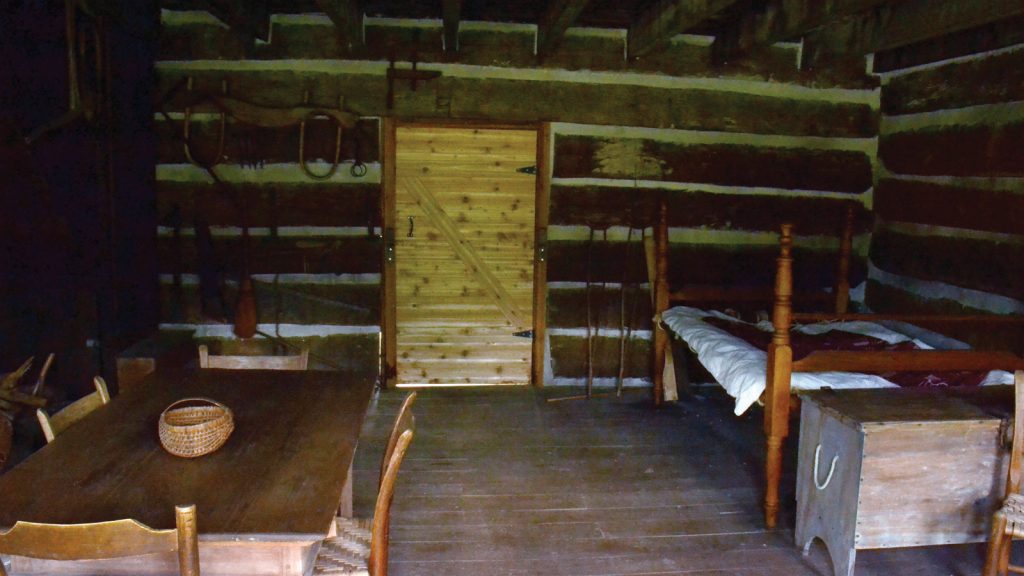
- Gordon-Collins Log Cabin: This cabin, built around 1822, served as a temporary residence for a settler’s family and later as slave quarters and a home for hired laborers.
- Easley General Store: This store, relocated from Easley, Missouri, provides a glimpse into the daily lives and commerce of a small-town general store.
- Quitty House: This home, built in 1910, showcases a unique “Shotgun” style of architecture and is one of the few surviving examples of this type of housing in Columbia and Boone County.
Missouri Theatre
The Missouri Theatre at 203 S. Ninth St. in downtown Columbia is on the National Register of Historic Places and is central Missouri’s only remaining pre-Depression era movie palace and vaudeville stage. Built in 1928, the theater’s interior is an ornate baroque and rococo style of the Louis XIV and XV periods. Designed by the Boller Brothers Architects of Kansas City, the theater is modeled after the Paris Opera House.
Much of the original detailing survives, including the Belgian marble wainscoting, plaster reliefs, stained glass art panels under the balcony, and an 1,800-pound Italian chandelier featuring crystal prisms and etched panels.
The Missouri Theatre boasts a rich history dating to 1928 and is now a concert venue and home to the Missouri Symphony Orchestra.
Quick history lesson:
- 1928 – Construction completed, opening as a movie palace and vaudeville stage.
- 1950s-1960s – Decline of movie palace theaters led to the Missouri Theatre’s transformation and eventual ownership by the University of Missouri in 2014.
- 2011 – The University of Missouri began a lease agreement, eventually purchasing the building in 2014.
- Present – The Missouri Theatre is a major performance venue for the University of Missouri School of Music, the University Concert Series, and the Missouri Symphony Orchestra.
State Historical Society of Missouri
The State Historical Society of Missouri’s mission is to collect, preserve, publish, exhibit, and make available material related to all aspects and periods of Missouri history. The Center for Missouri Studies is just one of SHSMO’s research centers and is located in the Flat Branch area of downtown Columbia at 6 Elm Street.
Founded in May 1898 by the Missouri Press Association and established as a trustee of the state a year later, the State Historical Society of Missouri is the premier research center for the study of Missouri state and local history.
The Center for Missouri Studies in Columbia also houses the nation’s best collection of Missouri regional and westward expansion art. The Center serves as the administrative headquarters for the Society.
Collections include: unique manuscript collections; an extensive newspaper collection dating from 1808 with newspapers from all 114 Missouri counties and the city of St. Louis; thousands of editorial cartoons that are national in scope; rare and specialized books; thousands of maps and photographic images; oral histories; and an extensive art collection that includes major works by George Caleb Bingham and Thomas Hart Benton.
The Center also publishes the Missouri Historical Review.