
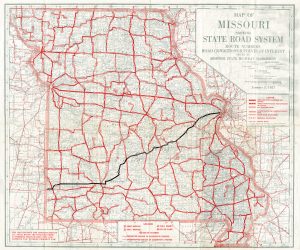
Whether you know it as “The Mother Road” or “The Main Street of America,” chances are you’re familiar with Route 66. As Nat King Cole sang, “It winds from Chicago to LA, more than 2,000 miles all the way,” and from St. Louis in the east to Joplin in the west, 317 of those miles are in Missouri.
As the historic highway celebrates the 100th anniversary of its birth this year, the State Historical Society of Missouri (605 Elm St.) is commemorating the occasion with Through the Windshield: Missouri’s Route 66 Exhibition. SHSMO is also hosting a traveling exhibition about Route 66 through July 31 with stops in Springfield, Carthage, and St. Louis.
Route 66 Shows ‘The Business of America Is Business’
 From its conception, Route 66 was a marketing project, according to Stacia Schaefer, senior strategic communications associate at SHSMO. With more people driving, there was a need for a new highway to connect larger stretches of the country. Before Route 66, Schaefer said, traveling to another state was much less accessible. Missourians across the state wanted Route 66 to run through their community to drive economic development and tourism in their city or town.
“You don’t think in terms of highways having marketers,” Schaefer said, [but] “these people started from the very beginning marketing (Route 66) as the route to take to get west.”
And Missourians still want to claim pieces of Route 66. While Oklahoma businessman and highway commissioner Cyrus Avery is considered the “Father of Route 66,” his business partner was John Woodruff from Missouri.
“In Missouri, we claim that we are the birthplace of Route 66 because [of] this guy right here,” Schaefer said, pointing to Avery. “He is an Oklahoma guy, although he spent a lot of time in Missouri. This guy, though,” Schaefer pointed to Woodruff, “was a Missouri guy.”
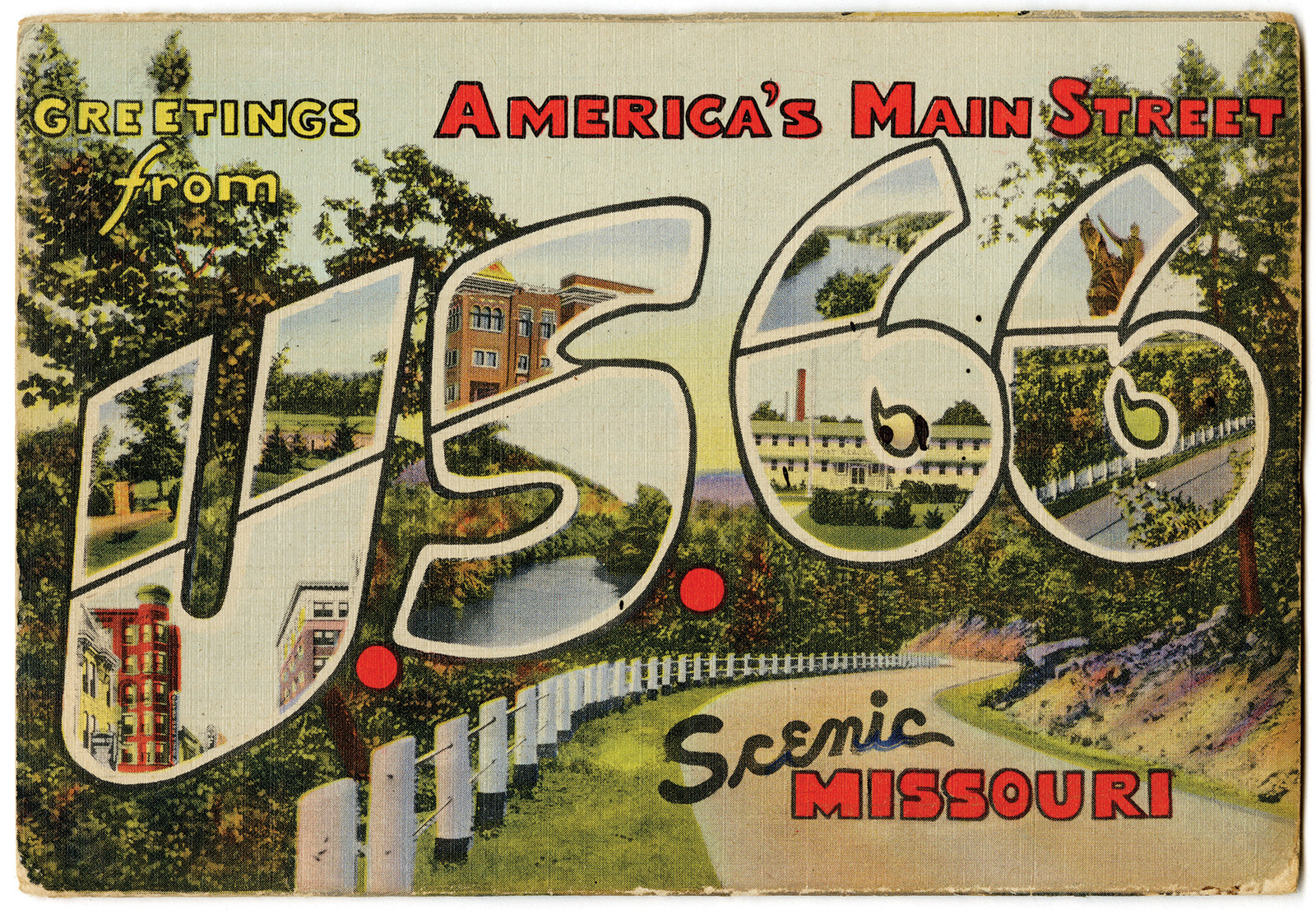
A lawyer in Springfield, Woodruff served as the first president of the U.S. Highway Association, an organization that pushed for the creation of Route 66. It was the association that promoted the new highway as the Main Street of America, since it connected hundreds of smaller, rural towns to major urban centers.
The roadway also served as a tourist spot in and of itself. The drive was the journey, as Americans took more “road trips” and traveled across the country on Route 66.
“That is why we still talk about it today because it’s not just one place, but it was always a destination,” Schaefer said. “What other roads can you think of like that?”
Schaefer acknowledged that many Missourians may not consider Missouri a tourist destination, but with the state being at the center of the United States, countless drivers passed through Missouri, encouraging those who lived near the highway to strive for tourists’ attention.
And strive they did. Headquartered in Joplin, the Ozark Playgrounds Association was a multistate effort to rake in tourism dollars as people traveled through multiple states on road trips across the county. A travel guide featured in the exhibit shows how the “Playgrounds of the Ozarks” aimed to lure visitors with the promise of fishing, swimming, golfing, boating, hiking, and camping activities in Missouri, Arkansas, and Oklahoma.
Four decades have passed since Route 66 was decommissioned in 1985, but its commercial appeal lives on. “Even today, we’re still trying to vie for Route 66 because it’s still being marketed,” Schaefer said.
The SHSMO Team Hits the Road
While preparing Through the Windshield, Schaefer and her colleagues traveled the Missouri leg of the historic highway to document where Route 66 is now compared to where it was. She noted that some spots look nearly identical to the photos in the exhibit — like the Wagon Wheel Motel in Cuba — while others have been torn down or renovated to lose the kitschy chrome and mid-century Americana style that characterizes the Route 66 aesthetic.
“You realize this isn’t going to be there forever, and we’ve already lost so many of these places. … We can’t take it for granted that they’re always going to be there,” Schaefer said.
While the exhibit takes a visitor through each county the highway travels, it doesn’t feature every tourist stop in Missouri, Schaefer added.
“We don’t even have some of the most famous places, … but we have some really fantastic stories.”
During their end-to-end tour of Missouri’s segment of the fabled highway, the exhibit team learned that Route 66 is a popular destination for people visiting the United States. As a result, their videotaped interviews include not only historians and people living or working near Route 66, but tourists from countries as far-flung as Sweden, France, and Japan.
Opportunity Knocked, and Missourians Answered
As Schaefer sees it, the long, winding history of Route 66 showcases Missourians’ entrepreneurial nature. As the Good Roads Movement progressed, and automobile lobbyists pushed for more roads in the United States, Missouri took advantage of the opportunity. SHSMO’s exhibit highlights Missourians who embodied that entrepreneurial spirit, like Arthur Nelson in Lebanon.
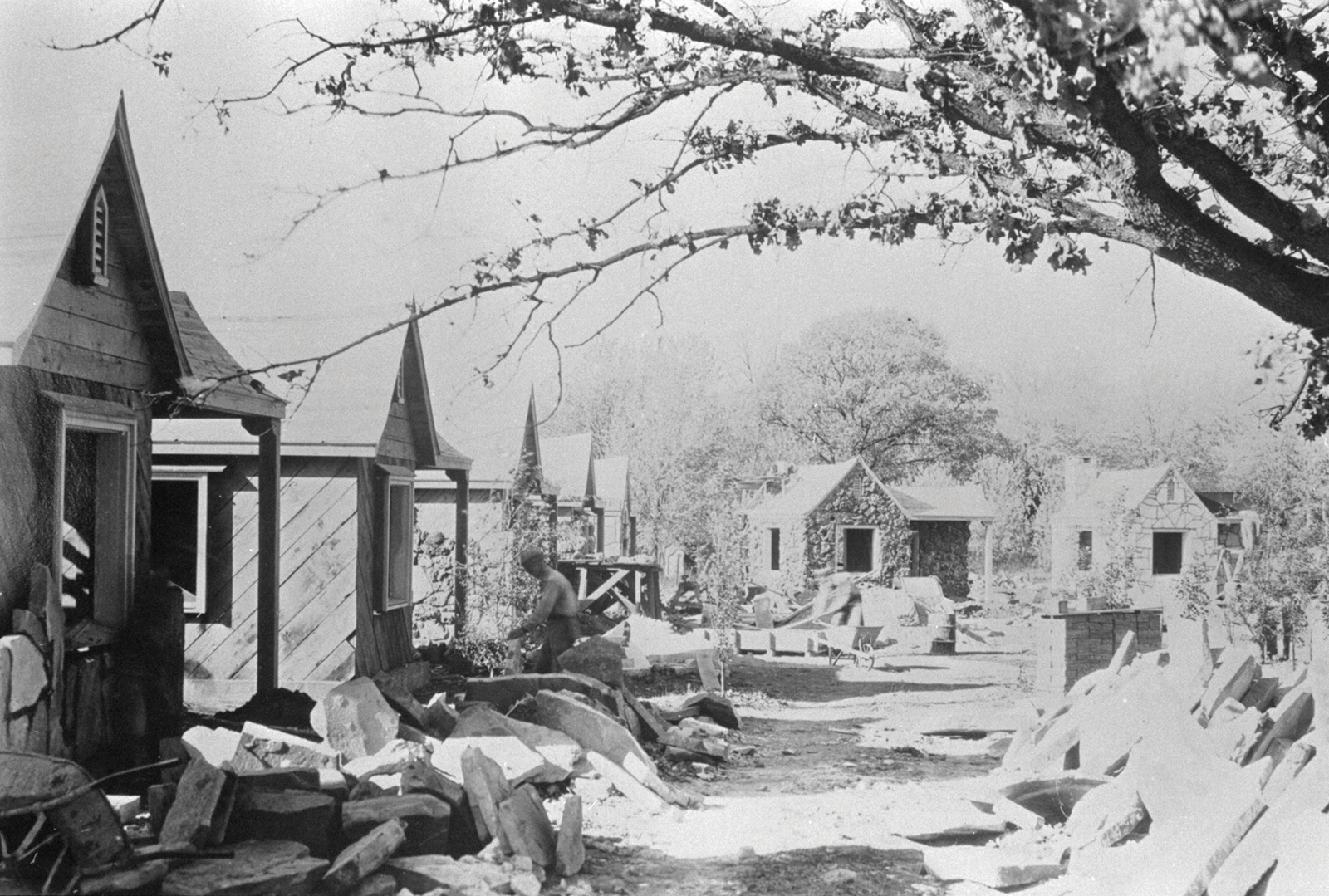
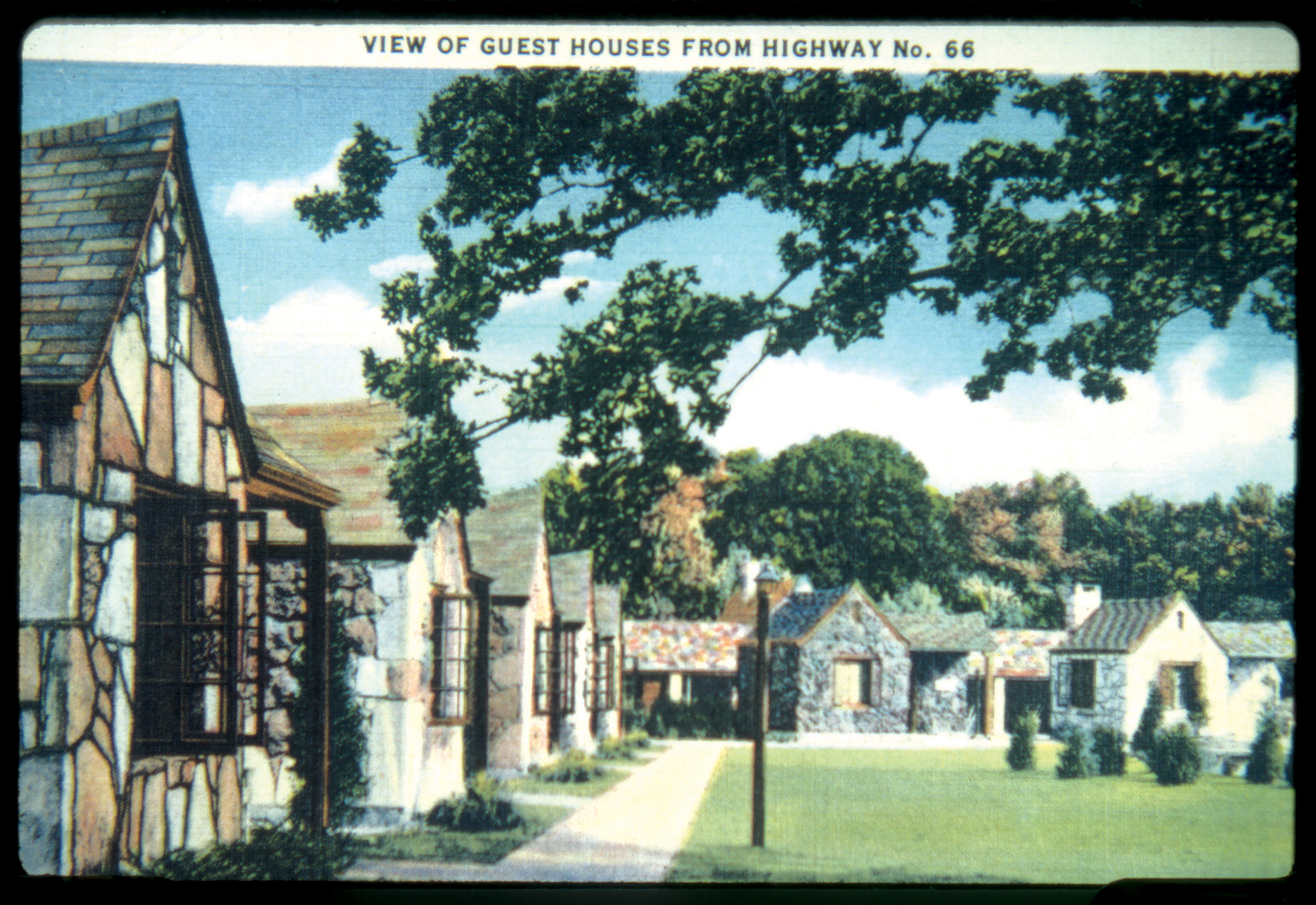
Nelson’s family owned an apple orchard, but disease and shipping costs were increasing throughout the country. So Nelson, a Good Roads advocate, donated part of his property for Highway 14 (a Route 66 precursor) and built a service station with restaurants, cottages, and a hotel near Route 66.
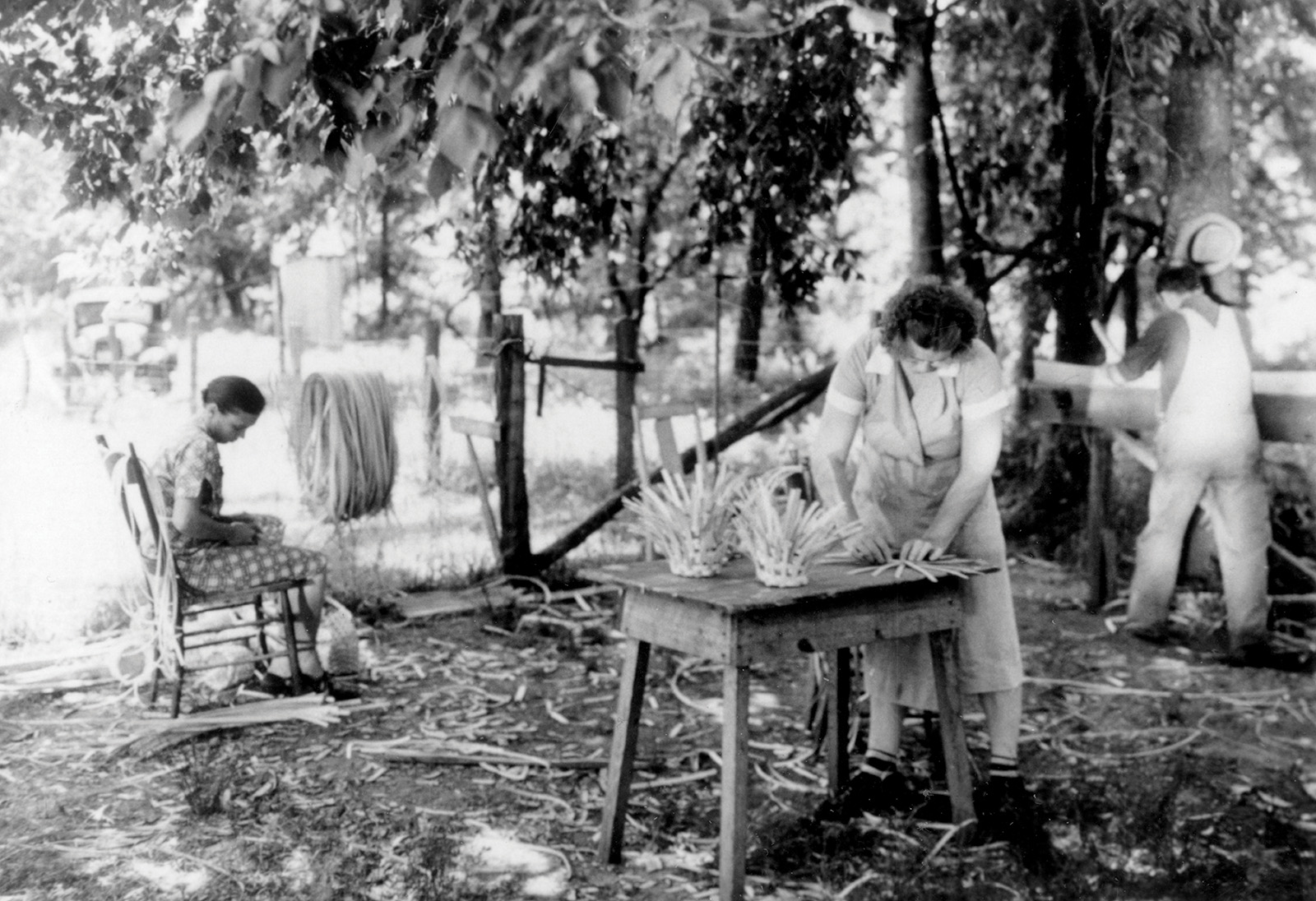
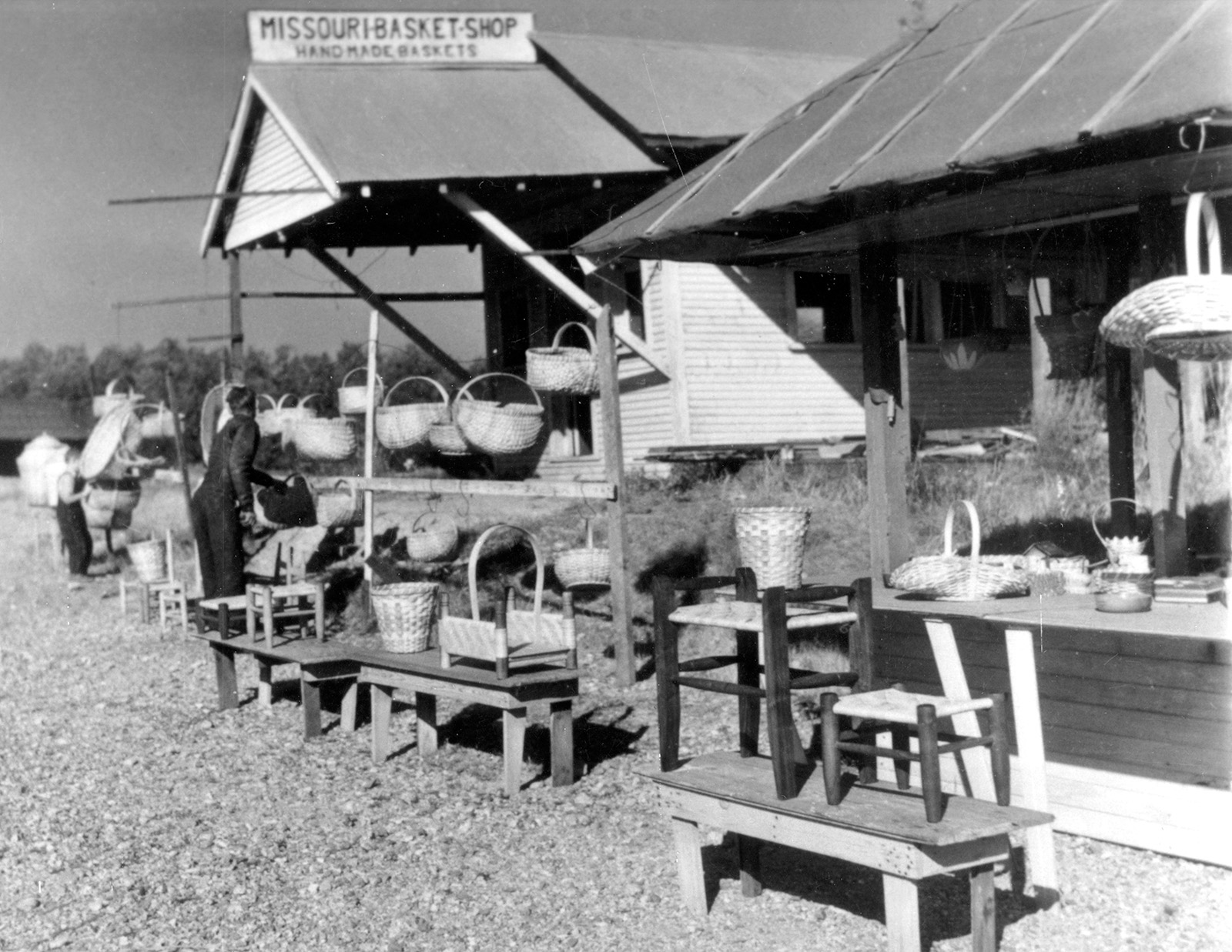
Then there was the Wells family of Pulaski County, who started making and selling baskets at stores along Route 66 for income during the Great Depression. Later, the Wells would make baskets for the 1939 World’s Fair in New York City and expand the business to ship baskets across the country.
“There’s a lot of … what people think of as the American spirit or the American way of life, that’s moving with the punches,” Schaefer said. And that spirit found a place — many places, in fact — along the Mother Road.
A Name That Sells Itself
Even the name of the new highway was marketable. Schaefer said U.S. Highway Association officials wanted to use the number 66 because “Route 66” was catchy and memorable. And they were right, judging by how often Route 66 shows up in popular culture.
The SHSMO exhibit includes a playlist of Route 66–inspired songs, including the classic “(Get Your Kicks On) Route 66” by Nat King Cole — although the SHSMO staff recommend the cover by St. Louis native Chuck Berry.
Other songs on the Route 66 playlist include “Way Down Watson” by Son Volt, which laments the demolition of Coral Court Motel on Route 66 in St. Louis, and “Chuggin’ on Down 66” by Smiley Burnette, which mentions Springfield, whose Ozark Jubilee TV program once made it the musical rival of Nashville.
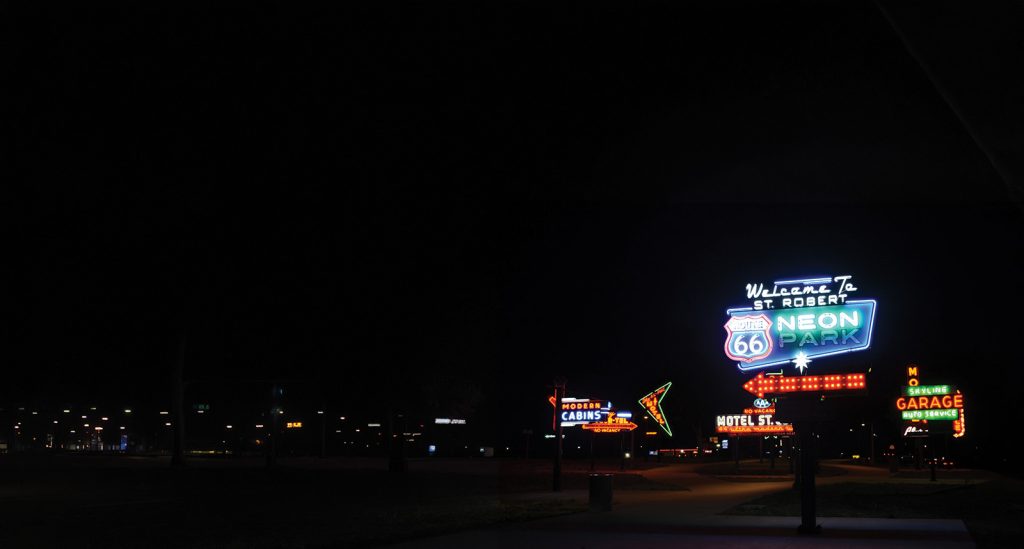
At the tail end of the exhibit is a picture of the Route 66 Neon Park, an open-air museum in St. Robert that showcases restored, vintage neon signs from real Route 66 businesses.
Schaefer said knowing the history of Route 66 is important to knowing the history behind infrastructure, automobiles, and the tourist economy in the United States.
“That’s one reason that we exist: to document it and to try to keep something of it alive,” she said.
Route 66 Playlist
- Will Rogers Highway, Woody Guthrie, 1940
- Chuggin’ On Down Route 66, Smiley Burnette, 1954
- (Get Your Kicks on) Route 66, Chuck berry, 1961
- Way Down Watson, Son Volt, 1997
- King of the Road, Roger Miller, 1965
- Girl on the Billboard, Del Reeves, 1965
- Take It Easy, Eagles, 1972
- Tulsa Time, Don Williams, 1978
- Cadillac Ranch, Bruce Springsteen, 1980
- Heartland, U2, 1988