
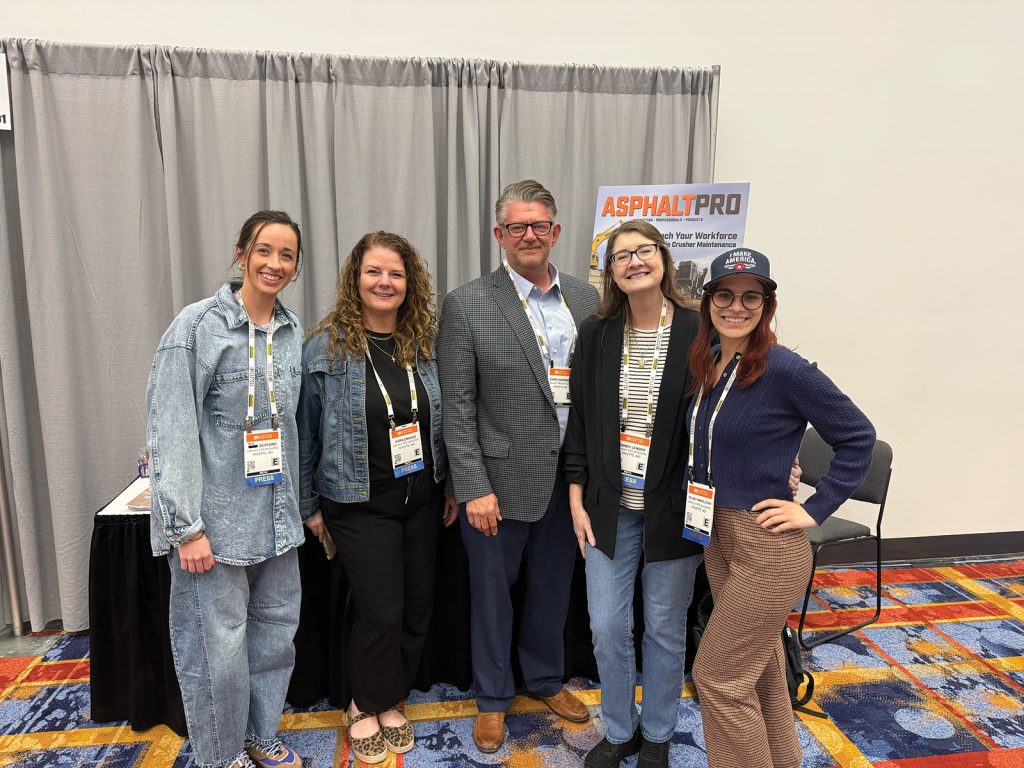
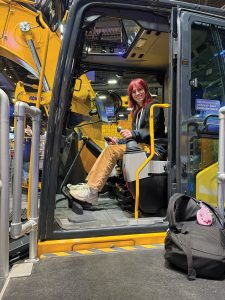
 Last month, I found myself walking through the cavernous halls of the Las Vegas Convention Center at CONEXPO-CON/AGG, North America’s largest construction trade show.
“What the heck is the associate editor of COMO Magazine doing at such an event?” you might be wondering. And to that I say, it’s good for writers to put themselves in potentially awkward and unfamiliar environments — otherwise, how could they really be good storytellers? If you want to get more technical, though, I was there to assist our wonderful associate publisher, Chris Harrison, who also publishes AsphaltPro magazine, with the production of video content.
The scale of it all was almost hard to grasp. Booths stretched in every direction, packed with massive machines, demonstrations, and people eager to talk about their companies and the craft behind their work. The air hummed constantly with engines rumbling to life, conversations overlapping, and equipment clanking.
After a few days surrounded by the people who build our roads, I left thinking about how rarely we think about our roadways (although, with all the construction lately, maybe we’re thinking about them a little more than usual — ha!). Most of us depend on them daily without giving them much thought, yet each one requires enormous planning, equipment, skill, and labor. The work itself might be noisy and complex while it’s happening, but the result becomes something a little more modest — a surface we rely on without really noticing, guiding us where we need to go.
That idea kept coming back to me as we wrapped up this issue of COMO Magazine. Even with the incredibly impactful people, places, and ideas in our lives, how often do we make the time to formally acknowledge them and really sit with them?
Take the Unbound Book Festival, one of the stories in this month’s issue. Each spring, the nationally recognized literary event brings authors and readers from across the country to Columbia. While we get to see the finished product — cozy readings in bookstores and shops downtown, attendees conversing on patios, panels with hands flying up to ask the next question — many people don’t see the months-long effort of the volunteers, organizers, and supporters working behind the scenes. The festival also has a meaningful influence on our city’s economy, bringing in visitors whose spending circulates throughout the community.
In this issue, we also offer a “COMO Civic Starter Pack,” a guide meant to help residents move beyond online discourse and into tangible civic engagement. Getting involved in your community can feel intimidating if you don’t know where to begin, but small steps like attending a meeting, volunteering, and learning how local systems work can have lasting effects for generations to come.
And I can’t forget about Stephen Feilbach, creator of the sculptural bugs at the Columbia Center for Urban Agriculture. His art encourages conversations among marketgoers and invites us to think more deeply about the natural world and our relationship with it.
Impact is rarely announced with grand fanfare. More often, it’s found in the things we interact with or simply pass by every day. Like the road beneath your tires, its influence often reveals itself only when you stop to think about how much it’s been carrying all along.