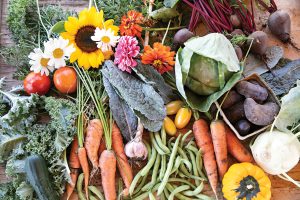

Each summer, my husband, Lyle, and I enjoy visiting the Columbia Farmers Market on Saturday mornings. Last summer, we planted a vibrant home garden full of wildflowers, sunflowers, tomatoes, and chiles. When we visited the farmers market, we didn’t need to stand in line for those high-demand items. We supplemented our garden produce with zucchini, cucumbers, corn, garlic, shallots, lettuce, and peppers from our local vendors.
We appreciated our time last summer with our flowers, fruits, and vegetables so much. When we dismantled the garden at the end of the season, we wanted to keep feeling close to our food. So almost every Saturday, we continued visiting the market.
The weeks and months have transformed the market scene and its visitors: from the crowded, summer peak carnival we knew to wistful fits and starts of end-of-summer regulars, to autumn harvest celebration, to a sparse but serious crew of bundled up, heater-hovering, flushed-cheek, teeth-chattering, grinning, patient patrons.
Our Saturday morning canvas bag harvests have also changed, especially this winter. In place of summer produce, our bags now contain steaks, roasts, potatoes, jarred goods, baked goods, Niobrara Naturals candles and soaps, and exciting old and new flavors of Kaged Heat hot sauce.
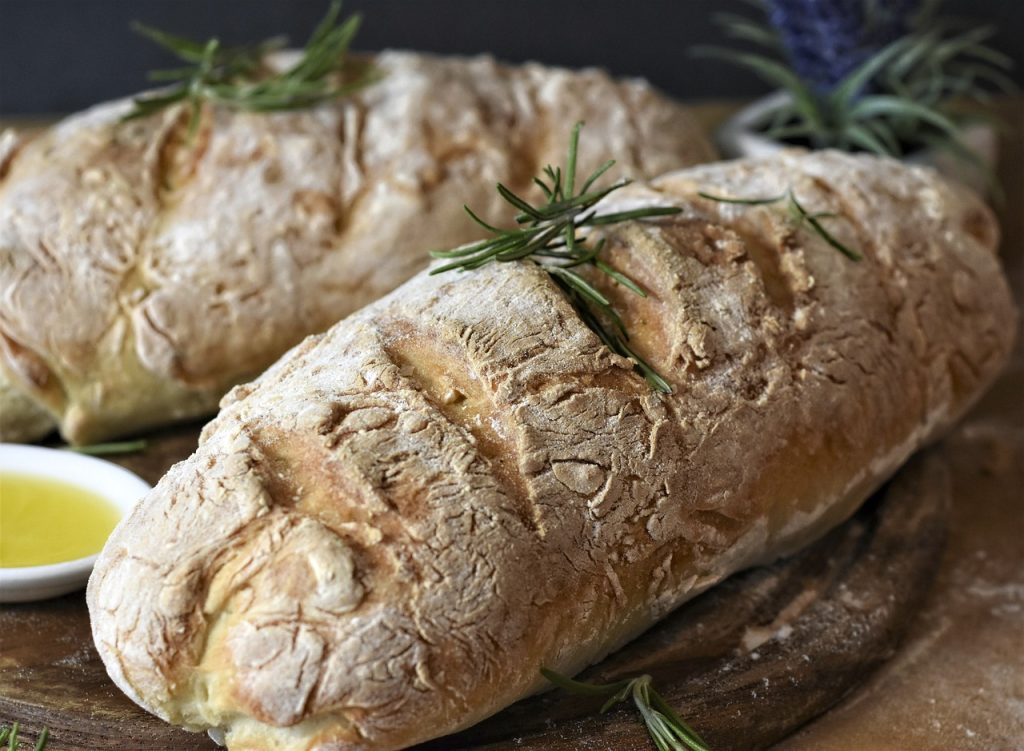
On Valentine’s Day, we visited the market, planning to make homemade pizza for our celebration dinner. We picked up a tub of spicy tomato sauce from Pasta La Fata’s booth. Then, we noticed Uprise had a few remaining baguettes. I asked Lyle if he’d like to make French bread pizza. But then I noticed a few loaves of ciabatta. I altered course again, thinking that ciabatta’s unique combination of crunchy, chewy, soft, and light might make a fantastic pizza crust.
That night, we carefully cut the ciabatta loaf in half lengthwise. We set the denser bottom half aside for other uses like a strata or croutons, concentrating on the extra-airy, light top half as the base for our pizza. We shredded mozzarella and Grana Padano and sprinkled the mixture on top of the ciabatta half, layering the cheese first rather than the sauce so the cheese could settle into the large holes, sealing the crust from the rest of the toppings.
We spooned the spicy tomato sauce over the cheese and added pepperoni, mushrooms, black olives, thinly sliced red onion, fresh basil, dried oregano and thyme, crushed red pepper, and a little more cheese. We baked the pizza on a greased pan at 425 degrees until the top was partially golden and the crust was crisp. We sliced the pizza into Roman style 2- to 3-inch even slices. Finally, we drizzled the slices with good balsamic vinegar.
The pizza was a revelation, in large part due to the texture of the ciabatta crust. In The Bread Bible, Rose Levy Berenbaum explains that the large amount of water in ciabatta lends to its lightness, writing, “The contrast of the crisp firm crust and soft open crumb is a delightful shock to the senses.” Imagine that experience, plus cheese and pepperoni.
The Columbia Farmers Market in winter is a subtle joy. The color, light, noise, and crammed-together people are mostly gone. Instead of knowing exactly what we’re there for, we must look, and pause, and ask questions. We talk to the farmers and vendors more. We try new products. As in our pizza experiment, we end up making meals not just from single whole-food ingredients, but also from creations vendors have made using local produce. As in summer, cooking from the farmers market feels collective, an act of community. But in the winter, it’s a bit more intimate.
In winter, there’s less of everything. Booths are farther apart. Instead of the summer’s consistent temperature inside and outside the pavilion, there’s a ciabatta-like shock to the senses when opening the plastic curtain pavilion door. The bright hit of cold wind is sealed behind us. Rubbing my hands together to appreciate the still cold but also heated air, I often stand still for a moment before setting forth to select my ingredients, a pause not always possible in the buoyant summer gathering.
Last fall, we were sad to dismantle our garden. But we let that feeling teach us what we were missing: a better connection to our food.
Just before the holidays, we talked to Kaged Heat hot sauce owners Killion Hardesty and Gage Ryan at their booth. We’d gotten to know them a bit after repeated visits. They mentioned it would be the last Saturday they’d participate in the market for a while, needing to concentrate on planting their peppers.
At home the next week, I knew I’d miss their hot sauces, so I placed an online order. I selected several bottles of the first sauce we’d tried last summer, Garlic Ghost, and a few other favorites like CoMo Dragon and Boonefire Roots. I wanted to make sure we could survive the winter but also have an extra bottle or two to give to friends. The next day, when the doorbell rang, we opened our front door for Killion, holding a bag of Kaged Heat hot sauces and stickers. We wished him happy holidays and thanked him for a fun season.
Our summer garden gave us so much: meandering wildflowers, skyward sunflowers, large tomatoes, small tomatoes, mild banana peppers, hotter jalapenos, flavor-enhancing serrano peppers, and thrillingly hot and vivid orange habaneros. But when the garden was gone for the season, our culinary connection wasn’t lost. We found it in the autumn and winter versions of the Columbia Farmers Market.