
Bidets growing in popularity among Columbia residents
There are certain things Columbia residents will discuss without hesitation: Mizzou football, road construction, the weather, and where to find a decent burger. Bathroom habits rarely make the list.
Mention a bidet, though, and you’re likely to get a raised eyebrow. A toilet that sprays water? On purpose?
For much of the world, the concept is hardly remarkable. Bidets have been used for generations in parts of Europe, Asia, and South America. Here, where toilet paper has long been the unquestioned standard, the idea still takes some getting used to. Yet local plumbing professionals say interest in bidets is growing, and one Columbia resident is happy to explain why. What once sounded like a fixture reserved for fancy hotels is finding an audience in ordinary conversations about home improvements.
An Awkward Subject
Americans have developed a remarkably euphemistic vocabulary for something everybody does. We “use the restroom,” “go number two,” or excuse ourselves for a minute. What happens behind the closed door is nobody else’s business.
That reluctance helps explain the reaction to bidets. Most of us learned to use toilet paper as children and never had a reason to rethink it. The suggestion that water might work better can feel less like a bathroom upgrade than a challenge to a lifelong habit.
But the appeal isn’t especially complicated. People want to feel clean and comfortable. Washing with water can be gentler than repeated wiping for some people, and using less toilet paper is attractive to anyone tired of buying it. It also means less paper going down the drain, although a bidet won’t prevent every clog. For people with limited mobility, a bidet may also make an everyday task easier to manage without as much reaching or twisting.
There are environmental considerations, too. Toilet paper takes trees or other fibers, water, energy, and transportation to produce. Bidets consume water and, for powered models, electricity, so the trade-off depends on the product and how it’s used. Still, reducing paper consumption is part of the appeal.
The Numbers in Columbia
At Columbia Winnelson, a local plumbing supply store, the shift is showing up in sales. Showroom manager Kailey Bruemmer says bidet sales have increased 40 percent over the past year. She and operations manager Mikel Connell have also seen considerably more interest in powered toilet seats than in separate, standalone bidet fixtures.
It’s a notable change for a product that still makes some shoppers blush. And the options go well beyond the simple sprayer people may picture.
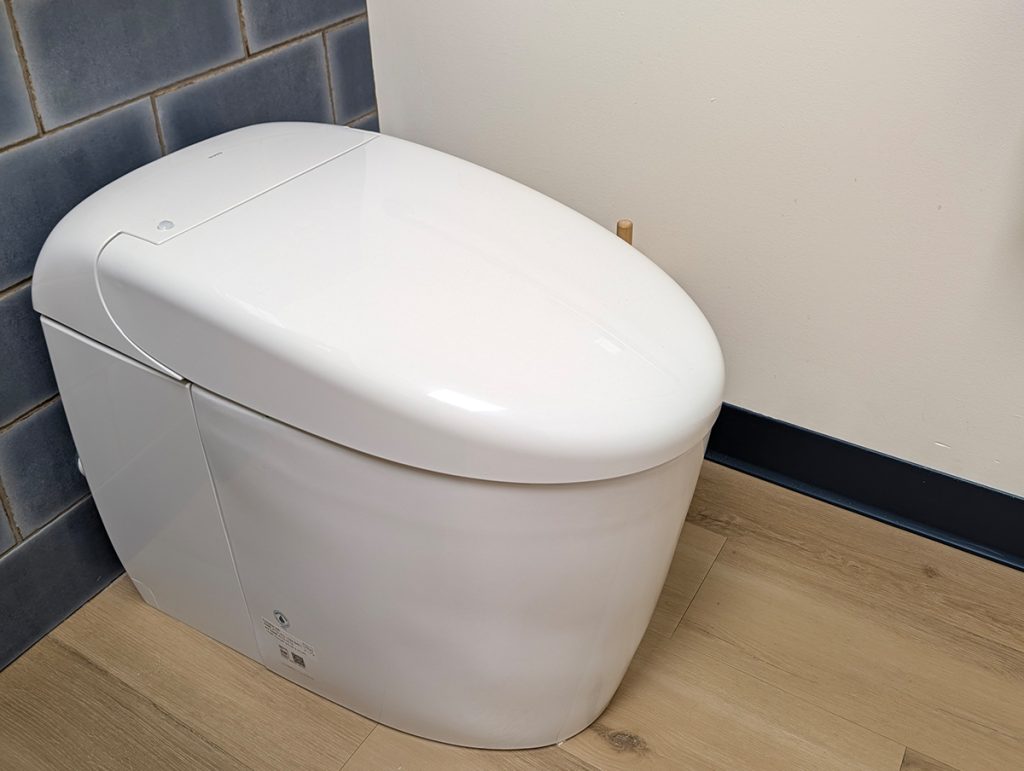
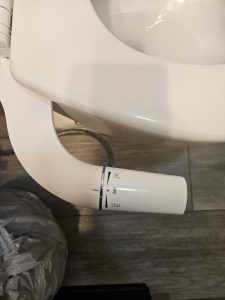
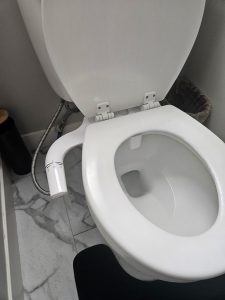
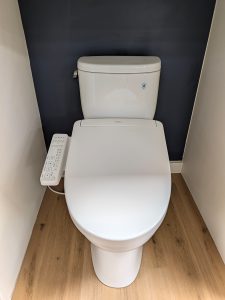
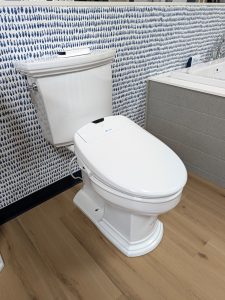
Some seats offer warm-water washing, heated seating, and drying functions. Others are basic attachments with a knob to adjust water pressure. For anyone picturing a second porcelain fixture squeezed beside the toilet, the newer models offer a different proposition: keep the toilet, change the seat.
There’s one detail worth checking before falling in love with the deluxe model. Many powered seats require an electrical outlet near the toilet. That may be an easy consideration in a new bathroom but an unexpected addition to an existing one. Not every bathroom was designed with a plug beside the plumbing. Before shopping, homeowners should check whether a model fits their toilet and what connections it requires. That small bit of homework could save an inconvenient surprise after the box is opened.
Bruemmer’s sales figures don’t mean bidets have become standard equipment in Columbia homes. It does suggest more customers are willing to consider something that once seemed unusual.
From Basic to Bells and Whistles
Bill Johnson, owner of Mr. Rooter Plumbing of Columbia, sees much of the current interest in bidets in higher-end homes. He suspects price is a big reason, although he says there are options for nearly every budget.
At the entry level, many bidet seats use cold water from the toilet’s existing supply line. Johnson says those models are generally straightforward to install and typically come with the necessary adapters. They don’t offer all the comforts of more expensive versions, but they do the main job.
Move up in price, and the feature list starts to resemble a luxury car brochure. Heated seats, warm water, air dryers, night lights, automatic lids, and flushing are among the possibilities. Some models also have bowl-rinsing features intended to help keep things clean.
All that convenience explains the electrical requirement Bruemmer mentioned. Johnson says the premium features need power, which homeowners should account for before purchasing. Electrical work near a water source must also meet applicable safety requirements.
He believes unfamiliarity remains a major obstacle to wider adoption of bidet seats. Some people simply don’t know they exist; others assume they’re only for wealthy homeowners. His experience suggests the first try can change minds.
“I think one of the surprises that most people find when they use it for the first time is, ‘Wow — it’s really nice to sit on a warm toilet seat,’” Johnson says.
It’s hard to argue with that on a cold Missouri morning.
A Convert Makes His Case
Columbia resident Robert Hightower doesn’t need a bidet sales pitch. He first encountered the idea overseas, where the equipment looked different but served the same purpose. After returning to the United States and seeing a friend’s more refined version, he decided to buy one.
Hightower has become an enthusiastic advocate, bringing up the subject whenever a conversation gives him an opening. Guests at his house have reacted with questions, skepticism, and the occasional turned-up nose. Those willing to try it, he says, tend to be pleasantly surprised.
His own model is hardly extravagant. It has adjustable water pressure and two nozzles. He appreciates needing less toilet paper and, more than anything, the feeling of being clean afterward. He has tried a friend’s top-of-the-line version, complete with heated seating and drying, but he’s content with his simpler setup.
“I’d suggest one to anyone who’s curious or on the fence — you can thank me later,” Hightower says. “I hate using the toilet without one at this point.”
He also knows the subject can get a laugh. That has never stopped him from recommending the experience to friends who are willing to listen. Hightower’s enthusiasm is amusing, but it gets at the real hurdle: persuading someone to try a different way of doing something they’ve done the same way for decades.
Changing the Conversation
For all the attention paid to bathroom renovations, it’s curious how little discussion there is about the most frequently used fixture in the room. Homeowners will debate tile, faucets, mirrors, and showerheads for weeks. Mention a bidet seat, and the conversation can turn awkward fast.
That may be changing. Columbia Winnelson is selling more of them. Johnson is seeing interest among customers willing to invest in bathroom comfort. Hightower has become the friend who won’t stop recommending one.
None of that means every household needs a bidet. A basic attachment won’t offer the experience of a powered seat, and some upgrades require planning and additional expense. Personal preferences matter, too.
But perhaps the reluctance to install a bidet says as much about our habits as it does about the product. We readily use water to clean almost everything else. For this one task, we’ve decided paper is enough, mostly because it’s what we’ve always used.
If Columbia’s growing curiosity is any indication, though, more people are at least willing to question that assumption.
Just maybe save the conversation for after dinner.