
Hundreds of chimney swifts filled the evening sky over Stephens College during Swift Night Out, a community event on Thursday, September 24, to introduce participants to these remarkable migratory birds and the importance of protecting their habitat.
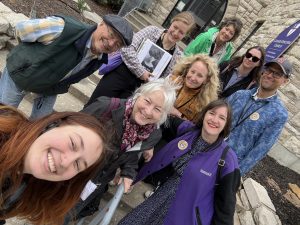
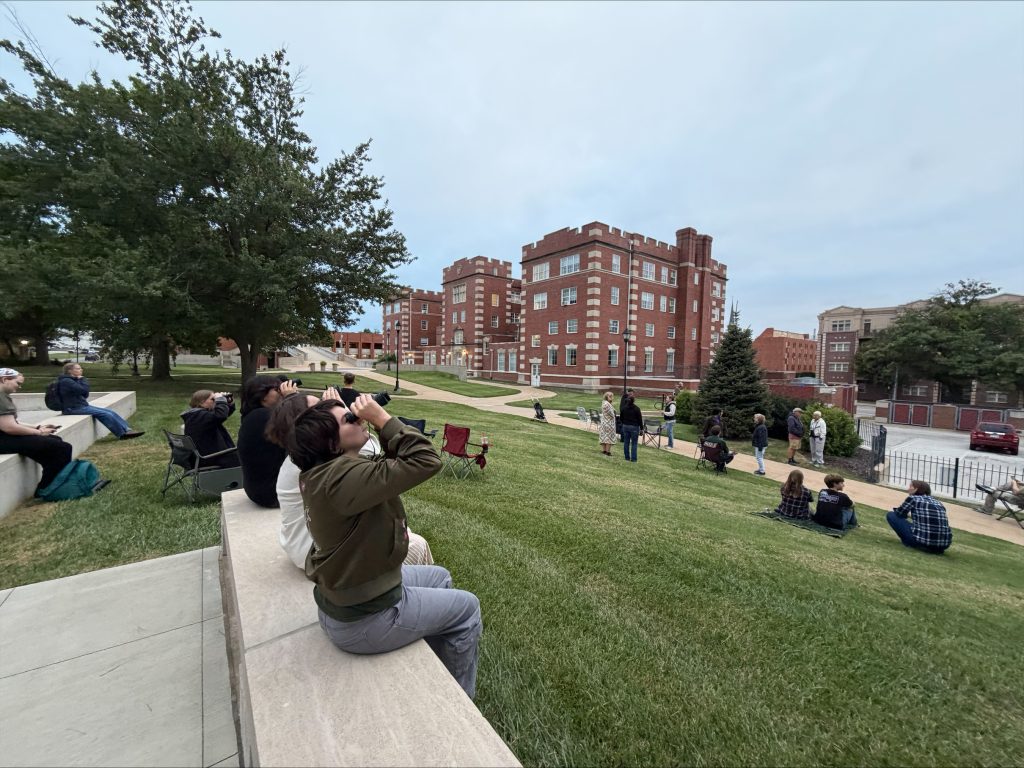
The event was a partnership among Stephens College, Columbia Audubon Society, and the U.S. Fish & Wildlife Service. Thirty-two people attended, with participants ranging from toddlers to senior adults, bringing together Stephens students and members of the loical community for an evening of wildlife watching and education. The evening began in the courtyard behind Lela Raney Wood Hall and Firestone Baars Chapel, where participants learned about chimney swift biology, migration, conservation, and the challenges facing the species before visiting roosting locations.
Stephens College student Emily Yeo, who is completing an internship working with chimney swifts, helped educate participants about the birds. She explained that chimney swifts are insectivores that spend much of their lives in flight. Unlike many other birds, swifts do not perch on horizontal branches. Instead, their specialized feet allow them to cling to vertical surfaces, including the interiors of chimneys.
Despite their impressive aerial abilities, chimney swifts are tiny, weighing an average of only about three-quarters of an ounce, roughly the weight of four quarters. They are seasonally monogamous and migrate thousands of miles between North and South America.
At 6:21 p.m. that evening, swifts began arriving over the Stephens campus. As dusk approached, hundreds could be seen and heard chattering overhead. Near sunset, the birds began circling together in an increasingly tight formation before funneling into a chimney to roost for the night. Their synchronized movements created what looked like a ballet in the sky.
Large communal roosts can contain thousands of birds. Tower Hall in downtown Columbia, for example, has hosted approximately 4,000 chimney swifts in its chimney.
Swift Night Out also highlighted conservation challenges facing the species. Chimney swifts depend on flying insects for food, making declines in insect populations a concern. They have also lost roosting and nesting habitat as older open chimneys disappear or are capped.
One way Stephens College is helping address these challenges is by adding native plants to campus. A greater variety of native plants supports a greater diversity of insects, which in turn provides food for insect-eating wildlife such as chimney swifts. Community members can contribute at home as well, including through local initiatives such as CoMo Wild Yards and by incorporating native plants into their landscapes.
For the 32 people gathered at Stephens College, Swift Night Out provided an opportunity to experience an extraordinary wildlife event in the middle of campus while learning how students, conservation organizations, students, and community members can work together to support migratory birds.
Jill Villarreal, Ph.D. is associate professor and director of the Center for Companion Animal Behavior (C-CAB) at Stephens College.