
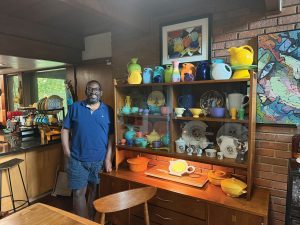
Pull up to Marshall Newman’s East Campus home, and there’s no mistaking what you’re about to find inside.
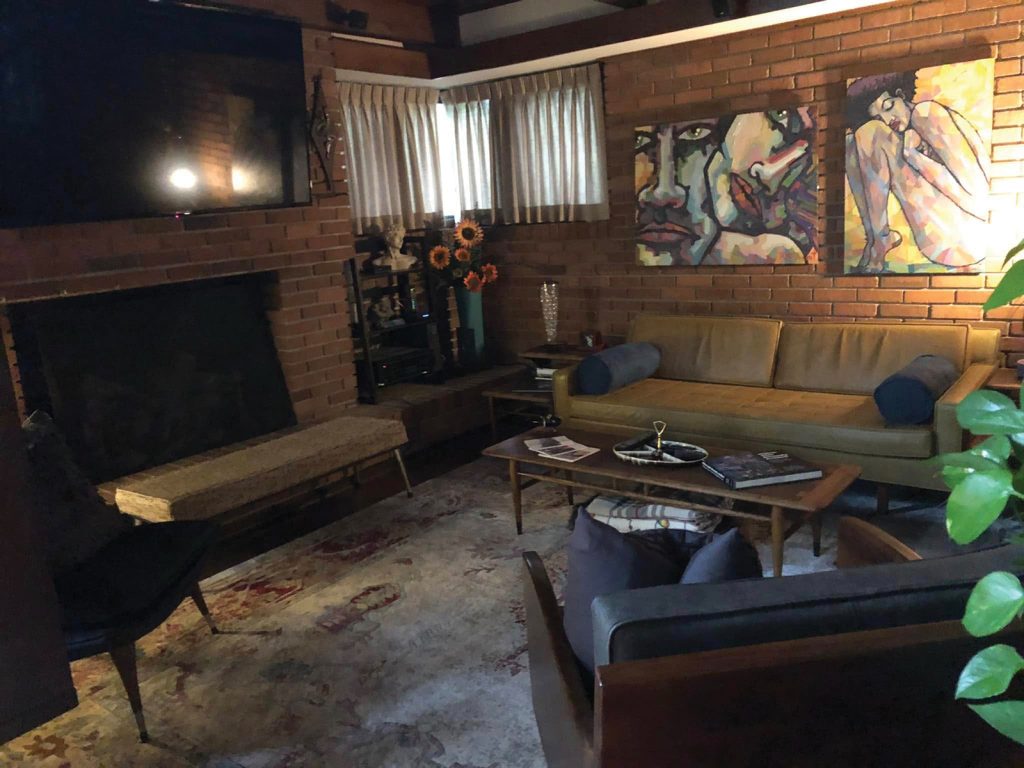
The exterior architecture offers the first clue. Then come the koi pond, rocks and pavement, sculptures, and even patches of astroturf, all details that contribute to the mid-century modern aesthetic Newman has embraced inside and out.
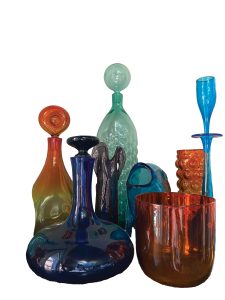
Walk through the front door, and the story continues. A large starburst clock hangs on the wall, while warm wood furniture shares space with pottery and colorful glass vases. It’s part home, part collection, and, perhaps most of all, a reflection of the man who lives there.
Newman, also known as Mid-Century Modern Marty, doesn’t just appreciate mid-century modern design. He restores, collects, and sells it, too.
But you don’t have to live in a time capsule to appreciate the style. In fact, that may be part of its lasting appeal.
More Than a Throwback
Mid-century modern, commonly shortened to MCM, is less about recreating a particular decade than embracing a design philosophy: clean lines, functional forms, warm materials, and pieces that are both useful and visually interesting.
According to Bethany Campbell of Lynn Design Group, MCM has evolved from a trend into something more enduring.
“MCM was very expressive in the ’60s and ’70s with bold colors, chrome, low-profile furniture, and geometric patterns,” Campbell says. “Today, we’re borrowing those principles and mixing them with softer, more transitional elements so a space feels timeless rather than like a snapshot of the 1950s.”
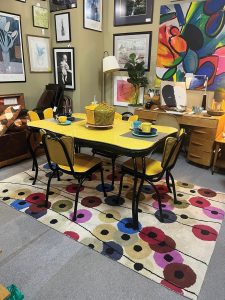
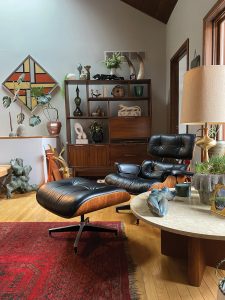
In other words, you don’t need shag carpet, an orange sofa, and starbursts covering every surface. Instead, look for sleek silhouettes, tapered or sculptural legs, geometric shapes, organic curves, and low-profile furniture. Warm woods such as walnut and teak pair naturally with leather, chrome, and glass, creating the combination of warmth and polish associated with MCM.
Color can help, too. Mustard, olive, orange, and turquoise can add a distinctly mid-century feel, particularly when balanced with neutrals and natural wood.
For Newman, starburst designs are an easy way to identify the style, whether they appear on clocks, glassware, or decorative objects. Tulip bases are another telltale feature, especially on tables. Hutches can provide both storage and display space, particularly when filled with dinnerware or colorful glassware.
Newman’s own hutch holds Fiestaware. For those without enough dishes to fill one, he offers another idea: Use the base as a television stand.
That kind of flexibility is part of what makes MCM style so livable.
Finding the Real Thing
Tyler Armstrong of retrostudio92 discovered the style through his own home. As a college student, he became interested in MCM. After graduation, he began furnishing his home with vintage furniture and accessories. Friends noticed and soon began asking him to help find pieces for their homes.
What began as a personal interest became a hobby of collecting, selling, and trading vintage furnishings.
“MCM is appealing because its sleek lines can fit in with any décor, from rustic to older antiques,” Armstrong says. “Also, I think color is making a comeback, and some of MCM’s colorful touches are welcome.”
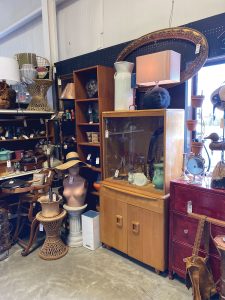
Today, Armstrong has two booths at Midway Antique Mall, while his garage is filled with pieces he has sourced and is refinishing. He also restores furniture for others when time and space allow.
For shoppers interested in authentic vintage pieces, Armstrong recommends looking closely at the furniture itself, beginning with the legs. Material combinations such as leather and wood or leather and chrome can offer clues.
Newman suggests looking for stamps and dates. Campbell says shoppers should also prioritize construction and materials rather than appearance alone.
“The biggest mistake is prioritizing the look over the quality,” Campbell says. “Because MCM is so popular, there are a lot of pieces that mimic the aesthetic without having the construction or materials that make the style so timeless.”
One well-made piece, she says, can be more effective than a room filled with inexpensive imitations.
Start With One Piece
Embracing MCM doesn’t require a complete home makeover.
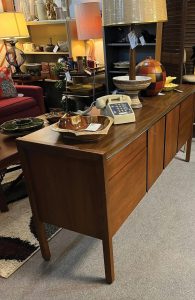
Start small. Mix chrome with warm woods and leather. Add a geometric rug, wallpaper, or artwork. Try a vintage credenza, sculptural chair, or distinctive light fixture.
Newman’s advice is simple: “Just swap out one piece at a time.”
The best MCM interiors often don’t look like showrooms. They look collected. A vintage chair can sit beside a contemporary sofa. A mid-century credenza can support a modern television. A colorful glass vase can share a table with a family heirloom.
The goal isn’t to make everything match. It’s to find pieces that make sense together.
Made to Last
For Columbia woodworker Ira Papick, that philosophy takes a more handcrafted form.
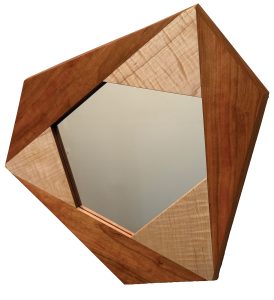
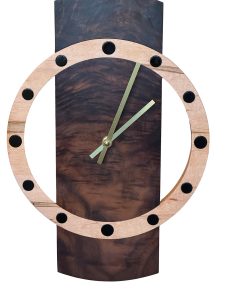
A professor emeritus in mathematics, Papick has spent years working with wood, creating mirrors, clocks, vases, and tables. His work has been exhibited and sold locally, including through the Columbia Art League.
His often MCM-inflected pieces have a simple, uncluttered quality. He works with unusual woods, including ambrosia and beetle maple, and uses wooden dowels or butterfly keys rather than metal hardware to connect and strengthen pieces.
For Papick, the appeal comes down to the material itself.
“At the end of the day, it’s about the wood,” he says.
It’s also about longevity, creating “pieces that will last for [their owner’s] life and the children’s lives.”
That may be the most enduring quality of MCM. Though associated with a particular era, its best characteristics — thoughtful design, useful objects, quality materials, and craftsmanship — aren’t limited to one decade.
They’re just good design.
Set the Table: An MCM Dinner Party
A home with a little mid-century flair practically begs for a dinner party.
You don’t need a perfectly restored dining room or vintage table setting. Choose a few distinctive pieces and let them establish the mood.
Start with a bar cart. Whether vintage or modern, it can instantly bring a mid-century touch to a room. Add an ice bucket, cocktail shaker, and interesting glassware. Colorful decanters and vintage glasses can double as décor when they aren’t being used.
At the table, consider shapes and materials as much as the food. A simple wooden table with sculptural serving pieces can create the right atmosphere without feeling like a theme party. Fiestaware adds color, while glass serving dishes and ceramics bring in organic shapes.
Mixing eras is encouraged. A vintage serving platter can sit beside contemporary dinnerware, just as a modern table can work beneath a vintage light fixture. The goal is a table that feels collected rather than purchased as a matching set.
For food, lean into approachable, nostalgic favorites: deviled eggs, cheese or relish trays, a roast or classic casserole, and a dessert with a retro feel. (Haven’t you always wanted to try your hand at Cherries Jubilee or Baked Alaska?) Familiar dishes can be updated without losing the spirit of the evening.
Then put on some music. Jazz, early rock ’n’ roll, and soul can set the mood while keeping conversation at the center.
And don’t forget your wardrobe. A structured dress, bold pattern, tailored trousers, loafers, or a vintage-inspired accessory can nod to the era without turning dinner into a costume party. Columbia’s Maude Vintage, with its retro sensibility, offers one source of inspiration.
Ultimately, the best MCM dinner party isn’t the one where every detail is historically accurate. It’s the one where the room feels good, the food keeps people at the table, and nobody is in a hurry to leave.
Which brings everything back to the philosophy behind the style itself.
Buy what you think is cool.
Then invite people over to enjoy it.