
Most Columbians know the Columbia Mall as a place that comes alive at 11 a.m., a hub for window shoppers, food‑court regulars, and determined bar gain hunters. But long before the store fronts glow and the first customers drift in, another community fills the walkways. Their footsteps echo through the corridors, creating a steady rhythm that has nothing to do with retail. These are the mall walkers, and for many of them, the Columbia Mall is a center of movement, friendship, and routine.
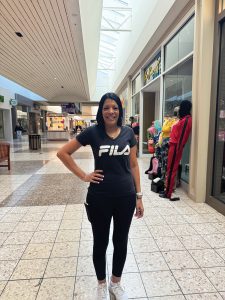
Angela Shelton, a homemaker and mother of three, is one of the familiar faces in this early‑morning crowd. She’s been walking the mall for years, ever since her children were small. As she walks past two young mothers pushing strollers, she smiles. “That used to be me,” she says, remembering the days when mall walking was her escape from the chaos of raising toddlers.
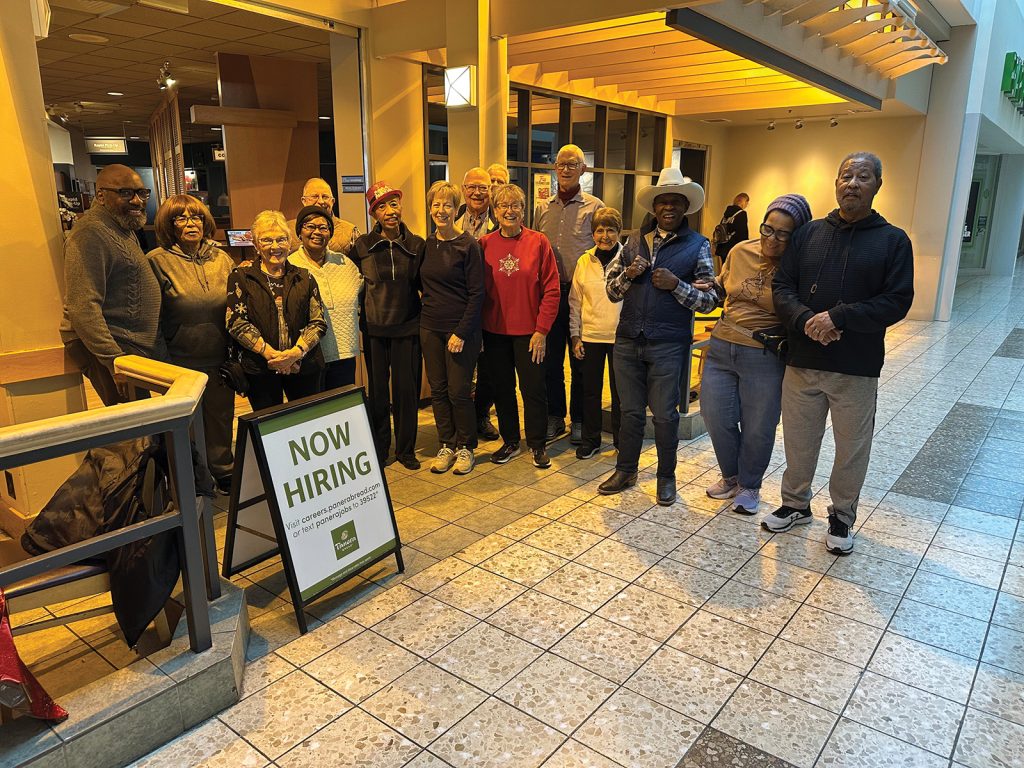
Now that her kids are grown up and more self‑sufficient, Shelton walks with a group. Some are relatives, and some are friends she met along the way. The mall walkers are a diverse bunch: retirees, parents, people recovering from injuries, and those simply looking for a safe, climate‑controlled place to move. Some arrive as early as six in the morning, long before the first Eddie Bauer employee clocks in.
Shelton first encountered mall walkers when she worked at a kiosk as a teenager. “At first, I thought it was a little funny,” she admits. “What were these people doing just walking around the mall?” Years later, as a young mom searching for a safe and affordable option for fitness, she understood. Mall walking wasn’t just exercise; it was connection.
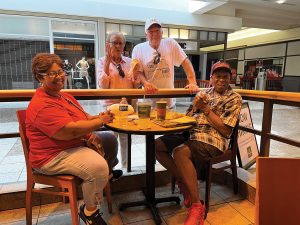
On Friday mornings, you can spot Shelton and her walking group gathered at Panera, bright red shoes propped under the table as they sip coffee and catch up. The shoes are a playful symbol of their shared commitment, but the group itself is what keeps Shelton coming back.
“I wanted to get into fitness, but I was never a gym person,” she says. “I needed to get out and start focusing on my health. Then it ended up being healthy and social.”
Safety is another reason she prefers the mall. “I feel safe, I really do,” Shelton says. “They have security here and cameras. I can walk by myself.” Outdoor options like Shelter Gardens are beautiful, but the mall’s climate‑controlled environment is easier on her asthma and allergies. No pollen, no icy sidewalks, no unpredictable weather, just smooth floors and steady temperatures.
One thing to note is that dogs can accompany early‑morning walkers — as long as their business is cleaned up afterward. Any day of the week, you can see many people walking their furry companions up and down the hallways.
For Barbra Horrell, mall walking began as something to get her out and about. Eight years ago, after her husband passed away, she needed something to anchor her days. She found it in the mall’s quiet morning hours.
Horrell walks with a group of four or five members from Second Baptist Church. Over time, they’ve gotten to know other walking groups, retirees, church friends, widowers, and longtime regulars. “There’s other groups too,” she says. “Different churches and different retired people that all came together, and we are one big family here.”
One lap around the mall equals a mile, and Horrell’s group is serious about their routine. They walk fifteen miles a week — three laps a day, five days a week. For Horrell, the mall offers consistency that outdoor walking can’t. Summer bugs and winter ice are no match for air‑conditioning and polished tile.
“This way, you can walk for as long as you want,” she says. “When you’re finished, you can have coffee with your friends and other groups that are walking. It really is a community that walks here every day.”
The benefits go beyond physical fitness. Horrell’s group, made up mostly of single widowers, has found emotional and mental support in their shared routine. “We’re friendlier,” she says, noting how walking has added happiness and routine to her life.
Mall walking has become a kind of informal therapy for many participants — a way to process grief, combat isolation, and maintain a sense of purpose. The mall’s wide corridors offer space not just for movement, but for conversation.
By the time the mall officially opens at 11 a.m., most walkers have already finished their miles, shared their coffee, and headed home. Shoppers rarely see the early‑morning transformation: the mall as a track, a meeting place, a support system.
But for Shelton, Horrell, and dozens of others, those quiet hours are the best part of the day. Mall walking is free, safe, and accessible, but its real value lies in the small‑town community feel, where everyone knows everyone.