
Helping journalists in exile
Photography by Nguyen Long
In 1983, when Alfred Friendly had the idea to start a foundation that would help journalists in developing countries, he could not have known that it would evolve into a three-week residential program helping journalists in exile get back into the field.
Current president of Alfred Friendly Press Partners, Randy Smith, first encountered the foundation when its representatives came into his newsroom at the Kansas City Star and proposed the idea of sending a fellow to the newsroom to learn about American journalism, gain new skills, and experience living in a democracy. The goal was to then have the fellow return to their home country and spread what they learned to other journalists and citizens.
After working with fellows from a few different parts of the world, Smith felt that the organization needed to be more strategic about where they were recruiting fellows.
“We looked around to see what kind of immigrant population we had in the 18 counties that we served primarily and realized there were a lot of sub-Saharan Africans,” Smith said. “We felt like we couldn’t solve the world’s problems, but we could be much more impactful if we could start a relationship with a news organization in that part of the world.”
After taking a year off from the program, Smith went to Nation Media in Kenya and was sent to look at the strengths and weaknesses of its operations in Uganda, Tanzania, and Rwanda and identify areas to improve. When he returned to the Friendly Foundation and told them about his experiences, he became the first non-family member on the board about six months later.
When Smith accepted a position at the University of Missouri School of Journalism in 2009, he proposed bringing the program to Mizzou and persuaded the university to sign a memo of understanding in 2015.
“We continued the program, but as newsrooms slimmed down, one of the concerns I had in the U.S. was whether or not our fellows had appropriate mentorship at [the newsrooms] because people were so busy,” he said. “And then when we had our last class in 2022, we discovered that we couldn’t send like three or four people home because things had happened in their countries.” A Russian fellow was unable to return to Moscow, for example, and participants from other parts of the world faced similar difficulties.
“We need to change as well, because the world has changed and so has journalism, and I kept running into journalists who were living in the U.S. in exile,” Smith said. “They weren’t earning their money from journalism anymore, so I began to wonder if there’s something we could do to help them return to the field.”
This Year’s Program
Saw Cha Toe, who returned as a fellow this year, had previously experienced the fellowship in its past form in 2015.
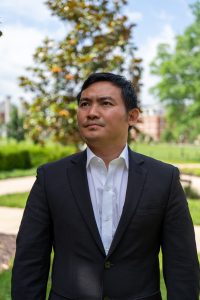
“It was a six-month fellowship program, so I spent about one month in Columbia, Missouri, and then I was assigned to Los Angeles, working with a local community newspaper in the Jewish genre,” Toe said. “I got a mentor at the Jewish journal coaching me how to operate the newsroom, grow the audience, and expand the circulation of the newspaper.”
Toe then went back to his home country of Myanmar (Burma) and continued working at The Irrawaddy magazine. During the 2021 coup d’etat, when the Myanmar military forcibly took power, Toe relocated to the United States.
“After that, the journalists were targeted; some of my friends got arrested, tortured, jailed,” Toe said. “Activists were targeted, the newsroom organizations were raided, were cracked down [on] and sealed. There was no more safety for journalists.”
Toe checked in with Smith when he arrived in the United States, and he ended up rejoining the program as a fellow this year.
“I built my own media organization, and my dream came true because of the Alfred Friendly program,” he said.
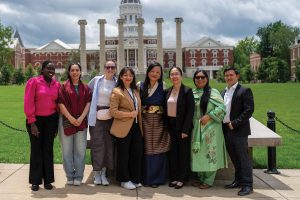
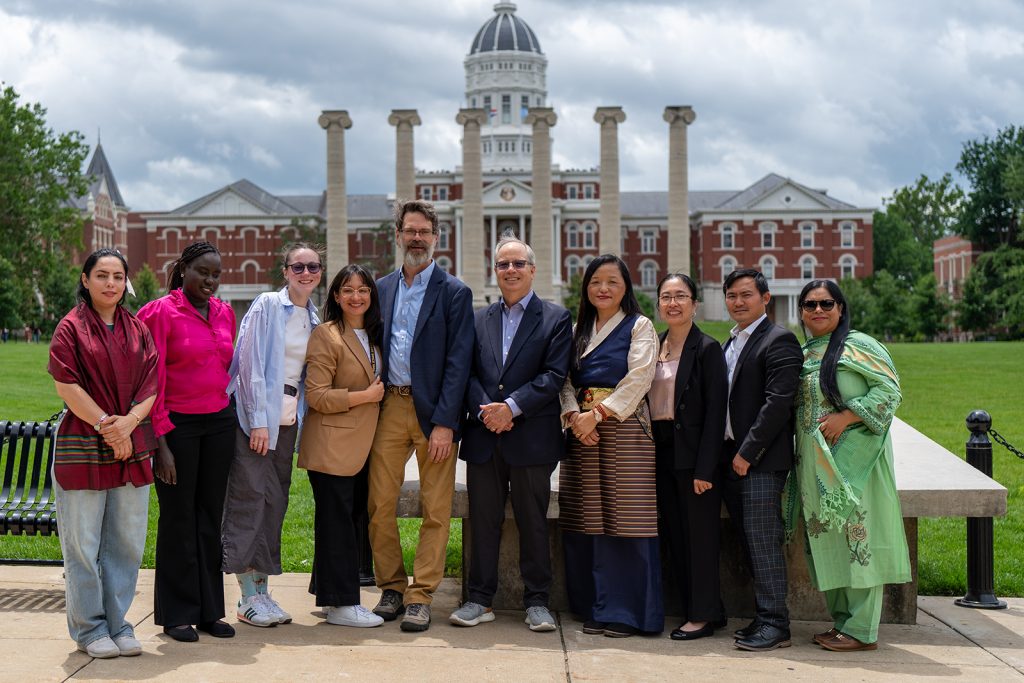
This year, the program invited seven other fellows to MU to teach them about safety, entrepreneurship, and investigative journalism:
- Rogena Akter (Bangladesh)
- Laura Clisánchez (Venezuela)
- Karina Merkureva (Russia)
- Anisa Shaheed (Afghanistan)
- Diing Magot (South Sudan)
- Tenzin Pema (Tibet)
- Quynh Nguyen (Vietnam)
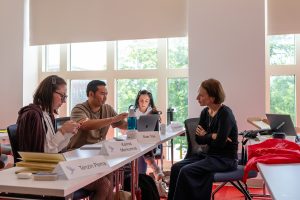
The fellows spent the first weekend learning about how to stay safe as journalists in exile.
“That was put on by the Committee to Protect Journalists (CPJ),” said J. Scott Christianson, who served as director of Mizzou’s Center for Entrepreneurship and Innovation and now provides operations support to the foundation. “It was a lot about being safe when you are reporting on protests. … It was also about technology, how to use secure communications, how to make sure that you’re storing things in a way that protects your sources, and also protects yourself and your family.”
Safety was one of the main draws of the program for Pema, the Tibetan journalist. Most recently, she was director of the Radio Free Asia’s Tibetan Service, which provides a window into Tibet — “probably the world’s most restricted and highly surveilled region,” as Pema put it.
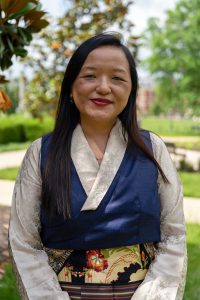
“I started researching [the program] and I saw all of the dedicated programs they have for legal and for safety as well as for entrepreneurship, and I think these are all the areas that we really kind of want to be studying more in depth,” she added.
Pema has reflected on exile, Tibet, and Tibetan identity in her collection of poems A Thousand Parallel Lives, and after the program, Pema wants to continue working to shed light on what is happening in the country. She said that one of the major challenges that journalists are facing around the world is being able to accurately report what is happening in places without being complicit in state propaganda.
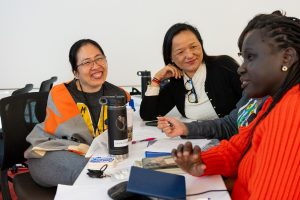
Once the fellows had been schooled in journalistic safety, they spent approximately a week learning about entrepreneurship.
“It’s not just about great reporting, it’s about a product that you’re producing, and you have to provide a value that at some point can be monetized,” Christianson said. To that end, fellows spent time working on résumés, elevator pitches, and fleshing out sample business models.
The week on entrepreneurship especially stuck with Nguyen, who fell so in love with Columbia that she wants to open a restaurant here one day. Nguyen is more commonly known by her pen name “Mother Mushroom,” and she reports on human rights in Vietnam. Nguyen has previously worked for Danlambao, a pro-democracy website, and helped found the Vietnamese Bloggers Network, which helps writers who speak out against state media.
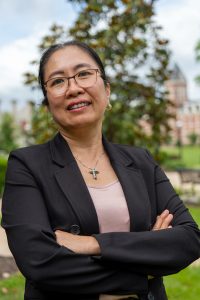
“I love this city because it’s not too big, but it’s not too small,” Nguyen said. “People have their own space to live their own life and show who they are without concern of being judged.”
Nguyen has good reason to fear being judged, having been arrested in October 2016 when she visited an activist in prison and sentenced to 10 years in prison herself in 2017. Over 1,000 people signed a petition demanding her release, which was granted — albeit with immediate exile — in 2018. Nguyen was also awarded the International Woman of Courage Award in 2017 by the U.S. Department of State.
“I was charged up to 10 years in prison, but after pressure from the [U.S.] State Department and the international community outside [Vietnam], I was released after spending two years in prison and have to live in exile right now with my daughter, my son, and my mom,” she said.
Nguyen heard about Alfred Friendly Press Partners from Nobel Peace Prize winner Maria Ressa, whom she met at a CPJ awards ceremony where both were being honored in 2018. She said that Ressa recommended her to Smith, and he invited her to apply for the program.
“I was so impressed with this fellowship because it’s made me feel like we have support and we are not alone,” Nguyen said. “When I am struggling with how to continue my journalism career and how to help the other people in the community — even like the situation about human rights in Vietnam right now — after spending three weeks in the program, I think I have a lot of knowledge and support.”
Another of Nguyen’s biggest takeaways from the program was how democracy defends people.
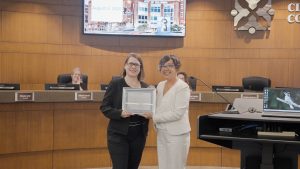
“The thing I feel most thankful for is how I now know that democracy works,” she said. “I went to the court, and the judge protected the First Amendment [rights] of the defendant, and she gave the defendant a chance to talk about him and how [he] feels for 10 minutes without interruption. I don’t have that in my country.”