
Everywhere you turn these days, it seems that some health system, insurance company, or hospital is touting its commitment to “patient-centered care.” A patient-centered care approach means more than simply putting the patient’s needs first. It involves a partnership between caregiver and patient, with shared decision-making guided by what matters most for the patient’s well-being.
Now, a new partnership between Stephens College and Kuehler Veterinary Services is taking that same guiding philosophy and applying it to animals. This “animal-first” approach to care sees animals as individuals — and recognizes that understanding their individuality is essential to good healthcare. The Stephens–KVS partnership is both putting this philosophy into practice and developing these skills in the next generation of animal caregivers.
Holistic Healing for Horses (and Other Creatures)
As most Columbians know, Stephens is home to a storied and celebrated equestrian program. Professors Shelby Baxley and Sara Linde Patel manage the horses at the Stephens College Equestrian Center. The two are especially interested in preventative care, because avoiding problems is often the best way to treat these animals. Because many of the horses at Stephens are long in the tooth, they frequently need physical or emotional rehabilitation.
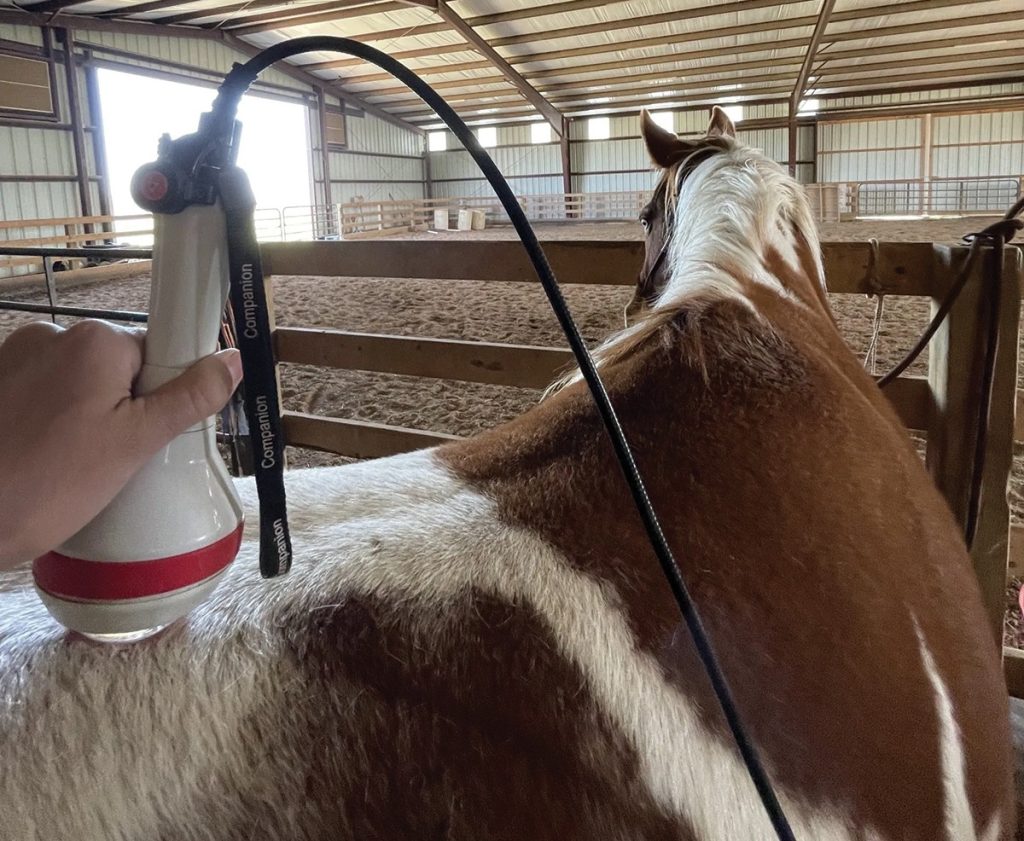
The new partnership with Dr. Kally Kuehler of KVS centers on alternative methods of care, which is crucial for successful rehabilitation. Kuehler trained under a traditional medical model at the University of Missouri College of Veterinary Medicine and later became a specialist in alternative, holistic modalities, such as animal chiropractic care and acupuncture, as well as equine physical therapy.
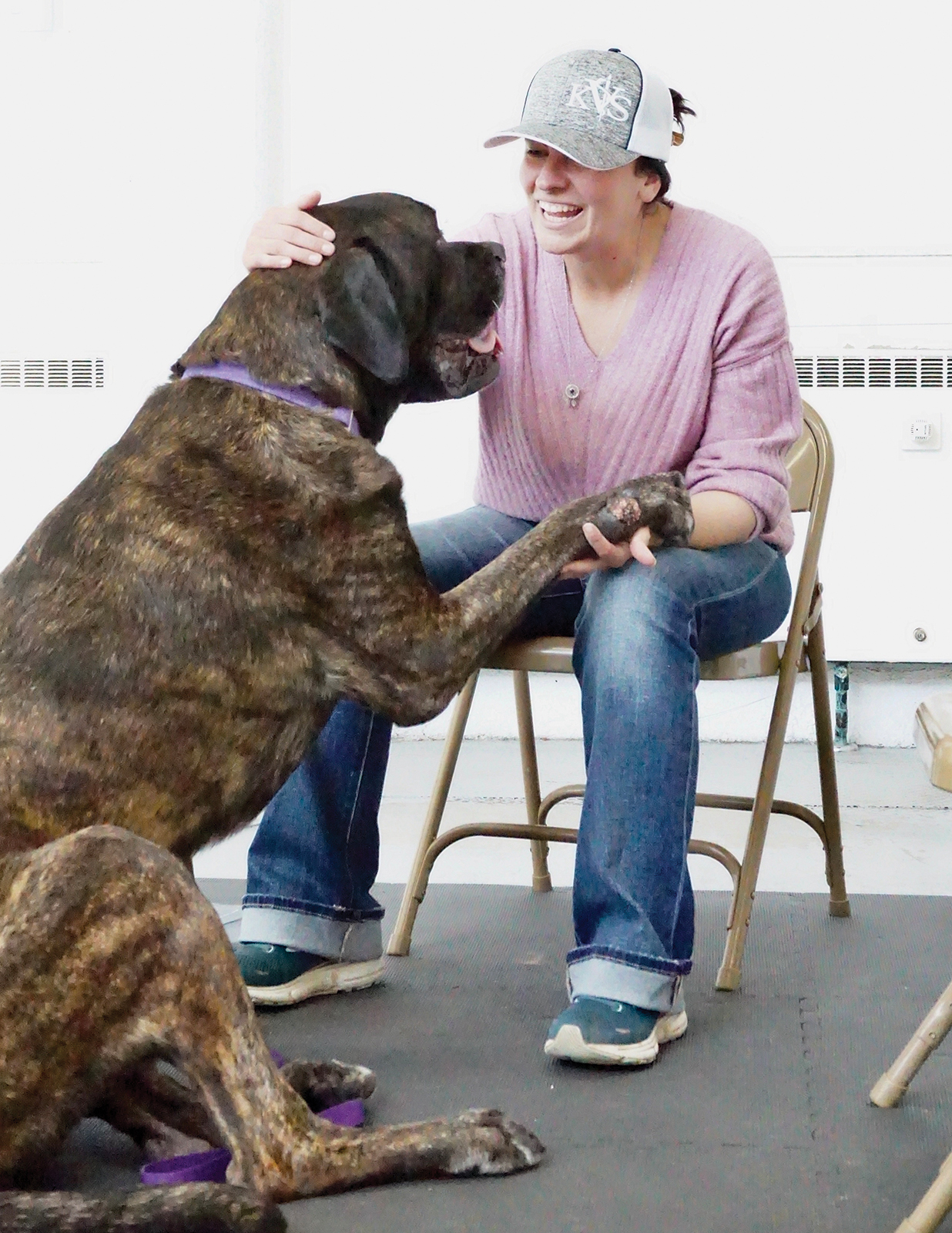
Traditional medical models use a standard of care approach to treatment, which refers to widely accepted practice expectations, mostly determined by the diagnosis. In contrast, Kuehler customizes her process for each patient. She allows her patients — individuals with personalities and preferences — to tell her what they need through careful physical examination and reading their behavior.
A customized approach for each patient may require a provider to let go of the past. A plan that has worked before for a specific diagnosis may not work for every patient. Kuehler especially favors alternative treatments that can be more effective than commonly prescribed medications.
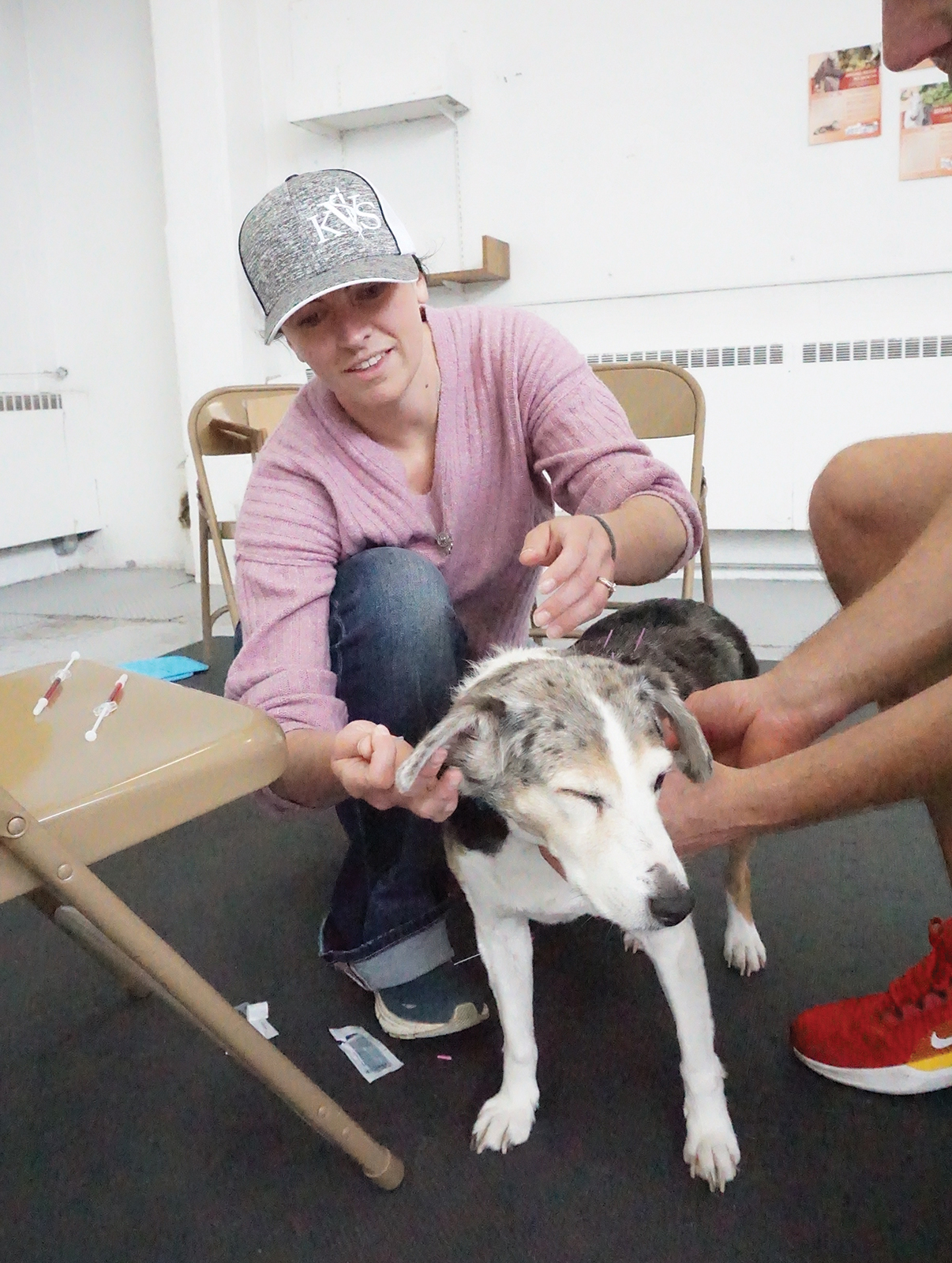
One of these alternative modalities is chiropractic treatment. As in humans, chiropractic care of animals involves laying on of hands. For musculoskeletal problems, Kuehler first feels for areas of hot and cold: Temperature differences can indicate problems underneath the skin. Then she assesses how the skin moves over the area, checking for grittiness or knots. She gradually progresses to deeper tissues, down to the bones.
The animals may initially show discomfort from the manipulations, but typically they show a relaxation response about halfway through the process. This response is what owners notice.
Alternative care can also be effective for treating behavioral problems, especially anxiety. For example, acupuncture is a treatment of choice for dogs that have a fear response to loud noises like storms or fireworks. Kuehler may also insert a permanent acupuncture point (a small metal BB) under a dog’s scalp to reduce severe anxiety.
Taking Their Time
 In addition to an animal-first philosophy, caregivers at Stephens College have another important advantage: “the beauty of time.” Unlike equestrian centers that depend on performance horses for income, trainers at Stephens can take the time to pay close attention to what each horse is communicating. This allows a process to unfold, a collaboration where caregiver and animal get to know and respond to each other.
When the equestrian program hosted an ultrasound workshop for the veterinary college, visitors were amazed at how well behaved the horses were without any sedation. Patel attributes this to knowing each horse as an individual and addressing each one’s specific needs.
Time is also essential to the other primary function of the Stephens-KVS partnership: teaching a new generation of animal caregivers a patient-centered approach. Baxley and Patel are enthused about what Kuehler has to offer both the animals in their care and their students.
Patel describes Kuehler as “really supportive of students and passionate about teaching,” especially when it comes to methods they haven’t yet been exposed to. She also believes the current generation of students is more open to alternative approaches than in the past; they tend to be more sensitive to an animal’s experience. Their mentors are undoubtedly part of this shift, modeling this philosophy and helping shape the future of animal-first care.
“This is a perfect time for us,” Patel says. “We are a pet-friendly campus and with having the animal behavior degree — all of these things that the college has focused on in moving us forward in the realm of animal care and support. It falls right in alignment for the equine students, for animal behavior students, for anyone who wants to manage animals in their life, even their own pets.”
Community Outreach
Patel also believes it would be selfish not to share Kuehler with as many people as possible. As a result, the partnership between KVS and Stephens College has created the opportunity for holistic veterinary care to expand into the wider Columbia community. Kuehler emphasizes that preventive care with complementary or alternative approaches should play a key role in keeping animals healthy. Pet owners don’t have to wait until something is wrong to schedule a visit.
KVS offers regularly scheduled visits held both on Stephens College campus and at the equestrian program stables. Appointments are available on the first and third Thursdays of each month. Equine visits are offered from 9 a.m. to 12 p.m. Canine and feline appointments are offered from 1 p.m. to 6 p.m.
The visits support the long-term health of animals by focusing on pain management, mobility support, performance optimization, and overall wellness. With KVS’s services on campus, the partnership is introducing the community and Stephens students to a holistic, animal-first approach to veterinary medicine.
Cluing in to Animal Cues
Animal caregivers won’t get very far by asking their patients to provide a detailed medical history. In veterinary medicine, a patient-first approach requires specialized sensitivity to an animal’s behavior and emotional cues.
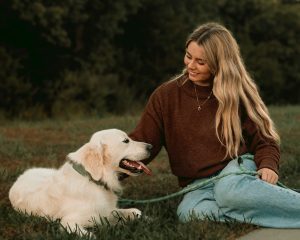
After thousands of years living alongside people, dogs are skilled at interpreting human cues and communicating with them through eye contact and other forms of nonverbal behavior. This phenomenon is fairly obvious to anyone who has spent time with a dog.
What may be less obvious is that, as social and prey animals, horses must remain highly aware of what’s happening around them. As Patel explains, they “observe everything,” including the emotional states of other horses and humans. Horses are not only adept at reading human nonverbal cues, but they also communicate through a wide range of facial expressions and body movements, revealing social signals that are both subtle and complex.
One of Baxley’s favorite things about working at the equestrian center is when she introduces a new arrival to an established pasture group. As herd animals, horses are inherently social. Baxley loves to see how their different personalities mesh and how the horses work out changing group dynamics.
The horses at Stephens are leased or donated to the college, and many of them are “a bit aged.” Older horses tend to be calmer than their young counterparts; when they must share space with each other, their energy can balance out well. The younger horses also learn good manners from their elders.
It seems the ways of our equine counterparts may not be so different from our own.