

Suzanne Rothwell, associate vice president for advancement at Columbia College, knew something was wrong when she noticed that she had an itchy rash on her legs that wouldn’t go away. Worse, she’d been experiencing gastrointestinal symptoms that had her semi-convinced she was suffering from colon cancer.
“I’ve been having symptoms for about 10 years and thought, maybe I had colon cancer, but that wasn’t it, and then they thought I had a certain kind of dermatology issue, and that wasn’t it,” Rothwell recalled. After having about 12 blood tests done in one day, she got a call from her doctor’s office with some good news and some bad news.
The good news was that she didn’t have cancer. The bad news was that she had been diagnosed with alpha-gal syndrome — and the disease was not curable.
Coming to Grips With Alpha-Gal
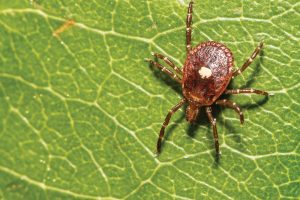 In the United States, alpha-gal syndrome is most often caused by the bite of the Lone Star tick, which can be identified by the one white spot on the female’s back. As a dog owner who likes to hike in the woods, Rothwell is sure she was bitten by a tick at some point.
People who get the disease experience mild to intense allergic reactions after eating red meat, dairy, or other products (e.g., gelatin) from mammals. This is due to the alpha-gal molecule that attaches to the tick and causes the human body to react differently to proteins found in these foods. Alpha-gal syndrome is diagnosed using a disease-specific blood test.
“The good thing about a diagnosis is that you know what to avoid so that the symptoms are not as severe,” Rothwell said. After getting her diagnosis, she was able to identify triggers and learn how to manage her symptoms. A special compound ointment and a prescription antihistamine help relieve Rothwell’s itchy rash, and she manages her gastrointestinal symptoms with food avoidance and knowing what is safe to eat.
Although Rothwell can no longer down a juicy cheeseburger and chase it with a chocolate shake, she still finds plenty of dining options. “The rule is anything that comes from hooves is not OK, but fins and feathers are fine,” Rothwell said. “No matter where I go, I can always find something to eat.”
While she doesn’t have the breathing issues that can come along with alpha-gal, she has still been advised to carry an Epi-Pen, as symptoms can come out of nowhere.
“Everyone’s symptoms tend to be a little bit different, and everyone’s triggers are also a little bit different, and people have different severities,” Rothwell said. Her advice to others who have alpha-gal is to “Just hang in there. It’s not the end of the world.”
And while there’s no actual cure for the condition, it’s possible that the allergy could eventually ease up on its own. According to the Missouri Department of Health and Senior Services website, “Some people may be able to eat red meat again if they avoid new tick bites for a long time. This is different for everyone, so talk to your doctor about what’s best for you.”
Ticking Off the Boxes
While alpha-gal syndrome has been grabbing headlines recently, it’s hardly the only tickborne illness mid-Missouri is home to. Probably the most widely known tickborne illness is Lyme disease, which often — but not always — signals its presence with a bull’s-eye rash near the bite location. Symptoms of Lyme disease are flu-like, with enlarged lymph nodes, muscle and joint pain, a stiff neck, fever, headache, and fatigue. Other tickborne diseases found in Missouri are Rocky Mountain spotted fever, ehrlichiosis, tularemia, Heartland virus, and Bourbon virus.
The best way to avoid ticks is to use an insect repellent spray that is specifically formulated to deter them. Apply it thoroughly when you know you are going to be outside for long periods of time.
Another tick-shunning strategy is to watch your step. “If you are going to be out on a trail, hiking or something, make sure you stay as close to the middle of the path as you can,” advised Austin Krohn, public information specialist at Columbia/Boone County Public Health and Human Services. It is best to keep a good distance away from the tree line and bushes to avoid picking up any ticks.
Skirting the Skeeters
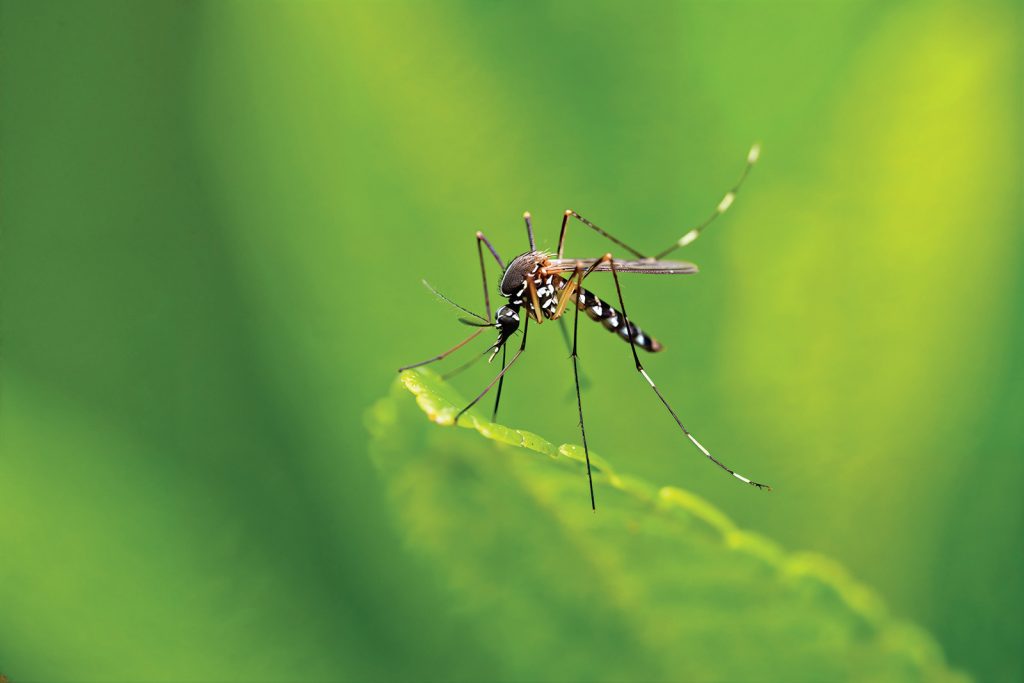
Mosquitos are another illness-bearing bug that comes out when the weather begins to warm. West Nile virus is one of the mosquito-related diseases to watch out for. As with Lyme disease, the symptoms are often flu-like, such as body aches, headaches, and fatigue. Sometimes even brain swelling called encephalitis can occur.
Even though this disease is something to be on the watch for, Boone County didn’t have a case of West Nile virus last year. “It’s not transmissible once you have it; you can’t give it to another person,” Krohn explained. However, county health officials are still monitoring this disease — along with other mosquito-borne illnesses, such as the Zika virus — especially in the warmer weather.
As with ticks, it’s best to use a good insect repellent to ward off the mosquitos. This, along with wearing clothes that cover your skin, is the main deterrent for these blood-sucking bugs.
Keeping Away from Kissing Bugs
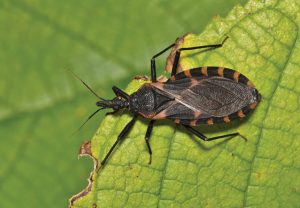 Talk about adding insult to injury: After a “kissing bug” climbs onto your face during the night and bites you near your mouth, it will poop on you. If you happen to rub your eyes or mouth upon waking, those parasite-laden feces can give you Chagas disease.
While this illness is still relatively rare in the United States — it’s more commonly found in Mexico and Central and South America — cases have been reported in Missouri. According to a 2024 article published in the Journal of Medical Entomology, the kissing critters that cause it have been found in at least 15 counties in Missouri — and Boone is one of them.
It can be hard to notice Chagas disease for the first few weeks to months. However, it is known to produce fever, fatigue, body aches, rashes, as well as eyelid swelling. More ominously, the disease can also eventually lead to heart and digestive issues.
“The problem with Chagas disease is that you may not even know you have it until later when you have these heart or digestive problems,” Krohn said, “so it is good to get it looked at early if you suspect something is wrong with you.” A blood test can reveal whether you’re suffering from this parasitic infection.
Kissing bugs, which are usually between ¾ and 1¼ inches long and have a flat, oval-shaped body, crawl into houses through open windows or cracks and crevices in the walls. They are often found in woodpiles and animal bedding, which causes them to be more prevalent on farms.
To prevent kissing bugs from getting inside your home, seal the areas around your windows, doors, walls, and roof so there are no cracks or gaps. Ensure screens on windows and doors are in good repair. Also keep piles of brush, wood, or rocks away from your home. Finally, direct outdoor lights away from your sleeping areas so as not to attract the bugs at night.
“The important thing is, if you find a kissing bug, do not kill it or crush it,” Krohn said. “Use gloves or tweezers to place it in a clean container and contact us at the Health Department, and we will be able to send it off for testing at the state to see if it carries that disease.”
If so, you can be treated with an anti-parasite medication.
Banishing the Bugs
Summer is just around the corner, and these upcoming months are the best time to enjoy the warm weather. There are many fun summer activities such as hiking, camping, and swimming that involve being outdoors. But whether you head outside or stay inside, take steps to keep the bugs at bay. You don’t want insect-borne illness to put a crimp in your summer fun.