

Maybe you’ve spent a Saturday morning wandering down Broadway or Ninth Street, or you’ve caught a concert at The Blue Note or a film at True/False. If so, you already know something about Columbia: This is a town that values and loves creativity. We love ideas. We love people who build, curate, and craft a life that feels meaningful and contributes to the beauty of our city.
But there’s a subtle trap hidden inside that impulse.
In our unending search for a well-curated life, success can start to feel like a vertical performance. Like we’re always climbing — always leveling up — always making sure the lighting hits our achievements just right. Careers become ladders. Social circles become rankings. Even the way we talk gives it away: “moving up,” “getting ahead,” “building a platform,” “gaining a following.” It’s as if the goal of life is to end up on some kind of pedestal.
I’m thankful that Jesus shows a different way to frame success.
Recently, I was re-reading a scene from one of the last moments in Jesus’s earthly life and ministry. A group of friends is around a table. They’re with someone truly extraordinary. And what are they doing? Arguing about which of them is the greatest. Comparing impact. Measuring importance. Doing what we all do when we feel the pressure to impress.
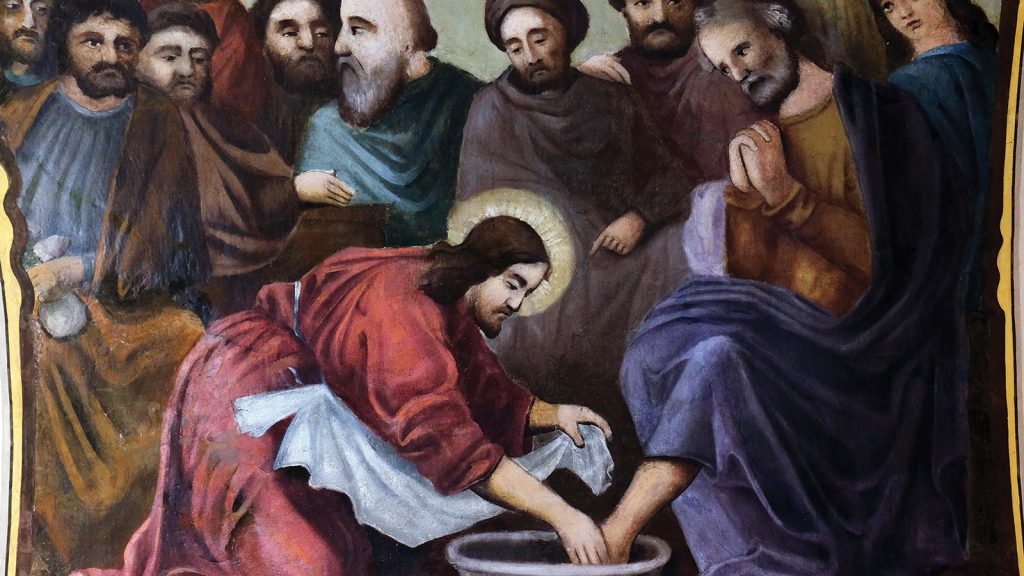
Jesus responds with something that feels like holy disruption. He picks up a towel and pours water into a basin. He proceeds to wash his disciples’ feet and wipe them dry.
In this act, he basically says: Among you, it’s going to be different. You don’t have to play that game here.
In a world that trains us to seek influence and protect status, Jesus offers a different model of accomplishment. If you want to be great, don’t look for the pedestal; look for the floor. Don’t reach for the title; reach for the towel. In the economy of God’s kingdom, greatness is not being served — it’s choosing to serve.
And in a town like ours — smart, driven, achievement-oriented — that can feel almost backward.
Because we’re often taught to help others, sure, but with the branding of our generosity still visible. To serve, but in ways that keep us in control. To give, but in ways that make us feel needed, appreciated, and impressive.
But Jesus calls that behavior out, not to shame us, but to free us. True greatness is quieter than that. Truer than that. It’s not about being seen — it’s about loving well.
I’ve started thinking about this as a kind of “flip and find.”
First, we flip our definition of success. Instead of asking, “What will this do for my image?” we ask, “How will this help the person in front of me?” We stop measuring our lives by the accolades we collect and start measuring them by the burdens we help carry. We trade the ladder for a towel.
Then, we find the places where needs already exist, in the life we already have. You don’t need a new stage to live a meaningful life. You need a new posture in spaces you already occupy. A lab at Mizzou. A local coffee shop. A classroom. Your workplace. Your living room. The dinner table. The question is the same everywhere: How can I be a source of grace here?
And here’s the theological heartbeat underneath all of it: The most influential person in the universe didn’t come to be served, but to serve. That is not just an example — it’s the shape of reality in the kingdom of God. When we choose that same path, we aren’t losing something; we’re actually finding everything.
There’s a unique kind of rest that shows up when you stop trying to be the greatest person in the room. When you stop curating your own exhibit. You become free — free to see people again, free to notice what’s happening around you, free to love without keeping score.
So as we celebrate the art and culture of COMO this month, here’s a different kind of creativity to consider: Maybe the most enduring work of art you will ever produce isn’t something you build for yourself, but what you give for someone else.