
Through decades marked by scientific breakthroughs, geopolitical upheaval, economic uncertainty, and a global pandemic, The Missouri Review has stood the test of time as an influential institution for emerging writers and a channel for ongoing literary conversation worldwide.
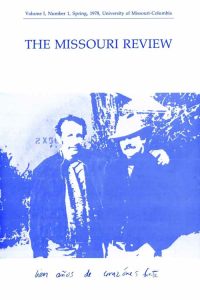
Founded in 1978 by University of Missouri English faculty members Marcia Southwick and Larry Levis, TMR’s first issue featured the work of an up-and-coming Joyce Carol Oates alongside household name writers like Robert Bly, Philip Levine, and William Stafford.
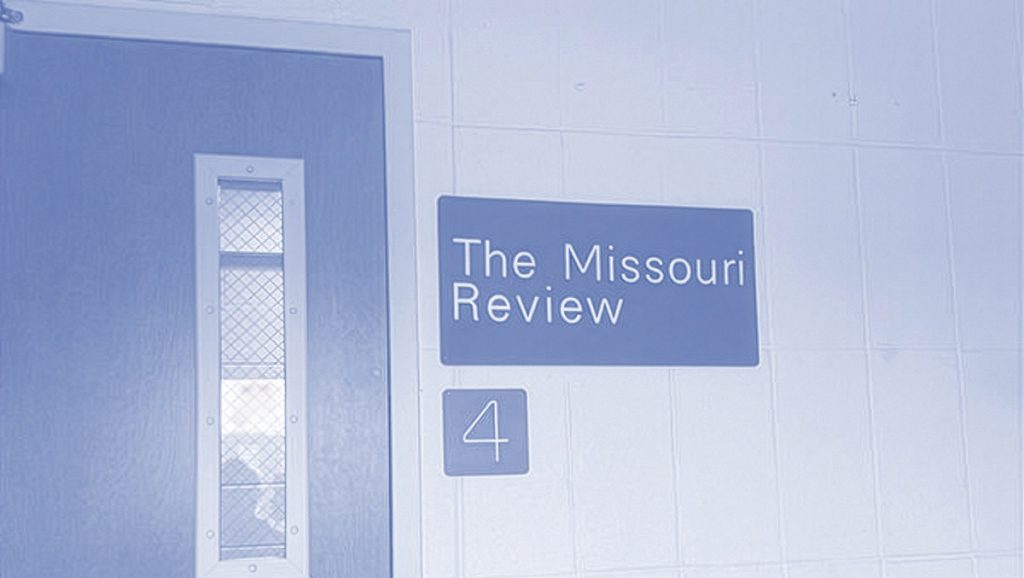
Since its inception, the publication has maintained a quarterly schedule and found long-lasting momentum under Editor-in-Chief Speer Morgan, who has been with the magazine for nearly 50 years. Based in McReynolds Hall on the Mizzou campus, TMR provides students with an immersive editorial experience rooted in continuity and care. Its long-lasting success is partly due to its core belief that strong writing is more important than reputation, credentials, or familiarity.
“We’re open to all submitters,” says Morgan. “We don’t care about submission fame, recognition, or how many books you’ve had. We treat all submissions equally.”
That openness has helped cultivate a submission pool and readership that extend far beyond mid-Missouri, connecting writers and readers across the United States and around the world. For several contributors, this may be their first time publishing. TMR is proud to be home to many first-time and rising authors, such as Susan Ford, Tim Loc, and Jennie Lin.
“The journal is a magazine of discovery,” adds Kris Somerville, TMR’s marketing coordinator, who also assists with cover design, artwork, and feature editing. “What we do is comb through the slush pile, looking for the best of the best. We’re not looking to publish people with already well-established reputations. That would be an easy thing to do.”

From Slush Pile to Publication
Each issue of TMR comprises roughly five fiction pieces, three poetry collections, and two personal essays, representing a curated coalescence of eager writers. It also hosts contests for print, including the Perkoff Prize and the Jeffrey E. Smith Editors’ Prize.
When a writer submits work — by mail or digitally — it enters the “slush pile,” the magazine’s incoming submissions queue, organized by genre. To reduce bias, editors read the manuscript before the cover letter, which may reveal prior publications or institutional affiliations. A piece is then passed along to other editors for further consideration or declined. And while rejection is not always easy for either editors or writers, it’s treated as a natural part of a work’s life cycle — one that TMR aims to handle with care and timeliness.
“If you’re a writer submitting to other journals, I think that writers find TMR more responsive, kinder, gentler, and more communicative — and again, open year-round, which is extraordinary,” says Somerville.
Each writer whose work is not accepted receives a thoughtful rejection letter that highlights the piece’s strongest elements and encourages future submissions. Turnaround times for physical submissions typically range from 10 to 12 weeks, while digitally submitted stories often receive a faster response, depending on the season. Comparatively, many journals, according to Somerville, have “exquisitely difficult reading periods,” sometimes resulting in anxiety-inducing waiting periods of six to 12 months.
After months of work, the end result is a magazine shaped less by literary status than by curiosity — and while the magazine’s issues are themed, those topics aren’t predetermined.
“We never have a theme before we have all of the pieces that we’re going to publish in a given issue,” says Managing Editor Marc McKee. “That theme emerges from how the pieces that have been accepted are in conversation with each other. … The best issues are, in a lot of ways, a lot like the kind of platonic ideal of a party where you have 17 amazing conversations.”
Rather than curating topics, the editors identify relationships between pieces, allowing patterns and shared concerns to surface organically. Some of TMR’s latest themes include “Strange Bedfellows” and “Under the Influence,” the latter of which centers on intoxicated characters or voices. McKee notes that the themes are more often than not a part of broader conversations happening worldwide.
“Without making a conscious effort to make some sort of political statement, ‘Under the Influence’ reflects both the contemporary period that we’re in and also how the hell artists are feeling about it,” says McKee.
Worldwide Whirlwind
TMR’s commitment to discovery is reflected in the magazine’s year-round submission process, which welcomes work from writers across the globe. According to Morgan, 59 percent of submissions come from writers in the United States, while the remainder arrive courtesy of international writers.
“That ‘rest of the world’ has increased over the last few years,” explains Morgan. “Instead of it being the obvious 10 percent Great Britain, et cetera, et cetera, it’s now become everywhere — Africa, Central Europe, China, New Zealand, Australia.”
Non-contest submissions cost as little as four dollars, keeping the barrier to entry low for writers submitting their work.
Readership has also expanded in a similar way, due in large part to Project MUSE, a nonprofit online database of peer-reviewed academic journals and e-books created through a partnership of libraries and publishers. Through the platform, TMR’s full archive is accessible online, and the editorial team says the magazine has remained the top literary magazine on Project MUSE for more than 18 years.
Digital publishing has further broadened what the magazine can share beyond the printed issue, including Poem of the Week; podcasts featuring writers, editors, and agents; and BLASTs — exclusive online prose pieces.





The Small but Mighty Team
Maintaining that reach and the volume of submissions that accompanies it requires a deeply collaborative team working behind the scenes, so it’s no surprise that the TMR team is tight-knit and agile. They don’t have formal editorial meetings in which they sit down with all considered manuscripts, but rather take it day-by-day, one piece at a time, in a way that is engaging and interactive.
Somerville says it helps that they share a similar taste in editorial content. She jokes that “it’s kind of like when married people start resembling each other, or you start looking like your dog.”
Associate Editor Ellen Orner also notes that interns play an integral role every semester in bringing the magazine to life with hands-on involvement.
“The students have the power to send rejections themselves,” says Orner, “which I think is unusual. It’s necessary because of the volume of submissions we receive, but as a volunteer at other journals, I never had the power to reject anything unless I was the genre editor. So that’s quite a lot of responsibility.”
Through TMR’s internship program, undergraduates and post-graduates across areas of study become active participants in the editorial process, gaining firsthand experience with literary publishing at a national level.
Abby Cahill, an MU junior studying English, first learned about the opportunity when her advisor mentioned it while helping her develop a graduation plan. Cahill, who took the internship course last semester, found the internship an opportunity to develop both professional skills and personal confidence.
“I’m quite a shy person, so it took me a little while to get out of my shell,” admits Cahill, “but everybody in there was focused on the same goal, and it was never a thing of ‘I’m a better reader than you.’ [Instead,] everybody was like, ‘Did you read this story? It was crazy. Let me send it to you.’ [The student interns] were super excited to be there.”
During the internship, Cahill chose fiction as her genre focus and was assigned approximately 20 manuscripts per week for review. On Tuesdays, she and other interns would take turns pitching the stories they felt were strong enough to be reviewed further.
“I took on the advice Speer gave us of keeping it short, finding a theme, and giving a one-sentence summary,” Cahill says. “I tried to really home in on that very quickly.”
In addition to working on reading submitted stories for print, Cahill gained substantial digital experience by working closely with Orner on the online publications team.
“I would stay after class on Tuesdays, and that’s when I would do a lot of copyediting,” says Cahill. “I worked with authors, reading over their stories, coming up with a quick synopsis, and formatting the pages. I also learned a lot about the ‘Chicago Manual Style’ of writing.”
Thursdays were spent in a very collaborative space, with interns discussing previously published works as a team. Cahill says that through the multilayered internship, she learned how to work under pressure and bolstered her copyediting skills for her future career and her current job at the student writing center.
Fellow former intern and junior at MU, Amelia Burgess, also praises the magazine and its immersive program.
“The magazine is unique in the eye it has for talent,” says Burgess. “They hold their contributors to a high standard, making sure that we are trained in what they want to see and that everything has multiple sets of eyes on it. One thing that stood out to me when I started was that it was hard to tell what was good and what was great, but at the end, it was distinguishable through the sheer amount of reading, analyzing, and discussion we do.”
One of Burgess’s favorite memories during the internship was learning that a story she had passed along to Orner was going to be published. It was not only a feeling of secondhand joy for the author who had submitted it, but a validating sense that she knew what good work looked like. Though Burgess plans to swap her area of study from journalism to law school, she believes many of the skills she gained at the magazine — especially time management — will be transferable.
One thing is certainly true for TMR: Themes may fluctuate, and student interns may come and go each semester, but the editorial process and the attention behind it have remained remarkably consistent.
When the magazine first spread its bookish wings in 1978, more than 50 percent of new literary periodicals were expected to fail within a few years. Nearly 50 years later, The Missouri Review has beat those odds. The explanation behind its longevity isn’t flashy, dramatic, or coincidental. Editors keep reading, students keep learning how to spot extraordinary work, and writers — many publishing for the first time — can still find a home for the work they cared enough about to keep returning to, draft after draft, before finally letting it go.