
The online version of this story was updated on January 21, 2026.
As Columbia’s social calendars shift and families settle into new routines, one activity keeps coming up in conversations among local moms: mahjong. Classes are full, groups are forming, and a weekly league has taken root, all driven by people looking for connection, focus, and a hobby that fits into busy lives.
As interest in American mahjong has grown in Columbia, many players have found their way into the game through local lessons or informal groups.
Learn by Doing
Lisa Schieber, a former teacher who splits her time between Dallas and Columbia, first began offering lessons after falling in love with the game herself. She completed a certification through Oh My Mahjong and opened her schedule to private lessons, family groups, and classes.
“It kind of started big in Dallas, and I always had my Columbia information on the Oh My Mahjong site, and I just kind of waited,” Schieber said. Finally, over the past year, things started picking up locally.
After teaching at a shop at Lake of the Ozarks, she received a call from Tin Roof gift shop asking whether she could offer classes there. Those sessions now fill easily, and she’s expanding into beginner strategy lessons and guided play for returning students.
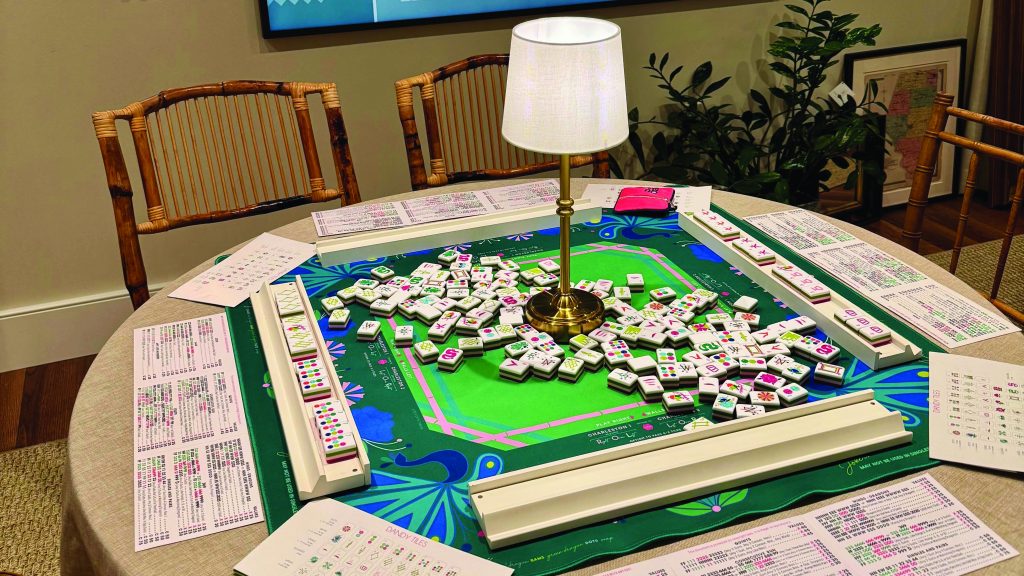
Her teaching approach breaks the game into three manageable steps: learning the tiles, learning the annual National Mahjong League card, and then practicing hands. Many students walk in knowing nothing, often nervous after only seeing the computer matching-tile game or videos of fast-paced play online.
The turning point usually comes fast.
“The best part is when they play a game and they get mahjong,” she said. “Two hours ago, they didn’t even know how to play.”
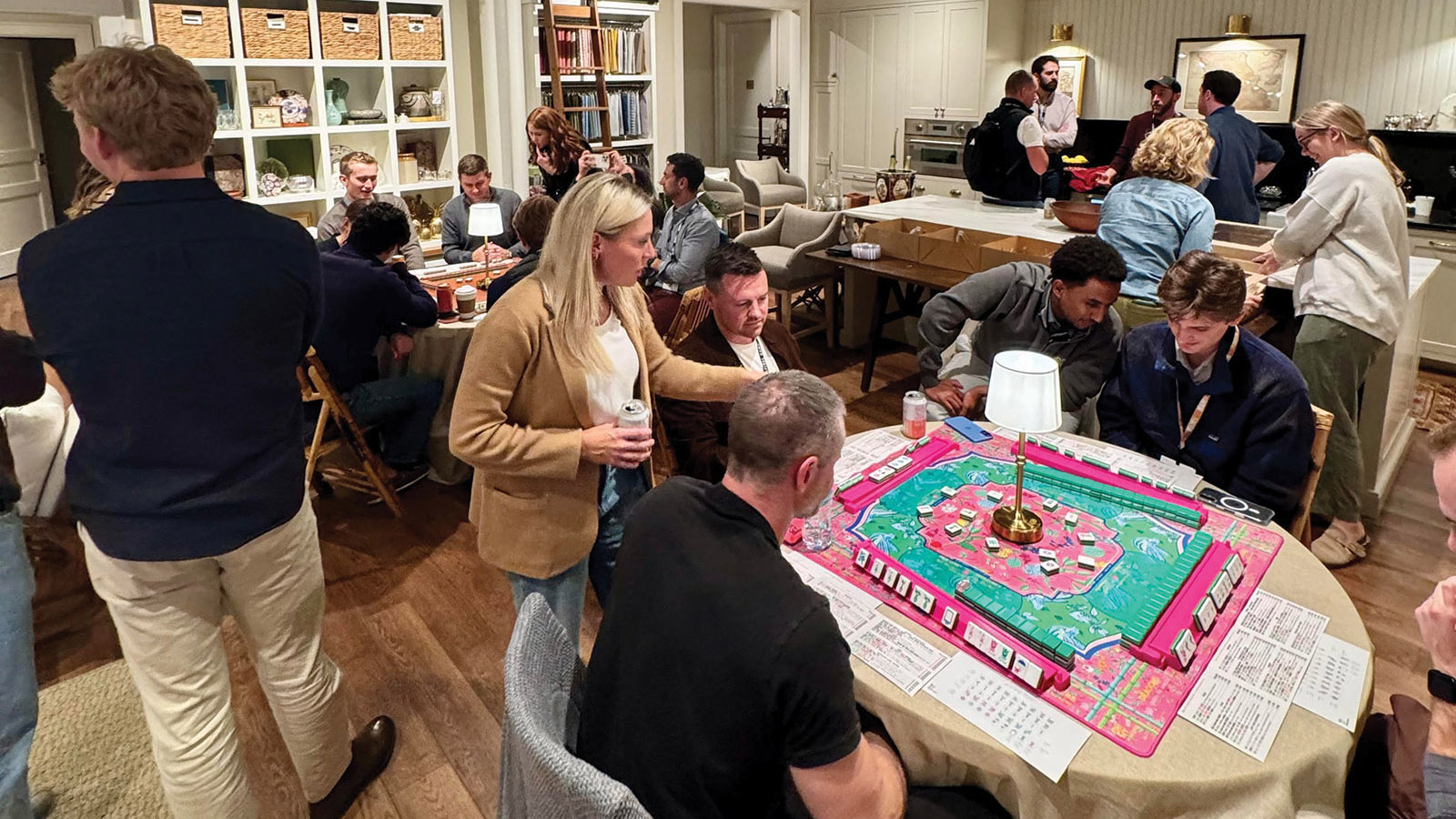
A League of Their Own
For Lauren Crosby, her path into mahjong teaching and organization started with an introduction from a friend visiting from Dallas. She didn’t consider herself a “game person,” but after a few rounds, she immediately wanted to keep playing. Deciding to create her own mahjong community in Columbia, she taught herself through videos and phone calls, then began teaching friends so she’d have more people to play with.
“Honestly, it’s just been organic from there,” Crosby said.
Interest spread quickly. Small lessons turned into birthday-party requests. Friends asked if she would organize something more formal. She noticed the same barrier popping up repeatedly: People wanted to play, but they didn’t want the responsibility of coordinating four players, managing substitutes, or committing to every session.
So she tested the idea of a weekly league. She rented a room through the Country Club of Missouri, posted a simple invitation on Instagram, and assumed it might draw a handful of people.
Instead, Crosby had so many sign-ups in less than twenty-four hours that she had to take the post down.
Her league now hosts six to seven tables most weeks, with a mix of stay-at-home moms, part-time workers, retirees, and full-time professionals who shift their lunch hours to attend. Crosby sets up tables and tiles in advance, sends weekly RSVPs, and handles substitute coordination so players never feel pressure to show up every time.
Her goal was to design something she would have been able to participate in when her children were younger: flexible, welcoming, and easy.
“It hits this window right when Mother’s Morning Out programs are going on,” she said. By holding the league during that block, stay-at-home moms can attend, as can moms who only have child care for a few hours. The timing also works for working moms who can shift their lunch hour. “I just wanted everyone to have the opportunity, but I wanted it to be easy.”
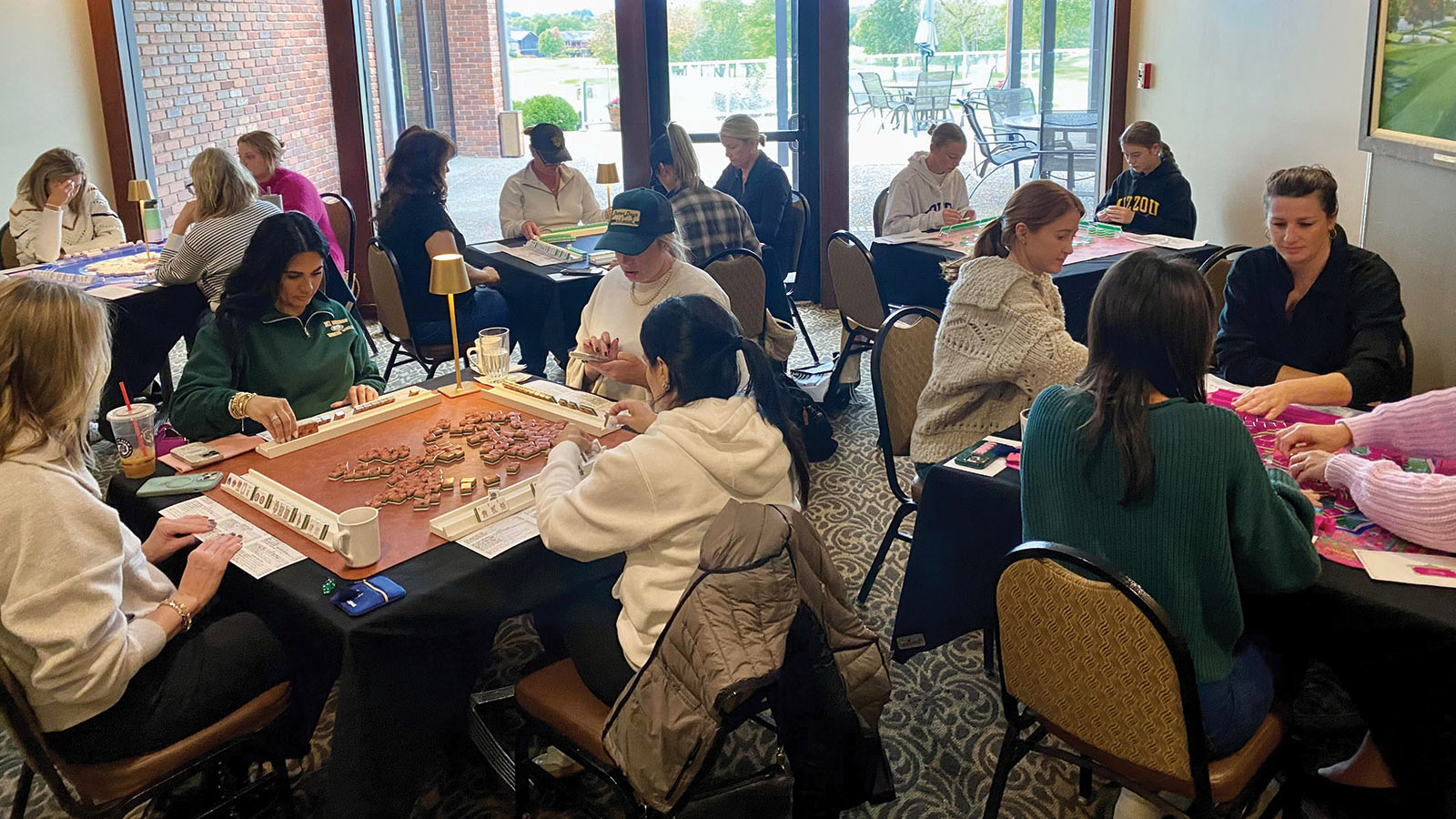
The Right Mix of Structured and Flexible, Old and New
The simplicity of that format — show up when you can, stay for a couple of hours, learn as you go — may be one of the biggest reasons the trend has grown so quickly. Both Crosby and Schieber noted that new players often feel intimidated until they realize the environment is meant to be social, not formal.
Crosby keeps her initial teaching short, then gets people playing right away. She encourages each table to set its own “house rules,” a contrast to tournament-style groups that follow every detail strictly.
Schieber teaches practical etiquette and pacing so beginners feel confident, but she also emphasizes that the game becomes enjoyable long before every rule makes sense.
For many players, mahjong has become a needed break, structured enough to feel engaging, but relaxed enough to feel restorative. The tiles require focus, which naturally pulls people into the moment. Phones stay down, questions get asked and answered, and conversations unfold naturally at the table.
Crosby has seen interest spread well beyond her immediate circle. She taught her own kids, and her friends’ children have joined in at home. Many adults also mentioned remembering a grandmother’s set from childhood, something familiar but never explained, which makes finally learning the game feel both new and nostalgic.
Across both lessons and league play, Schieber and Crosby said the same thing: People are looking for something social that doesn’t require a big-time commitment or strict structure. Mahjong fits easily into busy routines, offers a clear place to start, and gives people a manageable way to spend time with other adults.
For beginners, getting involved is easy. Schieber offers recurring classes at Tin Roof and teaches private groups. Crosby is expanding her Friday league and continues to offer small-group lessons. Both share updates on Instagram and welcome people who have never touched a mahjong tile before.
Their message is the same: Don’t overthink it. You learn mahjong by playing it.
And in Columbia right now, plenty of people are ready to pull up a chair.
Learn more or join a game by following Schieber at @mahjongwithlisa or finding her through ohmymahjong.com, or by following Crosby at @mahjongcomo or emailing her at [email protected].