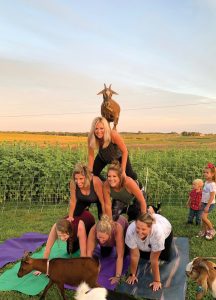

Breathe in through the nose, out through the mouth. Flow from Warrior’s Pose to Child’s Pose, then into Downward Dog — only this time, you might be sharing your mat with an actual dog (or maybe a few goats, bunnies, or kittens).
Sarah Judd of Sarah’s Yoga Studio has been practicing yoga for more than two decades, eventually turning her teenage passion into a professional endeavor.
“For about ten years, I was just doing it for myself,” Judd said. “It made me feel good emotionally and physically, and it was great for my overall well-being. Later, I saw an opportunity to start teaching at a local gym, and I was excited to share what I loved about it with others.”
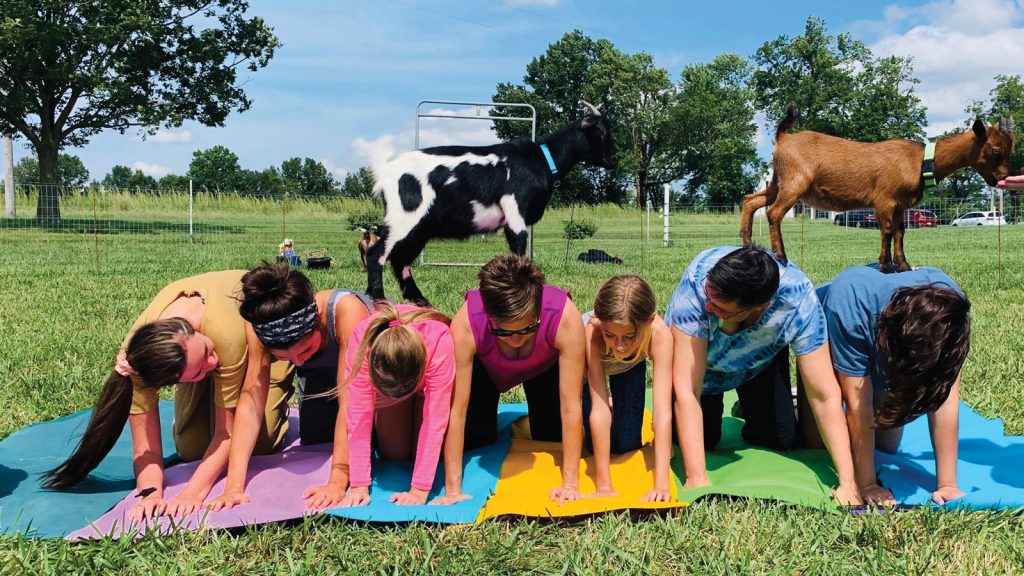
Sarah’s Yoga Studio is a pop-up practice that hosts a number of classes around the Columbia area. It began with a focus on traditional yoga. But a few years in, things took a playful detour when goats entered the meditational mix.
“It was a couple of years into teaching when someone asked if I wanted to lead a goat yoga class,” she recalled. “I thought it sounded fun. I’d seen it online, and I’m so glad I said ‘yes.’ Participants always tell me they feel better after class.”
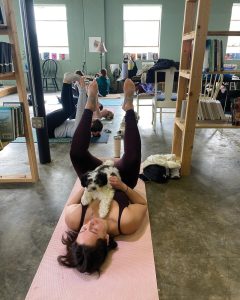
Judd now regularly partners with Four Oaks Farm to offer goat yoga both at the farm and other pop-up locations. She’s also teamed up with Bertha’s Beans Cat Café, Little Rays of Sunshine Animal Rescue, and Dolly’s Dream Home Rabbit Rescue to host puppy, bunny, and kitten yoga sessions — many of which double as opportunities for fostering or adoption.
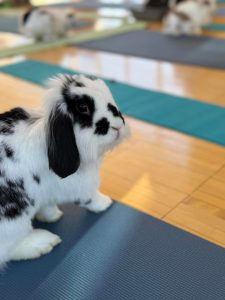
So … Is It Real Yoga?
Some instructors and yogis may debate whether animal yoga counts as “real yoga.” For naysayers, animals can be a distraction. One yogi blogger writes, “How can you turn inward when there are so many distractions happening around you? Reducing yoga into an add-on experience for any random recreational activity you enjoy — not just one that involves playing with barnyard friends — isn’t truly yoga.”
Judd disagrees, believing animals can add real value to a session.
“I think a regular yoga class brings more of a quiet calmness afterward, while animal yoga is a boost of happiness and a general reset,” she said.
There are a few key distinctions between traditional and animal-assisted sessions. In Judd’s experience, regular class attendees tend to focus more on deep mindfulness and structured poses. Animal yoga participants, on the other hand, often pause to pet, cuddle, or laugh at the animals around them. Differences aside, both formats offer similar emotional benefits.
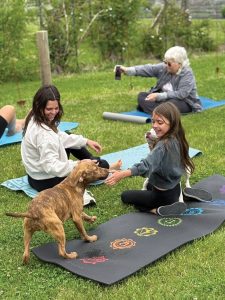
One of the unique perks of animal yoga — beyond simply enjoying the animals — is the sense of connection it invites and strengthens. Judd often notices more groups of friends or families attending these sessions together.
“I see more people come with friends to puppy yoga,” she noted. “In regular yoga, it’s often individuals who come alone.”
The presence of the animals tends to melt social barriers quickly. People who don’t know each other are more likely to chat, bond, and help one another — whether that’s snapping a photo of someone with a goat on their back or laughing together as a kitten climbs onto their mat.
Animal yoga can also serve as a gateway to yoga for newcomers who might otherwise be too intimidated to pick up a mat.
“With puppies there to focus on, I get a lot of beginners,” Judd explained. “They tell me that knowing the focus wasn’t all on them made it easier to show up. They don’t feel like they have to look like a magazine [cover] or an Instagram post. They’re just there to enjoy and explore yoga, often for the first time, without fear of being judged.”
A Matter of Intention
The question of whether animal yoga is “real” yoga ultimately boils down to perspective.
A Columbia Missourian article from April took a closer look at this topic with a focus on equine therapy.
“While adding animals to yoga practice might seem like a gimmick, studies have shown that these interactions can reduce anxiety, promote well-being, and relieve symptoms of depression,” wrote author Hannah Race. “A 2023 study at the University of Texas in Arlington found that including goats in yoga practice promoted joy, induced calm, and could be useful in mental health treatments.”
Judd agrees. Whether in a formal class or just practicing at home with your pet nearby, she believes animals don’t take away from the practice — it’s about the intention you bring to the mat. If your goal is to nail every pose in the sequence or enter the ultimate state of meditation, it might be a little more complicated with animals around.
But if your goal is to improve your emotional well-being, reset, and feel good afterward, animal yoga absolutely fits the bill. Judd personally believes animal yoga counts as real yoga, stating that she doesn’t think having an animal present, whether it’s your pet or in a formal class session, takes away from one’s ability to tune into the “yoga vibe.”
“If people are smiling because the puppies are being funny, that’s improving their well-being,” Judd said, emphasizing that joy on the mat is what matters.