

This is the time of year when I am getting the last vestiges of my vegetable garden out before the weather finally turns cold. There are some lettuce plants, green beans, and a few habanero peppers left, and not much else. It was a pretty good year for the garden, with copious quantities of cucumbers, a decent number of tomatoes, and a good number of jalapenos and green peppers. But the winner for the most prodigious plant goes to the habanero, which produced far more bounty than any other.
Why do I grow habaneros, you may ask? The answer is twofold: For their unique flavor and heat profile, and because they are usually one of the easiest to successfully grow.
The first time I grew habaneros was back in the early ‘90s. I had seen them in a recipe and was intrigued, and when I saw them at Westlake’s, I decided to give them a try. The plants grew, producing many of the wrinkly orange fruits, and I, being somewhat naive, had to taste one to see what all the hype was about.
Well, take my word for it, it was high octane! After I recovered from the scorching effect of the tiny bite I took, I did a little research.
The heat of peppers is measured on the Scoville scale in Scoville heat units. This was developed in 1912 by Wilbur Scoville, a pharmacist, who came up with the Scoville organoleptic test.
Although today the capsaicin level (Capsaicin is the component of the pepper responsible for the heat) is measured using a more modern technique, old Wilbur’s name is still the measuring stick. To give examples of heat levels, here are some common ones: Green bell pepper, 0 SHU (Scoville heat units); Anaheim green chile, 500-1,000 SHU; jalapeno, 2,500-8,000 SHU; cayenne, 30,000-50,000 SHU; habanero, 150,000-575,000 SHU; ghost pepper, 800,000-1 million SHU; Carolina reaper, between 1.8 million and 2.3 million SHU … you get the picture.
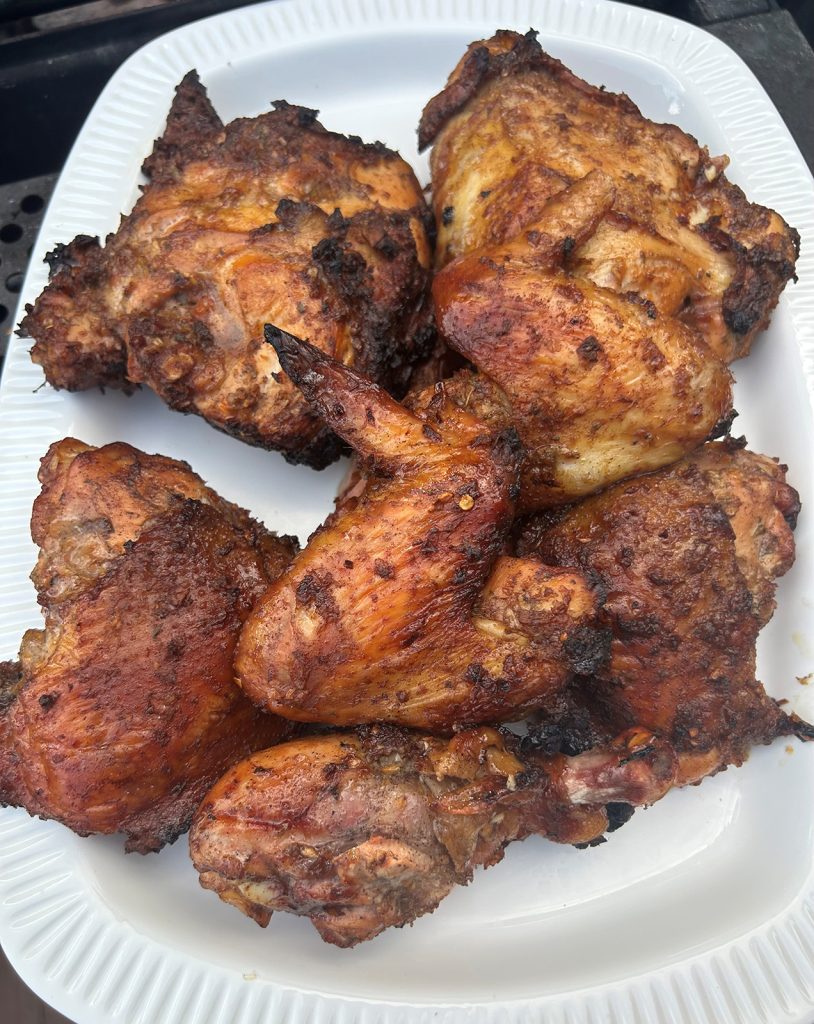
What do you do with a habanero once you’ve grown it? In a past article I offered a recipe for Potato Habanero Chowder, and here’s another tasty recipe: Jerk Chicken. If you don’t want to go to the trouble of making this from scratch, you can buy jerk seasoning. Just make sure you are getting the real deal – Busha Brown’s or Walkerswood, which are both good. I don’t recommend any of the dry spice blends.
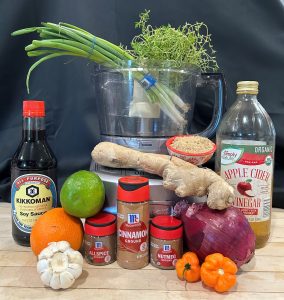
Jerk Chicken
1 whole chicken cut up
⅔ c. chopped yellow or red onion
6 habaneros, seeded and chopped
6 cloves garlic
6 scallions
2 tbsp. fresh grated ginger
⅔ c. soy sauce
¼ c. cider vinegar
⅛ c. olive oil
1 c. citrus juice (lemon, lime, orange or any combination)
¼ c. brown sugar
2 tsp. nutmeg
2 tsp. allspice
2 tsp. cinnamon
1 tbsp. fresh thyme
⅛ tsp. salt
1 tbsp ground black pepper
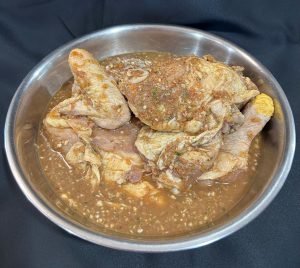
Place all ingredients in a food processor and process until smooth.
Poke the chicken all over with a fork or Jaccard meat tenderizer so the marinade will permeate. Place in a non-reactive container or heavy Ziploc, pour marinade over the chicken, marinate at least two hours up to overnight. Grill over indirect heat until 165-degree internal temp. Can also be baked in the oven.