


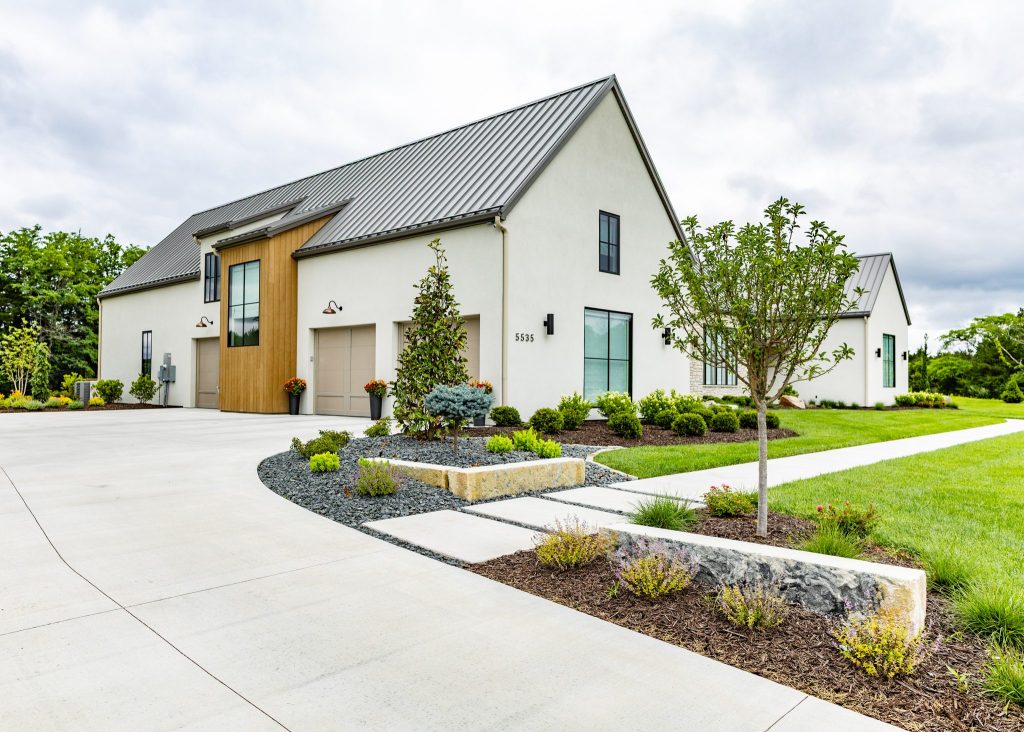
You’re undertaking a major site renovation. The plans are drawn, the budget is set, and after months of dreaming and detailed planning, it’s time to bring the project to life. You’ve already invested significant resources—so how do you move smoothly from concept to finished product?
For major projects with a wide range of materials, we begin with material mockups. Physical samples of stone, paving, and jointing materials allow us to evaluate color, texture, and overall balance before installation begins. Each design requires a slightly different approach, but the goal is always the same: creating a cohesive material palette. Intricate patterns, varied textures, and contrasting colors can elevate a project, while a careful review with your designer helps prevent costly missteps before they happen.
Once the build is underway, we work in phases:
First, we rough in the site by removing old landscapes, cutting the site to new grades, and completing the bulk of the heavy machine work. This phase focuses primarily on hardscapes, including walls, patios, and boulders. These features establish the structure of the design and create benchmarks for the work that follows. If needed, protective sleeves for underground utilities such as gas, water, and electric are installed at this time. During this phase, we also confirm grades, optimize drainage, and identify opportunities to adjust the plan so it better fits the site.
This phase can feel overwhelming because a clean space may become an active construction site within hours. Stay the course, it’s all uphill from here.
Hardscape work is followed by softscape installation, including beds, plantings, and irrigation. Planting plans typically establish most of the design, but we also review farm inventory and grower availability for specialty items and unique specimens that can make the finished product feel more custom. This phase is usually less invasive, uses smaller machinery, and gives the site a more finished appearance. We continually assess machinery needs and access points so we can work in zones, finish one area at a time, reduce rework, and keep the site cleaner throughout longer builds.
Finally, we move into the detail phase. This includes cleaning hard surfaces, installing landscape lighting, and repairing any areas affected during construction. As the last contractor on site for many projects, we typically complete the final cleanup so the client receives a turn-key finished product.
Sometimes a full project cannot be completed in one consolidated effort. Budget, timing, or coordination with other scopes of work may require the project to be completed in phases. Each phase should support the same goal: efficiency. Some site work, such as grading and turf reestablishment, may need to be repeated, but we prioritize grade changes and heavy machinery work early to reduce rework later. When in doubt, your project manager can help determine the best phasing plan for your project.
A successful build comes down to thoughtful planning, clear sequencing, and steady communication throughout each phase. By selecting materials carefully, following the right order of operations, and phasing work when needed, we can turn a complex renovation into a smooth process and deliver a finished space that feels intentional, functional, and complete.