
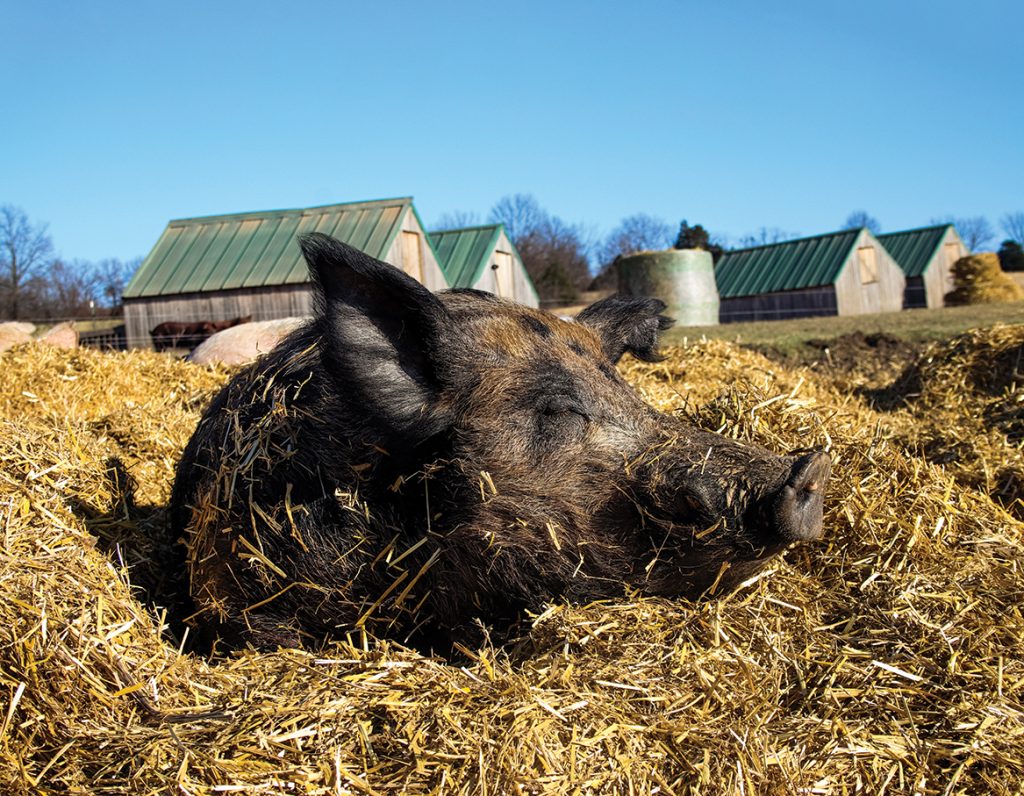
At Sullivan Farms, just 22 miles north of Columbia, Leroy and Mabel never get in a hurry. In fact, Leroy, who tops the scales at about half a ton, is fine with napping most of the day. Mabel is a bit more active, especially if she has some young-uns to care for, and she’s not too shy about getting up close to Bill and Brittany Sullivan — or an occasional visitor — to coax getting her back scratched.
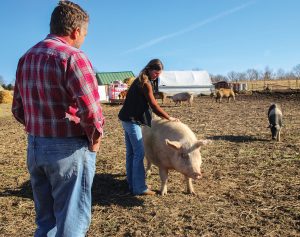 Leroy and Mabel are among the starring pigs in Sullivan Farms’ pork-producing operation just outside Fayette. Shoppers at Columbia Farmers Market have gotten acquainted with the farm and its pork. Diners in Columbia might not be aware that when they order a pork dish from Nourish, Barred Owl, Beet Box, Sycamore, Sage, and a few other local restaurants, their palate-pleasing experience is courtesy of Sullivan Farms.
The Sullivans also sell to St. Louis area restaurants, including Katie’s Pizza & Pasta Osteria and Expat BBQ.
“Columbia has such great food, and a great food scene,” Brittany said. “And they’re really supportive of local food producers.”
There’s also a degree of dining sophistication among Columbia food consumers and the chefs and restaurants that seek out menu options with transparent and traceable food options. It’s not an elitist sort of air, but a discerning choice to select food that has healthy qualities and value.
“There is a big disconnect between where the food comes from and what’s on the plate,” Brittany added, explaining that she and Bill became more intentional about their food choices after their daughter was born 20 years ago. “It was really important to me to know where my food was coming from. How it was grown, what was being put in it.”
First-Generation Farmers
And at first glance, Bill and Brittany exude the sort of confidence and knowledge you might expect to find from seasoned pig farmers.
But this is no typical pig farm, and Bill and Brittany are not the product of a multigenerational agriculture family. The Sullivans moved in 2010 to rural Fayette from Florida, where Brittany was a physical therapist assistant and Bill had a contracting business. They are both originally from the Chicago area; it’s safe to say farming wasn’t exactly in their blood. Brittany continued her profession in the physical therapy realm until two years ago, when she made managing the pig farm her full-time gig. Bill developed a robust vegetable gardening niche at their first farm, a 20-acre spot just three-quarters of a mile down the road from the house they built five years ago.
“I always liked gardening,” Bill said. He’s careful to distinguish between having a vegetable garden and full-scale farming, recognizing that the two are different levels of work, but the scope of what he started has blossomed. “We went from vegetable gardening to raising pigs.”
Their quest for home-grown, non-GMO, antibiotic-free meat started with a few laying hens and butcher hens. The Sullivans added a pair of pigs to butcher but decided instead to buy a boar to make it a breeding operation.
And Then There Were Pigs
“It was a slow transition,” Bill noted. Brittany added, “It was kind of like build your own brand,” as she does all of the farm’s marketing and hers is the farm’s most familiar face at the farmers market, where they also still sell vegetables.
With a cattle operation, it can take a few years for a calf to grow, while pigs are ready for butchering in nine to 11 months, she said. Initially, Sullivan Farms butchered twice a year, then four times a year. Now, they have pigs ready for butchering and processing twice a month.
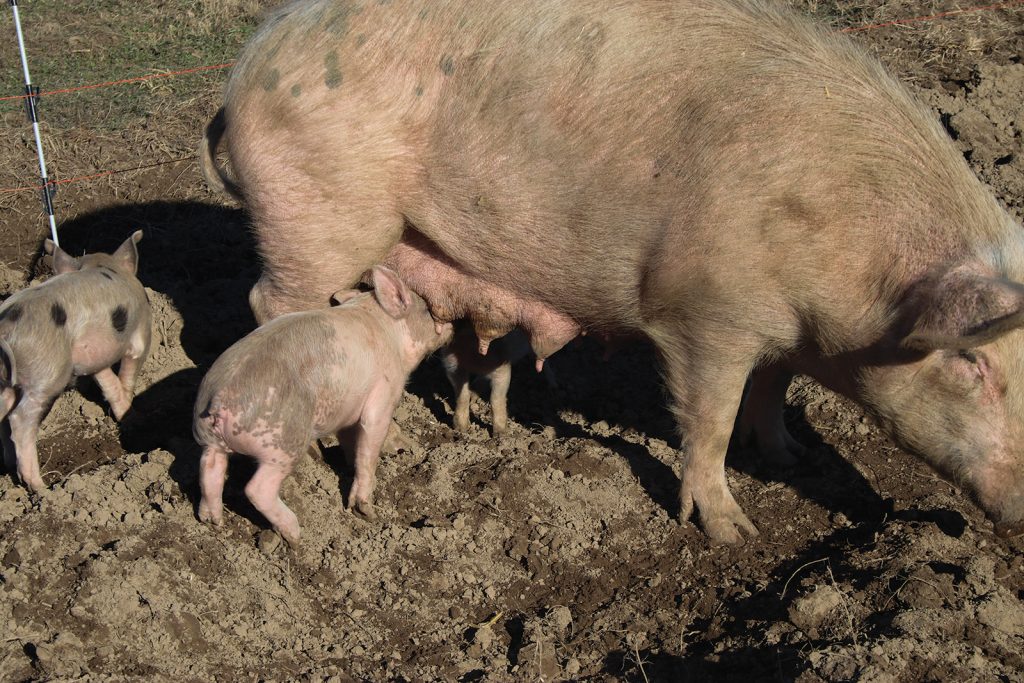
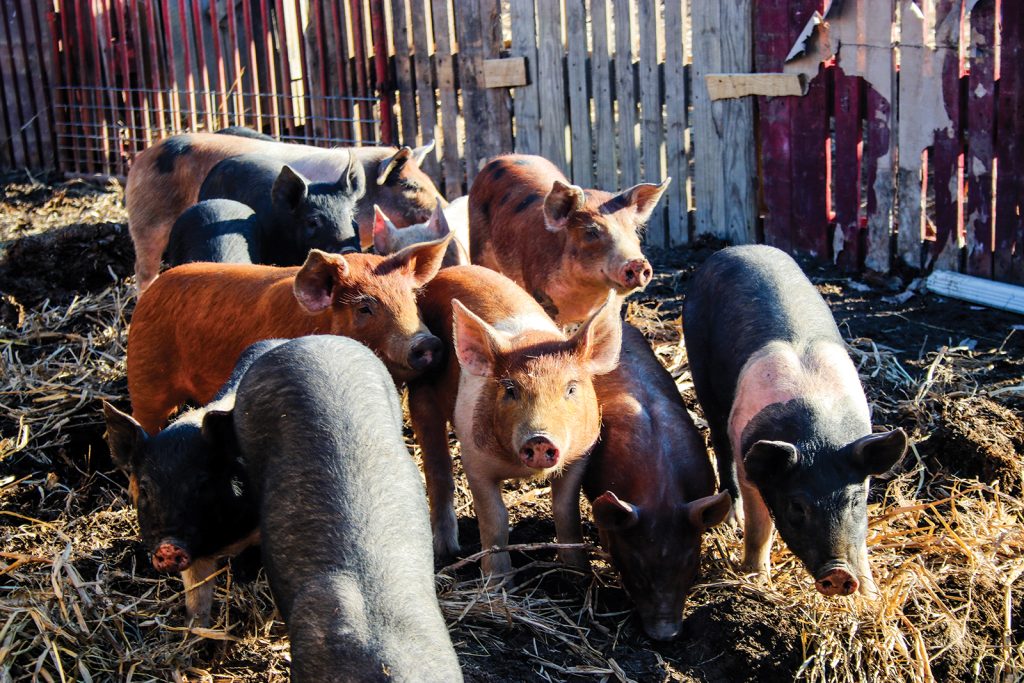
They usually have around 200 pigs on the farm at any given time because pigs are born year-round, with as many as 10 or 12 pigs in each sow’s litter. The number, Bill said, is constantly changing, just as the pork and farming industries face constant change as a fact of life.
“We’ve also made changes along the way as the business has grown,” Brittany said.
The Mizzou Meat Market is the butcher and processor for wholesale pigs. Davis Meat Processing in Jonesburg is the butcher for customer sales, grill bundles and other assortments that are sold online, and the farm’s subscription boxes that customers pick up at the farmers market. When customers buy a pig, they can order specific cuts and processing.
Transactional – and Relational
Sullivan Farms has different groups of customers, Brittany said. Individual families or groups of families may buy a whole or half hog processed for the freezer. The farm’s main business is the sale of half and whole hogs and the roster of restaurants that get deliveries every Friday.
Columbia Farmers Market also offers invaluable visibility for the business, which is as much relational as it is transactional.
“People see you, they see you on social media, they see you at the farmers market,” Brittany explained. “They’ve watched our daughter grow up. I’ve watched their children grow up.”
A similar approach is used with the restaurants and chefs the Sullivans count as customers — and friends. The Sullivan Farms website, just one aspect of their modern farming marketing campaigns, details the Sullivans’ goals:
- Healthier, ethically raised meat
- Traceable food source with transparent practices
- Reduces reliance on industrial meat systems
- Promotes animal welfare and humane treatment standards
- Encourages environmentally friendly land use and soil health
- Boosts rural economies and preserves local food traditions
- Offers better taste, texture, and nutritional value through pasture-raised practices
- Empowers families to make informed, values-based food decisions
- Stronger connection between consumers and farmers
What Makes the Difference
“We’re not certified organic, per se, but we follow all organic practices,” Brittany said. The pigs are fed organic, non-GMO feed, there are no antibiotics or growth hormones in the feed, and part of the feeding regimen includes milk and whey products from Aurora Organic Dairy, the massive production plant off Route B in north Columbia.
Bill is especially eager to explain the free-range and rotational grazing practices that make the operation more sustainable. These regenerative practices also create better animal health, because after one area is used, it is tilled and planted to break the parasite cycle that is common to more confined pig feeding operations. He has also built custom shelters for animal comfort and safety. Those structures are among the examples of how Sullivan Farms is something of a hybrid mix of modern practices and yesteryear pig production.
The shelters — “hog huts” — are similar to what pig farmers used a hundred years ago, Bill said, pointing out that the huts have electricity to keep water from freezing. The electric fencing can be moved and set up, five acres at a time, in just one day.
The regenerative practices are the biggest nod to pig farming a century ago. Rotate pens and feeding areas, regrow, regenerate.
“It’s not fighting against nature but cooperating with nature,” he said. “It’s a completely different mindset. We’re giving more back to the soil than what we’re taking from it.”
The ultimate result is pork with better flavor that keeps restaurants and other customers buying what Sullivan Farms produces. Discerning buyers, chefs, and diners can tell the difference in the marbling — the percentage of fat within the muscle/meat of the pig. The creamy white fat marbled throughout the meat carries more moisture and flavor, melting as the meat is cooked.
Honoring the Animals
Buyers will pay more for Sullivan Farms’ humanely raised pork versus pork from pigs raised on farms where they are closely confined to be fattened up on antibiotic- and hormone-laced grain byproducts.
“Our price is obviously higher, but the quality is different,” Brittany added. Another difference is that Sullivan Farms “tries to honor all the animals that are out here. We give them their best life,” she said. “We also try to utilize every aspect of the pig, too.”
Brittany’s face lights up with a smile when she tells about the vegetarian bed and breakfast owner who purchases her pork from Sullivan Farms, citing the farm’s humane treatment of the animals. That relationship is also another example of how the farm aims to bridge the disconnection from agriculture to the dinner table.
The Sullivans said that philosophy is a common denominator among the vendors and producers at Columbia Farmers Market.
“It’s definitely a community,” Brittany said. “That’s where we find our support and friendship. Because we’re kind of all in this together.”