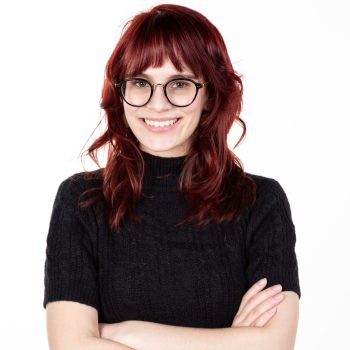

As the daughter of an environmental engineer and a teacher, I think I’ve always had at least a little bit of innate curiosity about the natural world around me. In high school, I fell down a rabbit hole learning about crime cases and how, remarkably, science and new technologies — from toxicology screenings to ballistics and fingerprinting — could be used to determine a range of crime scene factors. I thought, “That sounds pretty dang cool.” If I could combine my interest in experimentation with the ability to help people, I would feel like I’d done a real service to the world.
And then I got to college and realized I couldn’t do calculus or organic chemistry.
I’m not sure why that was such a shock to me when I had never been particularly good at math. I didn’t even make it to o-chem. I changed my major mid-second semester of my freshman year to something I not only loved, but also was far better at: English and creative writing. At the time, it wasn’t a confident decision. It felt more like closing a door I had already pictured my future self walking through.
While chemistry had become associated with long evenings at the tutoring center and anxious walks to office hours, I thoroughly enjoyed my biology lectures and labs. One topic that still sticks with me is observing bacterial cultures — the bright-colored splotches blooming on agar plates in strange shapes and spreading patterns. Weirdly, I remember thinking they looked like abstract paintings you might see hanging in a hotel lobby.
Bacteria tend to get an immediate “eww” reaction, but they’re quite fascinating. These single-celled organisms behave in astonishingly system-like ways in response to the environment, proximity, and time. Some strains grow wildly when given the right conditions. Others stay dormant until something awakens them. And not all bacteria are harmful — some are actually necessary for an ecosystem to function at all.
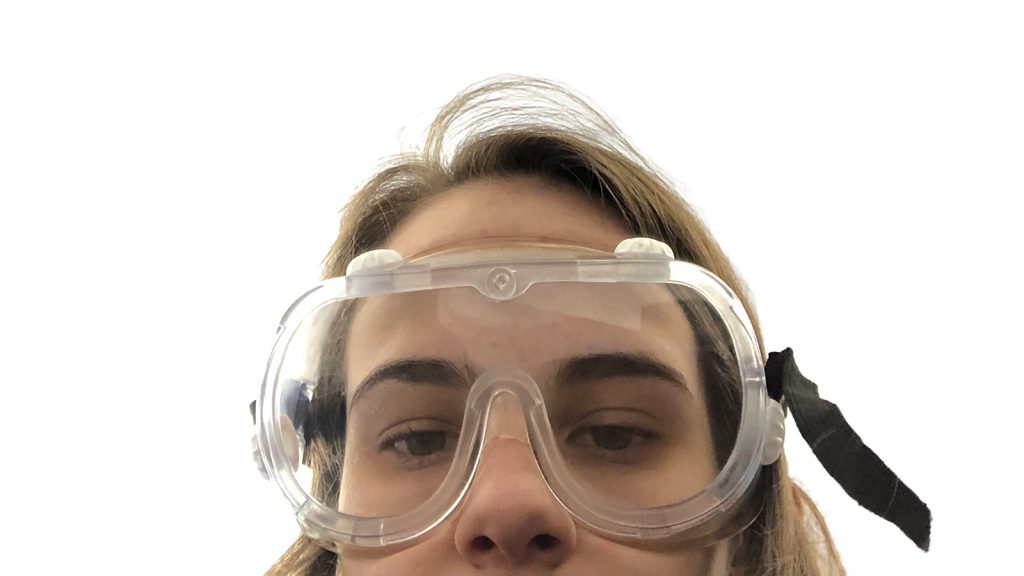
Over time, I realized changing my major wasn’t an indication that I had lost my interest in studying the world around me. I had simply changed the tools I used to explore those topics. I ditched the absolutely atrocious (and uncomfortable) goggles and traded in the lab reports and microscope for interviews, note-taking, and human exchanges.
Art and culture are, in many ways, another form of observation. They show us how and why a community grows, what it values, and what it chooses to preserve. If this issue represents the agar plate, then the stories within represent the bacteria: colorful and unexpected. You’ll meet people who paint, teach, design, and create. Thankfully, we aren’t stuck in a petri dish, and culture isn’t confined to our galleries or stages; it grows wherever people are willing to share part of themselves with others.
I once imagined analyzing evidence left behind at a scene. Now I get to document it while it’s still alive. And also … I don’t have to use calculus.