

Access Arts touts benefit of interns
from city’s summer jobs program.
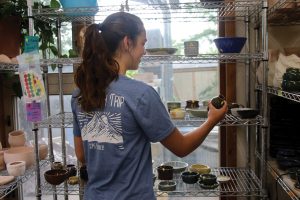
Amid the “little bit of chaos” that is an art studio full of kids, Mae Cyr quietly goes about her work — gathering and handing out supplies, then supervising two young campers as they roll out clay and shape it into dragon eyes. In the busy classroom, Cyr’s presence helps keep things running smoothly as the teacher focuses on instruction.
Cyr’s favorite thing about working at Access Arts is that children with special needs participate alongside their peers rather than in separate programs. She believes this approach, where all children learn together, benefits everyone. A local high school student, Cyr is spending the summer at Access Arts through the City of Columbia’s Career Related Experience (CARE) program, which helps local teenagers find summer jobs.
Access Arts is a nonprofit dedicated to providing creative learning opportunities for everyone. Those opportunities include ceramics, weaving, and mixed media arts. CARE interns assist with the organization’s summer camps, working with teachers in classrooms primarily serving children in kindergarten through third grade.
When Sarah Catlin, executive director of Access Arts, first started working with CARE interns, some as young as 14, she wondered what someone that age could really contribute to a professional environment. Catlin now recognizes the financial benefit of using the interns, who are hired and paid by CARE. Having an extra pair of hands at no extra cost helps keep expenses down, which contributes to the accessibility of her organization’s programs. Catlin is clear that the interns are “not lazy.” She sees them take initiative during downtime, especially when expectations are clear and written checklists help guide their work.
But the interns offer much more than additional help or cost savings. According to Catlin, campers enjoy being around the “cool, older kids.” She also finds working with them “really rewarding” on a personal level. One of the most rewarding parts, she says, is watching interns change over the course of the eight-week program. They often start out as timid and unsure of their role. Before long, they are comfortable giving direction to younger kids and interacting with parents at pick-up time each day. Cyr describes this change in herself: At first, she said she was nervous to talk to parents; now it is “easy.”
Both Cyr and Catlin have been impressed with the CARE program for its success at teaching professionalism. The program provides mentorship throughout the application and hiring process, with an emphasis on punctuality and reliability. Compared with a normal summer job, Cyr says her work is less flexible than many shift-based jobs teenagers often have. But she knows her supervisors are invested in her as an individual; they care about her future success in ways many employers don’t.

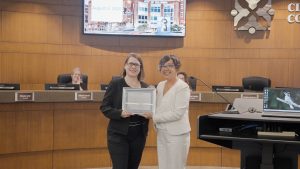
This year, CARE hired 130 trainees and prepared them all for employment with job readiness training — a big challenge. For most participants, this is their first job. CARE Director Ron Schmidt explains that this generation of kids is starting work later than in the past. They may be spending more time participating in school extracurricular activities and less time mowing lawns or babysitting. That means they tend to have fewer “soft skills” like interviewing well or communicating with supervisors. CARE focuses on teaching transferable workplace skills — skills that will serve participants not only from job to job, but throughout their lives.
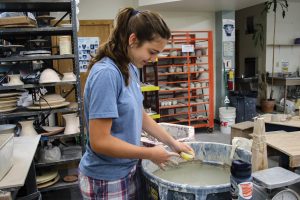
When Cyr was first hired through CARE, Access Arts seemed like a good fit for her interests, but she confesses that she “didn’t expect to like it this much.” She discovered a love of working with clay and has since enrolled as a student in some of Access Arts’ adult ceramics programs. Cyr now hopes to build a career that combines art and working with children. Listening to her describe the confidence she has gained and her optimism about the future makes it difficult not to feel hopeful about her generation.
Because CARE’s budget can only support a certain number of paid positions, not every applicant is hired. For Schmidt, this is the hardest part of his job: turning down teenagers who genuinely want the opportunity to participate. Though most of his time is dedicated to the trainees, he also feels a responsibility to those who are not selected. If they choose to, he will meet with them to explain how they can become stronger candidates in the future. His goal is for every applicant, whether hired or not, to benefit from applying and improve their chance of finding successful employment.
CARE worksites currently include a wide variety of employers, from restaurants and childcare centers to local utility providers. Catlin strongly encourages other organizations to participate. She sees Access Arts’ participation in the program as a way to give back to the community while also strengthening its mission of making creative learning accessible to everyone. CARE interns arrive for a job and leave with far more than a paycheck — they also gain workplace skills and a clear idea of what they are capable of accomplishing.
Cyr’s greater confidence and strong vision for her future reflect the larger purpose of the CARE program. When young people are given meaningful opportunities, clear expectations, and supportive mentors, they develop skills that extend far beyond a single summer. Those experiences don’t just prepare them for future jobs — they help build a stronger community.