


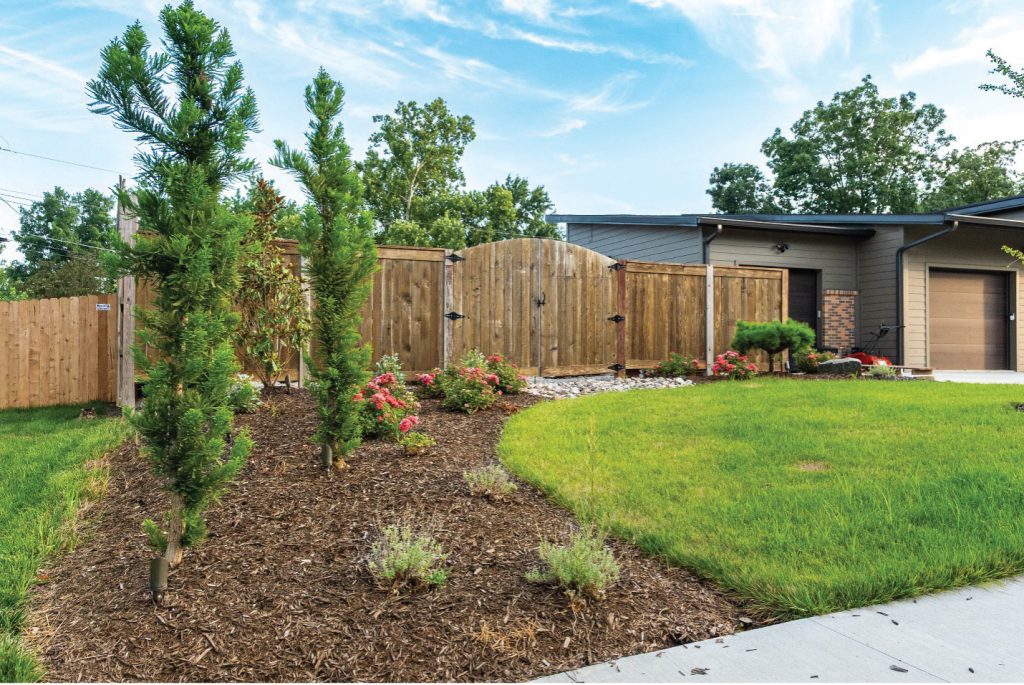
When designing residential landscapes, one of the most underutilized but incredibly impactful plant form is the columnar shaped plant. Columnar shaped plants are defined by their narrow and upright habit. Many of the types of plants that you already know and love come in columnar varieties – both trees and shrubs. This shape is ideal for homeowners with limited space or a desire for structure and vertical interest. Whether you have a small city garden, a suburban backyard, or a sprawling estate, columnar plants can bring elegance, privacy, and functionality to your outdoor space.
What Are Columnar Plants?
Columnar plants are varieties specifically bred or selected for their tall, narrow growth habit. Unlike bushy or spreading types, they grow vertically with minimal outward spread, making them perfect for tight spaces or areas where you want height without width. Common examples include ‘Sky Pencil’ holly, columnar boxwood, ‘Emerald Green’ arborvitae, and even deciduous trees like the columnar hornbeam, oak, or sweetgum.
Why Use Columnar Plants?
As a landscape designer, I often recommend columnar plants for three main reasons:
- Space Efficiency: In narrow side yards or anywhere that space is an issue, vertical plants provide greenery without crowding the area.
- Architectural Structure: These plants offer strong vertical lines that bring order and rhythm to a garden, similar to architectural columns. It’s like adding an exclamation point to the landscape.
- Privacy and Screening: Tall and narrow plants can form excellent privacy screens or windbreaks without taking up too much ground space.
Design Ideas Using Columnar Plants
Create a Living Fence: Instead of installing a traditional fence, consider a row of columnar evergreens like ‘Emerald Green’ arborvitae. These can grow 10-15 feet tall or more and stay compact, offering year-round privacy and greenery.
Frame Entryways and Pathways: Planting columnar shrubs or trees on either side of a walkway, driveway, or front door adds symmetry and formality. For example, two upright boxwoods flanking your entry can give your home a grander appearance and draw the eye to the front door.
Add Height to Low Plantings: In a garden with mostly low-growing plants, strategically placed columnar plants can break up the monotony and add dimension. Use them like vertical punctuation marks to draw the eye upward and give the garden a dynamic feel.
Define Outdoor Rooms: Tall, narrow plants can help define outdoor living spaces. For example, placing columnar tree around a patio can create the illusion of a walled garden or an open-air room without actually constructing walls.
Final Thoughts
Columnar plants are a powerful design tool for homeowners looking to make the most of their landscape. Whether you’re aiming for elegance, privacy, or simply trying to squeeze greenery into a small space, these can provide a beautiful and functional solution.