
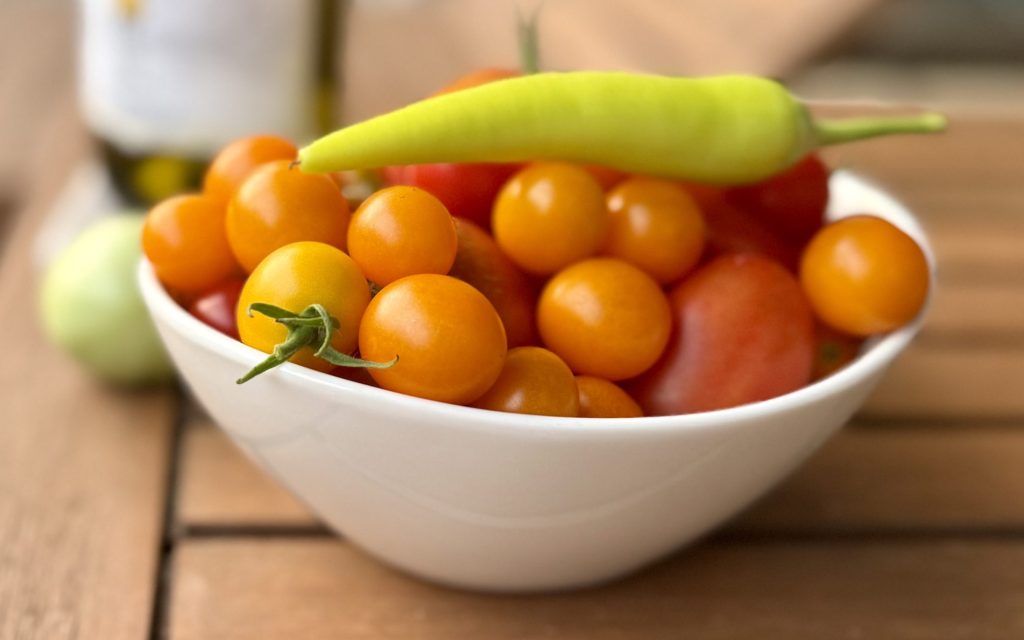
When I want to have fun, learn something new, relax, or appreciate an old memory, I focus on food. Any morning, any afternoon, I think about what I want to make for dinner. I quickly scan the refrigerator, freezer, and pantry. Sometimes an ingredient catches my eye. Quinoa … That’s a fun word to say and spell, and it’s high in protein. Sometimes I see an ingredient I know should be used soon, like the shockingly dark green heads of baby romaine lettuce we bought at the Farmer’s Market. Sometimes, when I realize we have local tomatoes, cucumbers, garlic, onion, peppers, and even locally made hot sauce — and it’s just after lunch so there’s time to chill — I make gazpacho.
I grew up in Columbia in the ‘70s and ‘80s in a food-focused family. My mom read cookbooks constantly. My dad chose specific vinyl records to play while cooking, eating, and relaxing after dinner. Every year, my parents made me and my sister Tracy a homemade birthday dinner.
My family celebrated food. We celebrated because of a birthday, a holiday, an achievement, but also because of an everyday occasion, like my mom finishing a Chinese cooking class at the library, or my dad buying a new grill and wanting to make homemade barbecue sauce.
Simple habits — whisking daily homemade Scheffler vinaigrette for the salad, grating Parmesan cheese for the table, chopping parsley for almost everything — were our rituals, comfort we could count on, while most everything else changed.
With food, my family kept memories close. After my parents returned from an adults-only vacation, dinner menus got exotic. We enjoyed Door County Salad with dried cherries, walnuts, and goat cheese after their trip to Wisconsin; and parsley-garlic Chimichurri sauce with grilled steaks after Argentina. Tracy and I listened to their stories. We tasted new flavors. Even when we’d not traveled with our parents, they encouraged us to experience new journeys.
We learned from food. We followed a recipe, chopped, stirred, watched the pot or the broiler. We made a mess, and we cleaned the counter and the dishes. We learned that our dad liked smoky barbecue, and that our mom liked less-smoky barbecue. We learned about compromise and about progress.
Sometimes, we learned to appreciate something we’d initially feared. Tracy’s recurring nightmare about our dad’s bumper crop of garden tomatoes grew into her love of tomatoes. My fear of fish — that for years convinced me the magical soup I enjoyed while visiting my Florida grandparents was vegetable soup — turned into my taste for Manhattan Fish Chowder. We learned about each other’s tastes and preferences — and that knowing what someone enjoys, or wholeheartedly does not enjoy, is a powerful way to learn about a person.
My parents, Mary Sue and Leonard, wrote notes on recipes. Mary Sue — generous, painfully thoughtful, opinionated, and brass tacks — wrote occasional notes about what had worked and what hadn’t worked, sure, but mostly she wrote about how, overall, the dish had been received. Notes, in teacher-cursive, usually fit into three categories: “Needs Work,” “Good,” or “Very Good.”
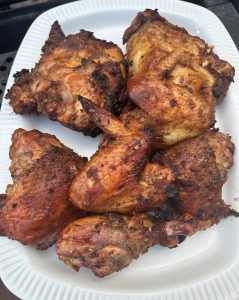
Leonard — creative, passionate, opinionated, and stubbornly optimistic — wrote specific notes about an ingredient change or omission, like his corrections to Julia Child and Company’s 1978 Steak Diane recipe. And he wrote about the occasional complete disregard for instruction, like his artist-scrawl note on Better Homes and Gardens 1967 Barbecue Book’s recipe for Barbecued Spareribs: “We use this sauce for chicken.”
Over a decade ago, I wrote a weekly food column. I was in graduate school for creative writing, and I don’t know how I had time to write a voluntary essay each week. But I treasured writing about my food memories and experiences. While I was writing those essays, my mom was sick. Then she got very sick. She passed away at the beginning of a semester, days after what turned out to be my last food column for a while. The memories I’d written about — growing up in Columbia and learning to appreciate food with my family — were suddenly way too close.
I didn’t want to remember learning to politely order food and not spill a glass at The Flaming Pit. I didn’t want to remember waiting to hear someone yell, “Leonard! Your pizza is ready!” in a room full of yelling people at Shakespeare’s. I didn’t want to remember huddling in a stucco-walled booth at Los Bandido’s, anticipating my scorching hot plate of chicken enchiladas.
I needed time.
More than a decade has passed, and now our dad is in memory care, so it’s up to me and Tracy to keep our family’s memories — food and otherwise — going. For Christmas, Tracy made two identical homemade cookbook binders — one for each of us — entitled, “Mary Sue’s Very Good Family Recipes.” In addition to cookbooks, our mom kept extensive binders full of clipped and typed recipes — from magazines, neighbors’ recipe cards, the newspaper, and from cookbooks she’d decided she no longer needed in their whole form. Tracy filled our binders with a few of the recipes our mom had labeled, “Very Good,” and from now on, we’ll continue adding favorites.
Mary Sue and Leonard, English majors at Knox College in the early 1960s, met in a Shakespeare class and then ate a pomegranate on an autumn campus walk. They were both from Chicago. They both loved food and words. They fell in love and got married and made a family.
My mom often teased my dad, “You think with your stomach.” Her comment usually meant something pragmatic like, “We don’t need five racks of ribs for four people,” or “It’s too early to think about dinner.” But now, remembering her sideways smile and playful delivery, it also might have meant she loved him. More than that, though my parents were very different people, it also might have meant she understood him.
I understand so much from food. I understand appreciation, thrill, disappointment, patience, progress, anticipation, and that scent is the sense most attached to memory: Onions and celery cooking in butter is Thanksgiving, starting the stuffing. Cinnamon baking is my dad’s birthday peach pie. Bacon baking is house guests waking up. Tinfoil is a Colorado picnic, watching chipmunks. Barkeeper’s Friend is my parents’ copper-bottomed pots. Sesame oil is my mom’s homemade wontons. Celery seed is my dad’s homemade barbecue sauce — the one for spareribs — that he liked on chicken.