
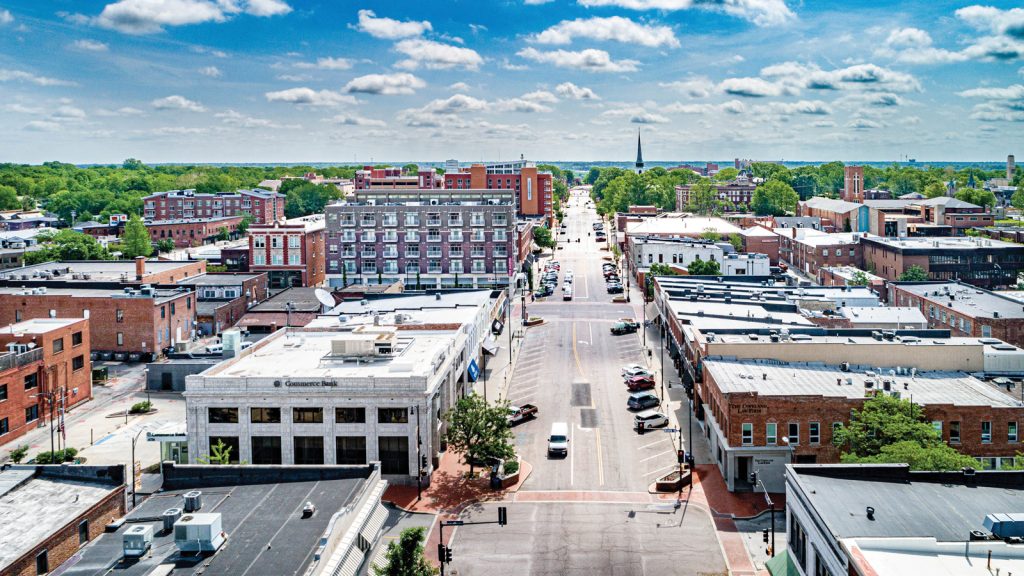
When I first moved to Columbia in the late ’90s to attend the University of Missouri, I didn’t know this place would become home. I certainly didn’t expect to raise a family here or to one day serve as mayor. But I fell in love with this city — its green spaces and bike trails, its creative energy, and, most of all, its people.
Now, having spent years working in and with our local government — from my time as Columbia’s first sustainability manager to my current role as mayor — I’ve come to think differently about what legacy really means.
Legacy isn’t a title or a name on a building. It’s about what you leave behind in the everyday lives of others. It’s the systems you help build, the people you lift up, and the choices you make today that shape tomorrow.
If I’m fortunate enough to leave a legacy, I hope it’s that I helped make Columbia more connected — both physically and socially. I want future generations to be able to walk or roll safely to school or work, to live in homes they can afford in neighborhoods where they feel they belong, and to access reliable transit that connects them to opportunity.
But I also want them to feel connected to something deeper: a sense of belonging in a city that listens, learns, and leads with empathy.
As a planner, I think in systems. That perspective has shaped how I approach policy: not as quick fixes, but as part of a long-term design for a more inclusive, sustainable, and resilient Columbia.
That’s why we are currently updating our codes and about to start the process to update our comprehensive plan. We’re doing this so future housing reflects the needs of real families, not just ideal blueprints. It’s why I continue to advocate for investments in public transportation that expand access while reducing our carbon footprint. And it’s why we’re developing more robust data tools to guide our decisions — because transparency and accountability are cornerstones of good government.
Some of this work is quiet and technical. You may not see it in a ribbon cutting or headline, but it matters. Because legacy lives in the details. In the ordinances that make a city more welcoming. In the budgets that prioritize the public good. In the meetings where a young voice is not just heard, but heeded.
At the same time, legacy is personal. I hope people remember that I showed up, whether it was at a neighborhood meeting, a trail opening, or a classroom visit. I want them to recognize that I led with heart, that I listened, and that I didn’t just ask people to trust the process — I invited them to shape it.
Maybe most importantly, I hope someone sees me and thinks, maybe I could do that too. If I can help open doors for the next generation of leaders — especially young people, especially women and girls — then that may be the most meaningful impact of all.
We don’t always get to see the fruits of the seeds we plant. But we plant them anyway — with intention, with hope, and with trust in the community we serve.
That’s the kind of legacy I want to leave: one rooted in care, shaped by collaboration, and designed to last.