
What does it mean to crave COMO? If one were to curate a tasting menu, it could go in any number of directions.
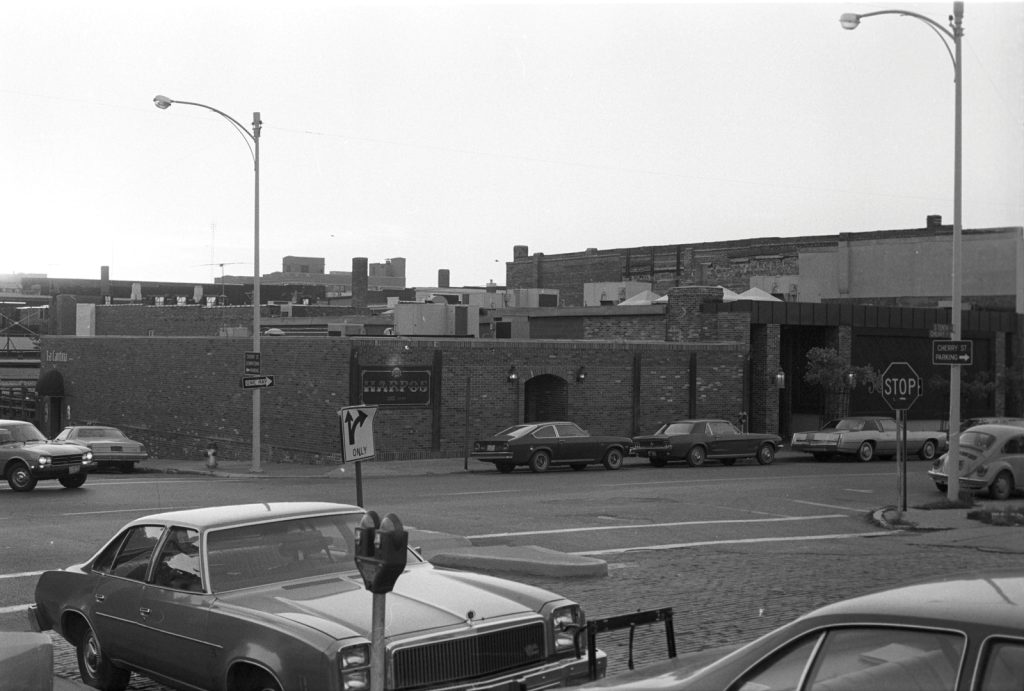
Those who came here for college might include — depending on one’s vintage — campus-adjacent stalwarts like Shakespeare’s Pizza, The Heidelberg, Flat Branch, Addison’s, Room 38, and Harpo’s.
Those with a yen for global flavors might list Bangkok Gardens, Jina Yoo’s, Osaka Japanese Restaurant, Beet Box, The Syrian Kitchen, Jamaican Jerk Hut, Mahi’s Ethiopian Kitchen, Las Margaritas, and CoMo Arepas.
Want comfort food? There’s Big Daddy’s BBQ and Flavor & Comfort. Feeling fancy? There’s CC’s City Broiler, Grand Cru, and Chris McD’s.
And for those who seek the sweet, there’s Sparky’s Homemade Ice Cream, Buck’s Ice Cream, Mugs-Up Drive In, U Knead Sweets, The Chocolate Factory, Uprise Bakery, and — I couldn’t not mention it — Tropical Liqueurs.
A Legacy of Flavor
While local restaurant goers enjoy finding new tastes to savor, much of the appeal of Columbia’s dining scene rests on what might be called “legacy foods.” Countless Columbians have happily downed a slice from Shakespeare’s or a plate of Addison’s nachos, to name just two favorites. Then there are the restaurant stalwarts: Booches, opened in 1884; Ernie’s, opened in 1934; Glenn’s Cafe, which opened at its original location in 1939; Mugs-Up Drive In, opened in 1956; and G&D Steakhouse, opened in 1970.
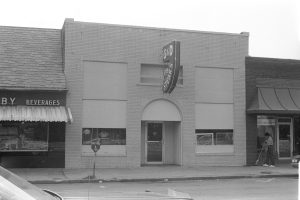
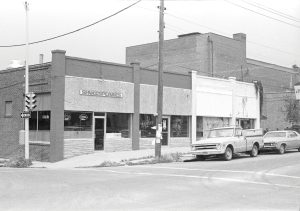
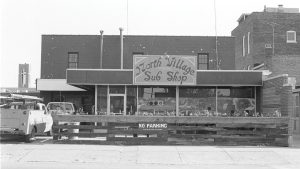
Oh, and let’s have a moment of silence for some of the restaurants that are no longer here: Jack’s Gourmet, Coley’s American Bistro, 44 Stone, Coffee Zone, Interstate Pancake Howse, The 63 Diner, Kostaki’s Pizza, Ninth Street Deli, Harold’s Donuts, and International Cafe. I might need to see a cardiologist to examine the sandwich-sized hole that was left in my heart when Sub Shop closed.
Without doubt, a Sub Shop Italian would qualify for the honor, but what makes a food a legacy food? Nina Mukerjee Furstenau, the author of such titles as Biting through the Skin: An Indian Kitchen in America’s Heartland and Green Chili and Other Imposters, says she reached out to a few friends for their feedback on Columbia’s culinary icons. Furstenau, whose work often weaves memoir with musings on menus, meals, and the makings thereof, reports that their responses ran more toward nostalgia than nourishment.
“They started immediately jumping in with different restaurants that have been here and the different occasions they’ve gone to them,” Furstenau says. “Mostly, they were describing the environment and the people they were with. When you go to restaurants in Columbia, they each have a personality. You’re seeking that almost as much as you are the food. And when you’re there with your friends, you perpetuate that personality yourself. Because you’re there, you’re part of it.”
Creating Community
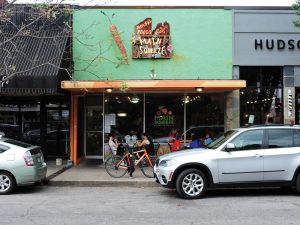
Community was on Leigh Lockhart’s mind when she opened Main Squeeze back in 1996.
“I was obsessed with those old shows where there was a general store: Little House on the Prairie, The Waltons, Andy Griffith. There was always a place where everybody could see each other, and that’s what I wanted,” Lockhart says. “I think food is the great unifier. It brings people together.”
With a bit of money saved up from her Murry’s bartending gig, Lockhart found herself situated behind the bar in a little alcove at Lakota Coffee Company.
“I gave Lakota owner Skip DuCharme 10 percent of my sales, which was a great way to pay rent. I couldn’t predict the money or how it was going to go,” Lockhart says.
But the juice biz was boomin’.
“By the time I moved out, I was paying all of his rent with my 10 percent. He even came to me — because he’s a very fair and good guy — and he said, ‘It appears you’re probably paying me more than is fair,’” Lockhart says.
When space became available for a stand-alone storefront, Lockhart jumped at the opportunity to expand to a cafe concept. There she served plant-based fare until 2023 when, feeling burned out on running a restaurant, she pivoted to a retail format selling eco-friendly household goods and cleaning supplies.
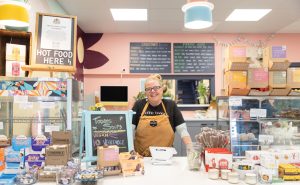
Last year she sold the business to Amanda Rainey and John Gilbreth, a wife-and-husband duo who also own Pizza Tree and Goldie’s Bagels. Main Squeeze reopened as a cafe in March 2025.
“When I sold the restaurant, there were only three conditions: I wanted a fair price for the business, I wanted them to commit to keeping it vegetarian, and I wanted them to sell my ice cream,” Lockhart says.
Lockhart’s still in the game with her vegan venture, a small-batch non-dairy ice cream brand called Oso Cremoso, which is available by the pint at Main Squeeze and Clovers Natural Market.
Something Old, Something New
Although Main Squeeze is the newest eatery in the couple’s family of restaurants, Rainey says the restaurant has always been meaningful to their family. The Ruby — Lockhart’s vegetarian version of the classic Reuben — was the first meal Gilbreth ate when he moved to Columbia. Rainey enjoyed eating there as a college student. When lunch was somehow overlooked on Rainey and Gilbreth’s wedding day, Rainey’s cousin made a Main Squeeze run. This personal history was a major motivator in the couple’s decision to purchase the restaurant.
“So many people who live here came for college or at that age,” Rainey says. “We kind of have a nostalgia for that simpler time in our lives. Looking back, you had less responsibilities and less worries and way more time because you were only going to class 12 hours a week. Maybe you worked at a local restaurant and had a little cash.”
So when they heard Lockhart was looking for new owners, the couple decided the time was right to revive an old favorite. They met with her several times in the months before they opened to learn the ropes behind some familiar favorites, and they hired back a handful of long-time employees.
But Rainey and Gilbreth are putting their own stamp on the place, too. There are several new menu items, and the interior has changed significantly. Gone are the tables made from recycled doors. Abstract paintings in minimalist frames line the walls. The menagerie of toy animals that once stood in for order-number placards now enjoy their retirement on a shelf behind the counter.
Lockhart says she tries not to make a habit of going into Main Squeeze too often — she’s good with passing the baton — but she just so happened to be making an ice cream delivery on the morning I met with Rainey in the cafe. The two exchanged some gossip, and on her way out the door, Lockhart expressed her appreciation for the direction Rainey and Gilbreth are taking things. Having been an early devotee of the farm-to-table ethos, she is happy to see Rainey and Gilbreth nurturing relationships with producers like Three Creeks Farm + Forest, Linnenbringer Farms, Hemme Brothers, and Fiddle & Stone Bread Co., and she was delighted that the day’s Buddha Bowl special would be made entirely with local ingredients.
“You are doing things I wish I could have done,” she told Rainey.
A Connection to Local Producers
Main Squeeze is not, of course, the only restaurant to put locally produced foods front and center. Barred Owl Butcher & Table, Flyover, Sycamore Restaurant, Pasta La Fata, Broadway Brewery, Belly Market & Rotisserie, and Ozark Mountain Biscuit & Bar are part of a non-exhaustive list of popular places known for elevating the homegrown.
Broadway Diner owner Dave Johnson says he’s been buying pork products from Patchwork Family Farms since it was known as Tiger Packing.
“It’s a wonderful product, and more importantly their mission is fantastic, and they do great work,” Johnson says.
Patchwork, a project of the Missouri Rural Crisis Center, is a marketing operation that buys hogs from independent family farmers and sells directly to consumers as well as grocery stores and restaurants under the Patchwork label. Patchwork doesn’t do lard, though, so Johnson gets that from Sullivan Farms, owned by Brittany and Bill Sullivan. Sometimes he gets eggs from Liz Graznak’s Happy Hollow Farms. Johnson especially loves baking pies, and he always looks forward to using peaches from Peach Tree Farm.
Few will dispute that a tomato grown in local soil and harvested at peak ripeness is exponentially better than a tomato purchased from a wholesaler, and Johnson is proud to support the local economy in this way. He cherishes the relationships he’s built with these suppliers.
“That’s what I’m always trying to do: Build community,” Johnson says.
Acknowledging the Past, Enriching the Present
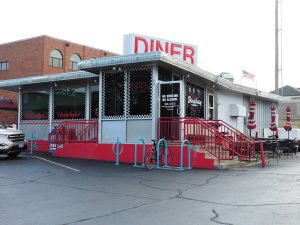
The diner itself has represented a means of community building since 1989, when Johnson’s father, Ed Johnson, purchased the business — then known as Fran’s Diner — some forty years after it opened its doors as The Minute Inn.
There were some things the Johnson family kept, including a borderline architectural creation known as The Stretch, made with hash browns, scrambled eggs, chili, cheddar, diced green peppers, and onions. The Stretch remains a go-to menu item for many a diner enthusiast.
“If I had a nickel for every ten I sold, it would be amazing,” Johnson says.
But there are other aspects of the diner’s history that aren’t quite so savory. Johnson says it’s important to acknowledge the role it once placed in enforcing the painful practice of racial segregation.
“I meet people nearly every week who were young enough then to have not been allowed to eat inside and have memories of being served out of our side window,” Johnson says.
In 1960, The Minute Inn was the site of Columbia’s first organized sit-in. While there’s no erasing that past, Johnson has found ways for the diner to make a more positive impact. During the first weeks of the COVID-19 pandemic, Johnson began offering free take-out meals to children and families who might be experiencing food insecurity.
“We were all so terrified at the beginning. We didn’t know what to do. We didn’t know what tomorrow or the next couple weeks would bring,” Johnson says. “I knew I had an inventory that would go bad and be wasted, but I could work and get some good out to people.”
Over the next year and a half, he distributed more than 10,000 hot meals.
“The community really stepped up. People started dropping by with cash or sending money,” Johnson says.
And so he kept at it.
“I’ve always felt that feeding people is more than feeding them food,” Johnson says. “It’s lifting them up, it’s welcoming them, it’s including them, and it’s being enriched by them.”
I was intrigued by that last point. Thinking back to my conversation with Furstenau, who described a give-and-take between people and the places they eat, I asked Johnson for an example of how he’s been enriched by the people he’s met. He didn’t hesitate in his response.
“The very best example is my wife. I met her through an employee, her son,” Johnson says. “He thought we would be the best of friends. She was widowed when Cooper was very young. We met, and a month and half later we were married. It’s been just the best 15 years I could ever have imagined.”