
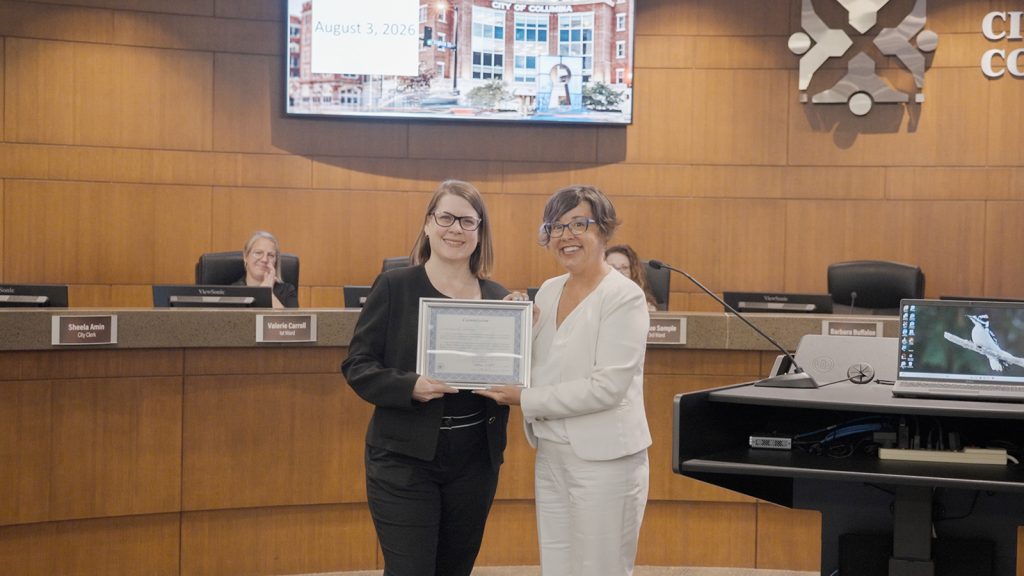
In August, Columbia made a little history.
With the swearing-in of our newest member, Sharon Geuea Jones, Columbia’s seven-member City Council is now made up entirely of women.
I recognize the significance of that moment. I also recognize what an extraordinary honor it is to serve alongside these six women.
For most of our nation’s history, a council like ours would have been unimaginable. August marked 106 years since Tennessee became the final state needed to ratify the 19th Amendment, guaranteeing that the right to vote could not be denied on account of sex. Even then, many Black women and other women of color continued to be denied meaningful access to the ballot for decades.
That history makes this moment worth recognizing.
But there is something else I want people to understand about our all-women council: We are seven very different women.
We come from different backgrounds and professions. We have different life experiences, priorities, and perspectives. We represent different wards and constituents. We ask different questions, and we do not always agree.
And that is exactly how representative government is supposed to work.
Being women does not make us a homogeneous voting bloc. At the same time, I see around our council table qualities often associated with women’s leadership. Empathy matters. Collaboration matters. So does listening before reaching a decision. I also see a strong commitment to transparency and communication — explaining our thinking, hearing from the people we represent, and making local government more accessible.
Those qualities certainly do not belong exclusively to women, but I am proud of the way they show up in this council.
Celebrating this moment also means being honest about the challenges women can face in public office. The Mayors Innovation Project’s 2025 “Under Pressure” report found that 84 percent of women mayors surveyed experienced harassment while campaigning, compared with 64 percent of men. In office, women were also more likely to face criticism about their appearance and questions about their ability to do the job related to their identity.
That matters because representation is not only about who is willing to run. It is also about creating a civic culture where talented people are willing to stay, lead, and encourage the next person to step forward. One finding gives me hope: Despite those challenges, 79 percent of women mayors surveyed said they would encourage others to run for office.
I would, too.
Not that running for office has to be the first step. Several members of our City Council served on boards, commissions, or in other volunteer roles before their names ever appeared on a ballot.
That is one reason I have been proud to partner with United WE’s Appointments Project, which helps women identify opportunities and navigate the process of serving on civic boards and commissions.
Building the bench of people willing to serve Columbia starts long before Election Day. It starts when someone applies for a city board or commission, volunteers for a neighborhood organization, attends a public meeting, or simply raises their hand and says, “I can help.”
Someday, an all-women City Council may not feel particularly remarkable. For now, I am proud to serve with these six women — to disagree, debate, learn from one another, and still share a commitment to Columbia.
And I hope someone sees our City Council and begins to think: Maybe I could do that, too.