
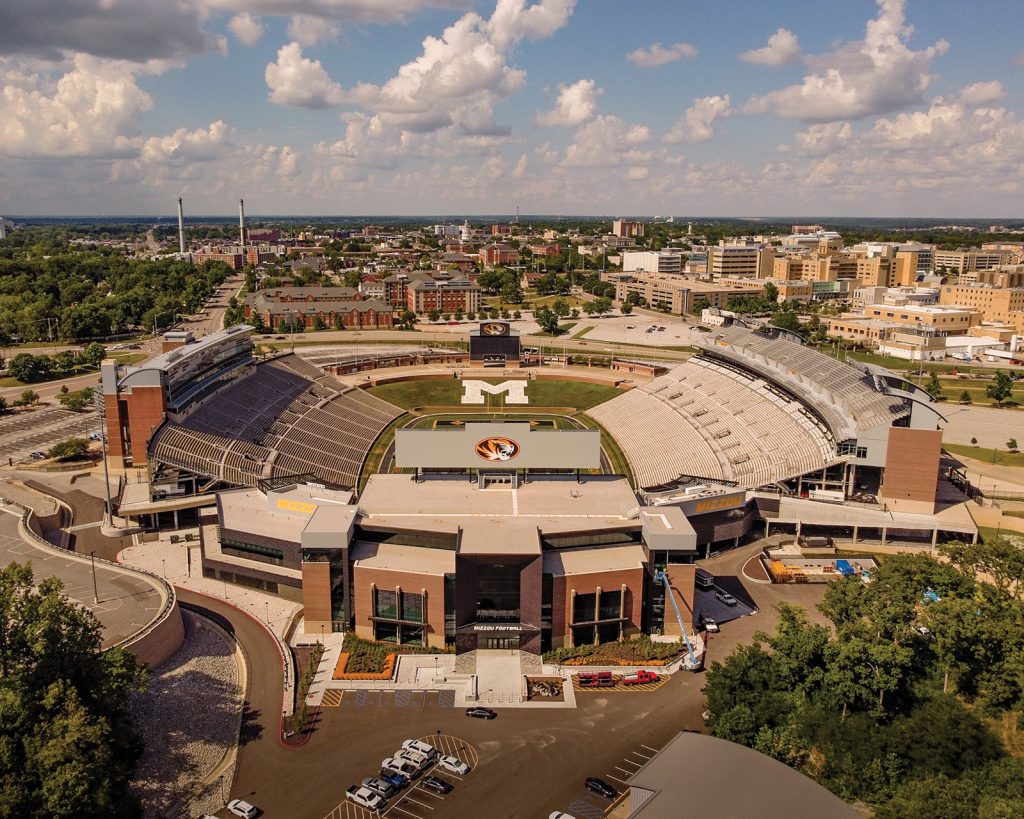
When I moved to Columbia in 1998 to attend the University of Missouri, the city felt very different.
My past college classmates and longtime residents often tell me they remember when traffic disappeared after students left for the summer. Neighborhoods felt smaller. Development happened at a slower pace. Columbia was growing, but few people imagined just how much growth was ahead.
Today, Columbia is home to nearly 131,000 residents and remains one of the fastest-growing cities in Missouri. Since 2000, our community has grown by roughly 40 to 50 percent, depending on how you measure it. The Columbia metropolitan area has added more than 70,000 residents during that same period.
Growth brings opportunity. It also creates a challenge that every generation of local leaders faces: How do we prepare for a future we cannot fully see?
In many ways, local government is an exercise in time travel.
Every decision we make today affects people years or even decades from now. The water treatment upgrade may not be fully appreciated until a future drought. The expansion of Nifong Parkway will shape development patterns for generations. Trees planted today will provide shade for children who are not yet born. Housing decisions made this year will influence affordability 10 years from now.
The communities that thrive are rarely the ones that simply react to change. They are the ones that anticipate it.
That is why Columbia is investing in long-range planning even while addressing today’s challenges.
We are preparing for future transportation needs through regional planning efforts, studying how transit can better connect people to jobs and services, and working with partners on the Improve I-70 project. We have recently invested in airport improvements that will strengthen our connections to the rest of the country. We are making infrastructure upgrades to our water, electric, and stormwater systems so they can serve a larger community in the decades ahead.
We’’re also planning for a future shaped by changing weather patterns. As someone who previously served as Columbia’s sustainability manager, I know that resilience is not just an environmental issue. It’s an economic issue, a public health issue, and a quality-of-life issue. Programs that expand our tree canopy, reduce extreme heat impacts, and strengthen critical infrastructure help ensure Columbia remains a great place to live no matter what challenges the future brings.
Perhaps the biggest lesson from looking backward is that no one can perfectly predict what comes next.
Few people in 1998 could have predicted smartphones, electric vehicles, or artificial intelligence. Twenty years from now, our children will likely experience technologies and opportunities we cannot yet imagine.
What we can predict is that people will continue choosing Columbia because of what has always made this community special: strong neighborhoods, outstanding educational institutions, parks and trails, entrepreneurial spirit, and residents who care deeply about one another.
The future is not something that simply happens to a city. It is something we build together.
If I could travel back and talk to the Columbia of 1998, I think the biggest surprise would not be how much we’ve grown. It would be how much potential still lies ahead.
The decisions we make today are shaping the Columbia that future generations will inherit. My hope is that when they look back on this moment, they’ll see a community that wasn’t afraid to think beyond the next budget cycle, the next election, or the next headline.
They’ll see a city that planned ahead.
A city that imagined what was possible.
A city that invested in its future.