
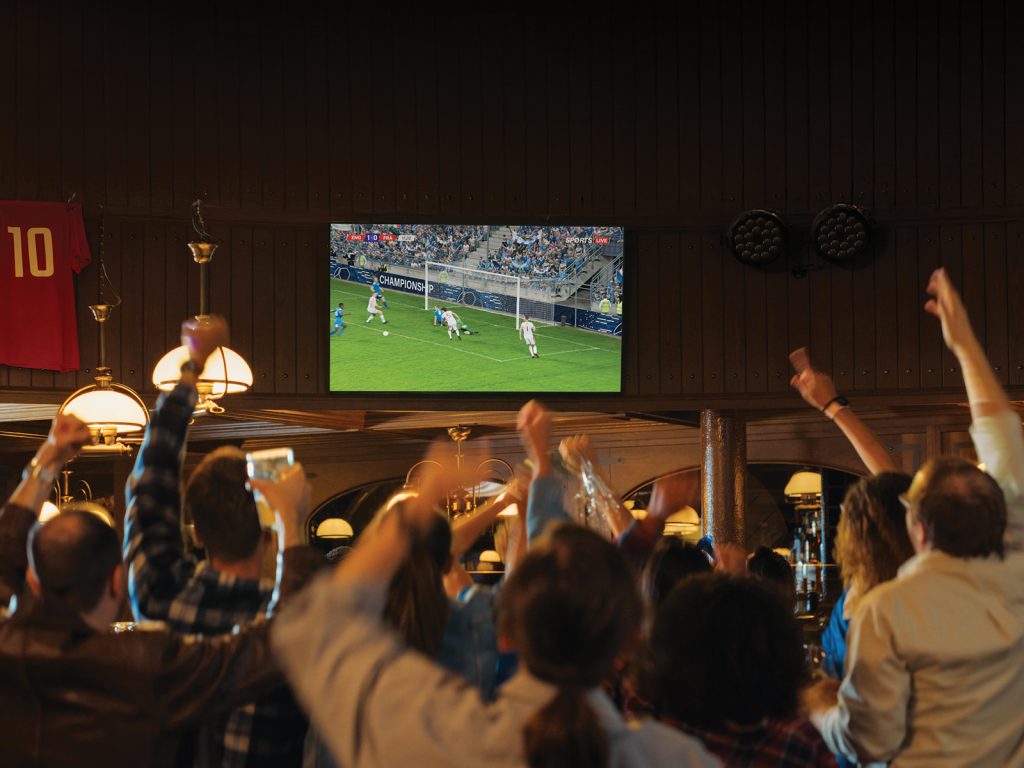
When you speak to a longtime soccer fan about the World Cup, you will often encounter a bizarre lexicon of names and places and moments. “’74, the Cruyff Turn.” “The Hand of God in ’86.” “Zidane’s ’06 madness.” “Wondo’s sitter in ’14.” (Please don’t repeat that last one near any long-suffering supporters of the U.S. Men’s National Team. Too much mental angst and trauma still remain. “Donovan and Dempsey versus Algeria in ’10” will get you much more favorable reactions.)
Each of these phrases represents a moment frozen in time, witnessed by billions of people around the world. Every four years, the entire world fandom of the “joga bonito” (the beautiful game) turns its eyes toward a massive tournament to crown the best futbol-playing country on the globe. And then suddenly the spotlight ignites and turns toward the host nation — or three, in the case of this year’s edition of the tournament. Canada, Mexico, and the United States all share the hosting duties in 2026, welcoming favorites, dark horses, and underdogs alike.
However, for the aforementioned supporters of the U.S. Men’s National Team, the World Cup holds a tumultuous history that blends anxious trepidation with moments of pure joy. That roller-coaster of sports-fueled emotions has historically been best navigated with others and commiserated about together. Columbia won’t be left out, especially with Kansas City being a host city of multiple rounds of matches just two hours to our west.
My own personal journey as a soccer fan began with an exchange trip to England in the summer of 1994, which was the previous time the United States hosted the Cup. England, though, had not qualified for that tournament, and it was as though the entire country had gone mute about the game I was so desperate to learn more about. Watching Brazil and Italy go to penalty kicks on the soil of my country while I was traveling abroad was a strange experience. But before the Cup could come around again, the U.S. had its own professional soccer league, and my hometown of Kansas City was blessed with a franchise that I still support to this day.
Fast-forward to 2010 (of “Donovan and Dempsey versus Algeria” fame), and the idea of having a place in Columbia that could support other soccer fans who felt like me seemed poised to become a reality. Dancing around wildly and hugging the other strangers in Willie’s at 11 a.m. in response to that moment made me realize that Columbia needed this outlet. So as a downtown bartender, I set my eyes toward the 2014 Cup with (barely) a plan of action in my mind.
Four years is an eternity for U.S. sports fans, so I turned back to my hometown team, which conveniently rebranded itself and won an MLS Cup title in those years. Several dedicated soccer fan friends joined me in starting an official Sporting KC supporters’ group, and we used the bar I worked at (McNally’s … RIP) as our base of operations.
As the U.S. Men’s team started the qualifying process for the 2014 World Cup, our group of fans joined the ranks of another official supporters’ group, The American Outlaws. One of the organizers of the group that would become the Outlaws’ Columbia chapter, Patrick Finney, told me that he just started creating Facebook posts in a desperate bid to find places that would put a soccer match on the TVs if more than one or two people showed up to watch. His aspirational group merged with my existing Sporting group, and things began to build.
I have written before, on social media, about my 2014 experience as a bar-liaison and leader of a supporters’ group during a World Cup. The crowd reaction videos of U.S. goals filmed in our establishment still bring a smile to my face, and it makes me emotional to think about the journey a passionate group of Columbia folks took to get to that point.
From there, real life kind of took over. New local leadership for the Outlaws led to changes, and the U.S. Men’s team missed qualifying for the World Cup in 2018. Sporting KC was no longer the powerhouse it had been in the early part of the decade. The rhythm and ebbing and flowing of the soccer world changed.
Then, during the leadup to the 2022 World Cup, I heard that a new local pre-professional soccer team had been founded in Columbia and was about to play a summer of matches locally. I had a chance to get to know the leadership group there, and I respect their nonprofit mission. AFC Columbia and its women’s team, the Missouri Reign, still play here every summer, and they will be playing home dates mixed in with the 2026 World Cup schedule.
In 2022, I was no longer bartending at a “soccer bar” of sorts, so I forced myself to wander out into the wild to watch some matches with others. Günter Hans stands out to me as the place I watched the United States and England play to a draw in a room containing a mixed crowd of both teams’ supporters. Friendly banter all the way around, I promise.
On the precipice of the 2026 Cup, Columbia sits two hours east of a host city venue, something that 1994 Jay, sitting in England, would have never dreamed of as a possibility. World Cup fever will attempt to sink its claws into our city and our amazing hospitality industry.
Here’s my Columbia-centric advice to you: Go out and enjoy the Cup. Ask your favorite happy hour or brunch spot if they’ll put a match on the TV. Learn what a “nutmeg” is. Become a vocal part of groups chanting about “Poch’s Army.” Buy a garish red, white, and blue scarf. High-five strangers. Pick a team that doesn’t seem like they have a chance to even make it out of the Group Stage, learn all about them, and root for them, too. Learn what a “rondo” is, and, again, please don’t mention “Wondo.”
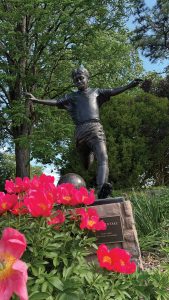 Go out to Cosmo Park on a Saturday morning and see what World Cup fever looks like to Under-7 and Under-12 teams. Stop by and see Paul Land’s sculpture in a roundabout there and ponder how one of our city’s preeminent commercial real estate gurus came to town in the ’70s to coach youth soccer when he didn’t even live here.
Patrick, my co-conspirator in starting Chapter 85 of the American Outlaws here in Columbia, said this:
“Participating in global soccer culture feels like a better connection with the rest of the world, even when participation in the global geopolitical culture doesn’t.”
Even with all of my history with the game here in Columbia, I wasn’t thrilled about this year’s World Cup, from a national perspective. That was, not until I got a chance to write this story. I hope to see you out for matches at a local establishment — and I can’t wait to explain Zidane’s ’06 madness to you.