

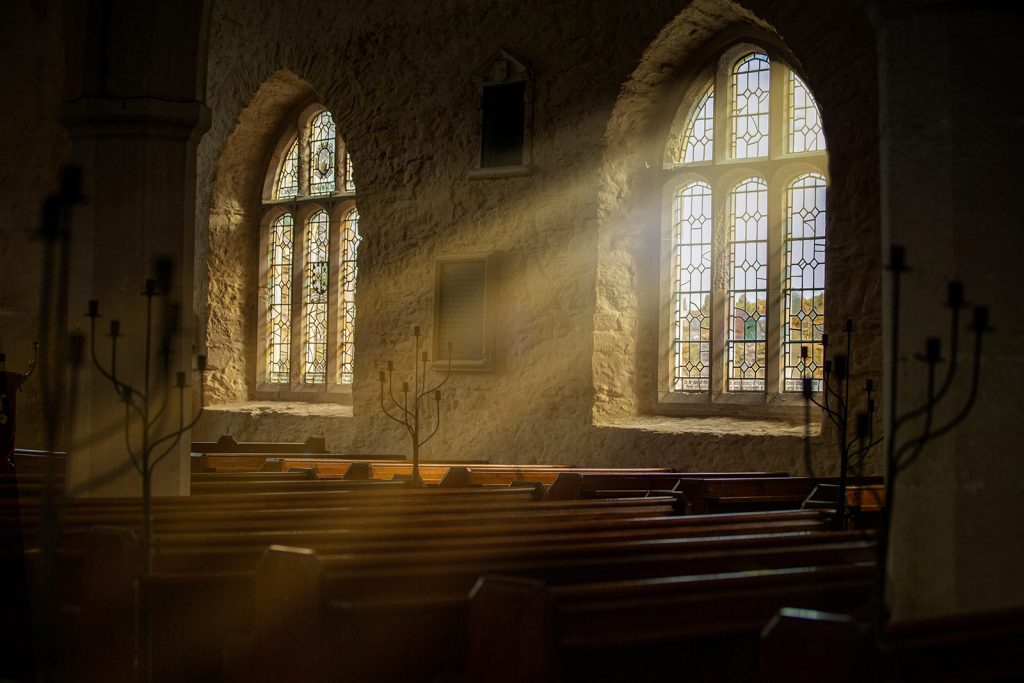
Columbia has a lot of banks. I passed six on the way to work this morning.
Have you ever once looked up a mission statement for a bank? Probably not, for the same reason I haven’t, either. I know what a bank is for. You can tell what a thing exists to do just by looking at it.
The same is probably true for the grocery store, car wash, and local fitness center. We know why they exist.
I’m not sure you could say that about a church, though — I would agree with you, and I work at one.
Ask 50 people in this town what a church is for, and you’ll get 50 answers. Most of that is our fault. Over a couple of generations, American Christianity has attempted to turn the church into a loyalty rewards program where preferences and demands set the agenda.
But what if you asked a local minister (me, for example) over a cup of coffee on Tuesday morning? I’d start by saying that before you define a church by what you think it is, I would encourage you to ask what is it for. Not what it offers. What it’s for. Then I would admit honestly that a lot of us have forgotten, not just those who attend the building on Sunday morning, but also those who supposedly lead these communities of faith.
An ancient letter was once written by a Roman prisoner to a church in Ephesus in the middle of the first century. It never describes a church as a service provider. It describes a community of faith with a mission and purpose. It describes a community of people who are known for something: primarily to make God visible in a particular place, in a local town or city. In a place like Columbia. The idea is that an unseen God has chosen to be seen through people for a reason. A church is not a building filled for a few hours on Sunday, but a group of flawed people who didn’t earn the kindness they received, now living life with each other and gathering each week because of it.
A church shouldn’t get judged on its programming or preaching. It needs to be judged on whether a local business owner, professor, grocery bagger, homeless person, and ex-convict are living life together. A church must be united by something more powerful than agreement, politics, wealth, status, or employment status — by something that won’t come from legislation, an academic system, or a political party. It comes from a shared allegiance to something none of them invented. And it has to hold on a Tuesday as much as on Sunday morning, or it’s fake.
The Scriptures would say a church is united by a person named Jesus, and His command to His followers is to be known for their love, humility, gentleness, and patience. His people should be known for making allowance for each other’s faults. That gives people room to be wrong, room to be heard, even room to be hard to love. Most of us, those who attend church and those who don’t, cut and run when people don’t think or vote or believe as we do. But a community built around Jesus, a community of faith centered around His teachings and His way, is known more for what it is for than what it is against.
You already know what a bank is for. Now you know what a church is for. The only question left is whether the ones you drive past actually know it, too. If you walked away from one once, it might be worth asking what you walked away from: a product or a people? One of those was never worth your time, energy, or investment.
The other might still be.